Echinochloa colona
(L.) Link
Jungle rice
iNaturalist· cc-by-nc
(c) James Bailey, some rights reserved (CC BY-NC), uploaded by James Bailey
iNaturalist· cc-by
(c) Tyler Bishop, some rights reserved (CC BY), uploaded by Tyler Bishop
iNaturalist· cc-by-nc
(c) Efahlmann, some rights reserved (CC BY-NC), uploaded by Efahlmann
Summary
Source: WikipediaEchinochloa colona, commonly known as jungle rice, wild rice, deccan grass, jharua or awnless barnyard grass, is a type of wild grass originating from tropical Asia. It was formerly classified as a species of Panicum. It is the wild ancestor of the cultivated cereal crop Echinochloa frumentacea, sawa millet. Some taxonomists treat the two taxa as one species, in which case the domesticated forms may also be referred to as E. colona.
Description
An annual grass. It forms tufts. The stems are slender. It grows up to 60 cm high. Sometimes the plant has a purple tinge. In dry areas the stems can lie along the ground and root at the nodes. The leaves are narrow. They are 0.5-0.7 cm wide. The narrow towards the tip. The flower is yellow. The flower develops in the axils of the leaves. The flower has a rough texture. The flowering heads have several short thick spikes. These have 4 crowded rows of spikelets.
Edible Uses
The seed is cooked and used as a millet — it can be prepared whole or ground into a flour and used as a mush or porridge. Young plants and shoots can be eaten raw or cooked, and are commonly eaten raw with rice.
Traditional Uses
The seed is ground into flour and cooked for bread or porridge. Young shoots are eaten raw or cooked. The seeds are boiled and eaten as a substitute for rice. The seeds are ground into flour and then mixed with maize or beans before making bread. The seeds are sun dried then crushed and winnowed before being cooked with salt and eaten with beans. It is used in kreb a grain mixture eaten in Chad and Sudan.
Medicinal Uses
None known
Distribution
It grows in temperate, subtropical and tropical zones. It grows in wet areas. It grows on clayey soils. It grows on black arable soils and near swamps and the edges of streams. It grows from sea level to 2,000 m above sea level. It can grow in arid places. In Argentina it grows from sea level to 1,700 m above sea level. In Sichuan and Yunnan.
Where It Grows
Afghanistan, Africa, American Samoa, Angola, Argentina, Asia, Australia, Azerbaijan, Bahrain, Bangladesh, Bermuda, Bolivia, Botswana, Brazil, Britain, Burkina Faso, Burundi, Cambodia, Cameroon, Cape Verde, Caribbean, Caucasus, Central Africa, Central African Republic, CAR, Central America, Chad, Chile, China, Colombia, Congo, Costa Rica, Côte d'Ivoire, Cuba, Cyprus, Dominican Republic, East Africa, East Timor, Ecuador, Egypt, Eswatini, Ethiopia, Eritrea, Europe, Fiji, Gambia, Ghana, Guam, Guatemala, Guinea, Guinée, Guinea-Bissau, Guyana, Haiti, Himalayas, Honduras, India, Indochina, Indonesia, Iran, Iraq, Israel, Italy, Ivory Coast, Jamaica, Japan, Kenya, Kerguelen Island, Laos, Lebanon, Lesotho, Libya, Madagascar, Malawi, Malaysia, Mali, Mariana Is., Marquesas, Mauritania, Mauritius, Mediterranean, Mexico, Middle East, Morocco, Mozambique, Myanmar, Namibia, Nauru, Nepal, New Caledonia, Nicaragua, Niger, Nigeria, North Africa, North America, Northeastern India, Oman, Pacific, Pakistan, Panama, Papua New Guinea, PNG, Paraguay, Peru, Philippines, Portugal, Puerto Rico, Qatar, Rotuma, Rwanda, Sahel, Samoa, Sao Tome and Principe, Saudi Arabia, SE Asia, Senegal, Seychelles, Sierra Leone, Socotra, Solomon Islands, Somalia, South Africa, Southern Africa, South America, South Sudan, Spain, Sri Lanka, St. Kitts and Nevis, Sudan, Swaziland, Taiwan, Tanzania, Thailand, Tibet, Timor-Leste, Trinidad & Tobago, Turkey, Türkiye, Tuvalu, Uganda, United Arab Emirates, UAE, Uruguay, USA, Vanuatu, Venezuela, Vietnam, West Africa, West Indies, Yemen, Zambia, Zimbabwe,
Cultivation
It can be grown from seed. Seed should be sown shallowly.
Propagation
Sow seed in early spring in a greenhouse, barely covering it. Prick seedlings into individual pots when large enough to handle and plant out into permanent positions in early summer. A direct sowing in late spring may also succeed, but is unlikely to ripen a seed crop in cool, wet summers.
Other Uses
None known Special Uses
Other Information
It is cultivated.
Notes
There are about 35 Echinochloa species. They grow in tropical to warm temperate regions. Chemical composition (Sudan sample): Protein (crude) = 10.6% (dry). Oil = 5.9% (dry). Fibre (crude) = 12.3% (dry). Ash (insoluble) = 8.7% (dry). Fibre (crude) = 12.3% (dry). Carbohydrate (soluble): Starch) = 51.1% (dry). Sucrose = 1.0% (dry). D-glucose = 0.4% (dry). D-fructose = 0.4% (dry). Amino acids (g [16g N]-1): Aspartic acid = 5.2g. Threonine = 3.5g. Serine = 4.7g. Glutamic acid = 25.3g. Proline = 8.2g. Glycine = 2.6g. Alanine = 10.3g. Valine = 5.8g. Cysteine = 0.8g. Methionine = 1.6g. Isoleucine = 4.6g. Leucine = 10.8g. Tyrosine = 4.3g. Phenylalanine = 6.9g. Histidine = 2.1g. Lysine = 2.1g. Arginine = 41.g. Fatty acids (g/100g) (saturated): 14:0 = 0.1g. 16:0 = 16.9g; (saturated): 18:0 = 3.1g. 22:0 = 0.3g. 24:0 = 0.2g.; (monounsaturated): 16:1 = 0.1g. 18:1 = 27.4g. 20:1 = 0.4g; (polyunsaturated): 18:2 = 50.5g. 18:3 = 1.0g. Minerals: Sulphur = 0.11% (dry). Potassium = 0.41% (dry). Magnesium = 0.22% (dry). Calcium = 0.05% (dry). Na = 0.01% (dry). K = 0.30% (dry). Zinc = 50 mg/kg-1(dry). Iron = 108 mg/kg-1 (dry). Manganese = 28 mg/kg-1 (dry). Copper = 4 mg/kg-1 (dry). Aluminium = 88 mg/kg-1 (dry). Chemical composition (after Paton & Dunlop) (grams per 100g): Protein = 10.68g. Fat = 5.20g. Carbohydrate (soluble) = 51.16g. Fibre = 14.68g. Ash = 7.35g. Water = 10.93g. Calories = 301.
Synonyms
Also Known As
Ahibary, Arrocillo, Awnless Barnyard grass, Be-sa-myet, Be-sar-myet, Borur, Canevao, Capim-arroz, Capim-carrapicho, Capimjau, Capituva, Cham, Diffra, Diffré, Difra, Djiba-djide, Gargaro, Gervao, Grama pintada, Gramilla de rastrojo, Hama, Homa, Hualcacho, Jangli sawuk, Jervao, Karumpul, Kereib, Liendre de puerco, Nhamo, Nhantandium, Othagaddi, Pachushama, Paja de puerco, Pakud, Pasto colorado, Pasto overito, Pazun-sa-myet, Queo, Queu, Sama, Sama banso, Samo, Sanwak, Sawa, Sawan, Sawank, Sawuk, Shama millet, Shama, Soma, Tani, Varsanam pillu, Wild rice, Winnbe-sa-myet, Wunba-sa-myet, Wun-be-sar, Wundu, Zari
References (78)
- Abbiw, D.K., 1990, Useful Plants of Ghana. West African uses of wild and cultivated plants. Intermediate Technology Publications and the Royal Botanic Gardens, Kew. p 25
- ABDELMUTI,
- Al-Sodany, Y. M., et al, 2013, Medicinal Plants in Saudi Arabia: I. Sarrwat Mountains at Taif, KSA. Academic Journal of Plant Sciences 6 (4): 134-145
- Altschul, S.V.R., 1973, Drugs and Foods from Little-known Plants. Notes in Harvard University Herbaria. Harvard Univ. Press. Massachusetts. no. 22
- Ambasta, S.P. (Ed.), 2000, The Useful Plants of India. CSIR India. p 188
Show all 78 references Hide references
- Bandyopadhyay, S., et al, 2012, A Census of Wild Edible Plants from Howrah District, West Bengal, India. Proceedings of UGC sponsored National Seminar 2012
- Borrell, O.W., 1989, An Annotated Checklist of the Flora of Kairiru Island, New Guinea. Marcellin College, Victoria Australia. p 23
- Burkill, H. M., 1985, The useful plants of west tropical Africa, Vol. 2. Kew.
- Burkill, I.H., 1966, A Dictionary of the Economic Products of the Malay Peninsula. Ministry of Agriculture and Cooperatives, Kuala Lumpur, Malaysia. Vol 1 (A-H) p 902
- Busson, 1965,
- Cherikoff V. & Isaacs, J., The Bush Food Handbook. How to gather, grow, process and cook Australian Wild Foods. Ti Tree Press, Australia p 189, 195
- Cobley, L.S. (rev. Steele, W.M.) 2nd Ed., 1976, An Introduction to the Botany of Tropical Crops. Longmans. p 56
- CRÉAC'H,
- Cribb, A.B. & J.W., 1976, Wild Food in Australia, Fontana. p 136
- Dangol, D. R., 2002, Economic uses of forest plant resources in western Chitwan, Nepal. Banko Janakari, 12(2): 56-64
- Facciola, S., 1998, Cornucopia 2: a Source Book of Edible Plants. Kampong Publications, p 175
- Flora of Pakistan. www.eFloras.org
- Fowler, D. G., 2007, Zambian Plants: Their Vernacular Names and Uses. Kew. p 69
- Franklin, J., Keppel, G., & Whistler, W., 2008, The vegetation and flora of Lakeba, Nayau and Aiwa Islands, Central Lau Group, Fiji. Micronesica 40(1/2): 169–225, 2008
- GAMMIE, (As Panicum colonum)
- Gangwar, A. K. & Ramakrishnan, P. S., 1990, Ethnobotanical Notes on Some Tribes of Arunachal Pradesh, Northeastern India. Economic Botany, Vol. 44, No. 1 pp. 94-105
- Grivetti, L. E., 1980, Agricultural development: present and potential role of edible wild plants. Part 2: Sub-Saharan Africa, Report to the Department of State Agency for International Development. p 73
- Grubben, G. J. H. and Denton, O. A. (eds), 2004, Plant Resources of Tropical Africa 2. Vegetables. PROTA, Wageningen, Netherlands. p 561
- GUPTA & KANODIA,
- Hedrick, U.P., 1919, (Ed.), Sturtevant's edible plants of the world. p 461
- Heyne, K., 1927, p 215
- Hussey, B.M.J., Keighery, G.J., Cousens, R.D., Dodd, J., Lloyd, S.G., 1997, Western Weeds. A guide to the weeds of Western Australia. Plant Protection Society of Western Australia. p 52
- Jackes, B. R., 2010, Plants of Magnetic Island. 3rd Edition. James Cook University, Australia. p 35
- Jardin, C., 1970, List of Foods Used In Africa, FAO Nutrition Information Document Series No 2.p 2
- Kala, C. P., 2009, Aboriginal uses and management of ethnobotanical species in deciduous forests of Chhattisgarh state in India. Journal of Ethnobiology and Ethnomedicine. 5:32
- Kenneally, K.E., Edinger, D. C., and Willing T., 1996, Broome and Beyond, Plants and People of the Dampier Peninsula, Kimberley, Western Australia. Department of Conservation and Land Management. p 218
- Kiple, K.F. & Ornelas, K.C., (eds), 2000, The Cambridge World History of Food. CUP p 117
- Lazarides, M. & Hince, B., 1993, Handbook of Economic Plants of Australia, CSIRO. p 86
- Long, C., 2005, Swaziland's Flora - siSwati names and Uses http://www.sntc.org.sz/flora/
- Macmillan, H.F. (Revised Barlow, H.S., et al), 1991, Tropical Planting and Gardening. Sixth edition. Malayan Nature Society. Kuala Lumpur. p 351
- Malezas Comestibles del Cono Sur, INTA, 2009, Buernos Aires
- Manandhar, N.P., 2002, Plants and People of Nepal. Timber Press. Portland, Oregon. p 211
- Martin, F.W. & Ruberte, R.M., 1979, Edible Leaves of the Tropics. Antillian College Press, Mayaguez, Puerto Rico. p 79, 194
- Martin, F.W. & Ruberte, R.M., 1979, Edible Leaves of the Tropics. Antillian College Press, Mayaguez, Puerto Rico. p 194 (As Panicum colonum)
- Moerman, D. F., 2010, Native American Ethnobotany. Timber Press. p 207
- Nassif, F., & Tanji, A., 2013, Gathered food plants in Morocco: The long forgotten species in Ethnobotanical Research. Life Science Leaflets 3:17-54
- National Research Council, 1996, Lost crops of Africa. Volume 1 grains, p 258
- Neogi, B., Prasad, M. N. V. and Rao, R. R., 1989, Ethnobotany of Some Weeds of Khasi and Garo Hills, Meghalaya, Northeastern India. Economic Botany 43(4): 471-479
- NOUR & HARPER,
- Ochse, J.J. et al, 1931, Vegetables of the Dutch East Indies. Asher reprint. p 332 (As Panicum colonum)
- Paczkowska, G. & Chapman, A.R., 2000, The Western Australian Flora. A Descriptive Catalogue. Western Australian Herbarium. p 102
- Parham, B. E. V., 1972, Plants of Samoa. New Zealand Department of Scientific and Industrial Research. Information Series. No. 85 p 110
- PATON & DUNLOP, (As Panicum colonum)
- Peduruhewa, P. S., et al, 2021, Potential of Underutilized Wild Edible Plants as the Food for the Future – A Review. Journal of Food Security, Vol. 9, No. 4, 136-147
- Peters, C. R., O'Brien, E. M., and Drummond, R.B., 1992, Edible Wild plants of Sub-saharan Africa. Kew. p 21
- Petheram, R.J. and Kok, B., 2003, Plants of the Kimberley Region of Western Australia. UWA Press p 117
- Plants for a Future database, The Field, Penpol, Lostwithiel, Cornwall, PL22 0NG, UK. http://www.scs.leeds.ac.uk/pfaf/
- Plants of Haiti Smithsonian Institute http://botany.si.edu/antilles/West Indies
- PROSEA (Plant Resources of South East Asia) handbook Volume 10 Cereals. p 87
- Purseglove, J.W., 1972, Tropical Crops. Monocotyledons. Longmans p 144
- Rashid, H. E., 1977, Geography of Bangladesh. Westview p 251 (As Panicum colonum)
- Romanowski, N., 2007, Edible Water Gardens. Hyland House. p 95
- Royal Botanic Gardens, Kew (1999). Survey of Economic Plants for Arid and Semi-Arid Lands (SEPASAL) database. Published on the Internet; http://www.rbgkew.org.uk/ceb/sepasal/internet [Accessed 8th May 2011]
- Ruiters-Welcome, A. K., 2019, Food plants of southern Africa. Ph.D. thesis. Univ. of Johannesburg p 87
- Sainty, G.R. & Jacobs, S.W.L., 1981, Waterplants of New South Wales. Water Resources Commission. NSW p 173
- SALIH,
- SAXENA,
- Scudder, 1971,
- SHANKARNARAYAN & SAXENA,
- Singh, H.B., Arora R.K.,1978, Wild edible Plants of India. Indian Council of Agricultural Research, New Delhi. p 84
- Singh, V. and Singh, P., 1981, Edible Wild Plants of Eastern Rajasthan. J. Econ. Tax. Bot. Vol 2 pp 197-207
- Stephens, K.M., & Dowling, R.M., 2002, Wetland Plants of Queensland. A field guide. CSIRO p 66
- Swaziland's Flora Database http://www.sntc.org.sz/flora
- Thaman, R. R, 2016, The flora of Tuvalu. Atoll Research Bulletin No. 611. Smithsonian Institute p 53
- van Wyk, B., 2005, Food Plants of the World. An illustrated guide. Timber press. p 183
- Vernon, R., 1983, Field Guide to Important Arable Weeds of Zambia. Dept of Agriculture, Chilanga, Zambia. p 114
- Welcome, A. K. & Van Wyk, B.-E., 2019, An inventory and analysis of the food plants of southern Africa. South African Journal of Botany 122 (2019) 136–179
- Westerway, J., et al, 2018, Preliminary checklist of the naturalised and pest plants of Timor-Leste. Blumea 63:157-163
- Wheeler, J.R.(ed.), 1992, Flora of the Kimberley Region. CALM, Western Australian Herbarium, p 1152
- Young, H., et al, 2005, Darfur - Livelihoods under Siege. Feinstein International Famine Center. p 175
- Youssef, R. S. A., 2013, Medicinal and non-medicinal uses of some plants found in the middle region of Saudi Arabia. Journal of Medicinal Plants Research. Vol. 7(34), pp. 2501-2517
- Yuncker, T.G., 1959, Plants of Tonga, Bernice P. Bishop Museum, Hawaii, Bulletin 220. p 61
- Zeven, A. C. & de West, J. M. J., 1982, Dictionary of cultivated plants and their regions of diversity. Wageningen. p 74
More from Poaceae
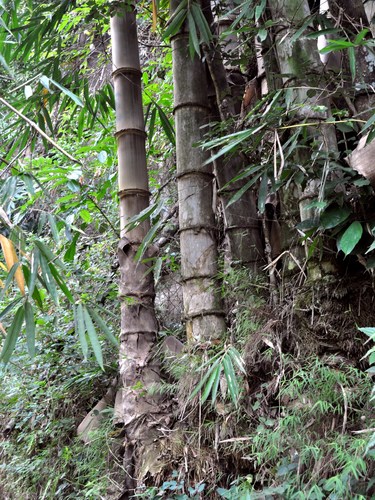
Dendrocalamus asper
Giant bamboo, Sweet bamboo
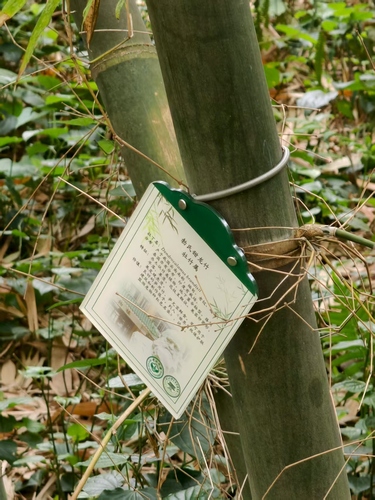
Dendrocalamus brandisii
Brandisii bamboo, Velvet leaf bamboo
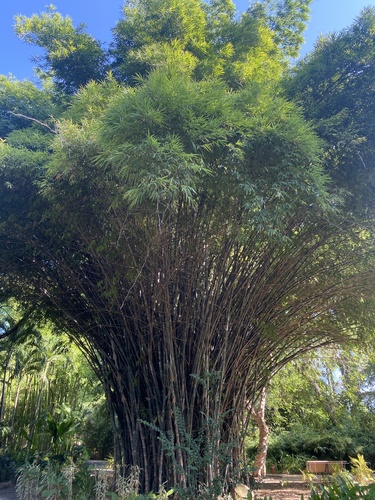
Dendrocalamus calostachyus
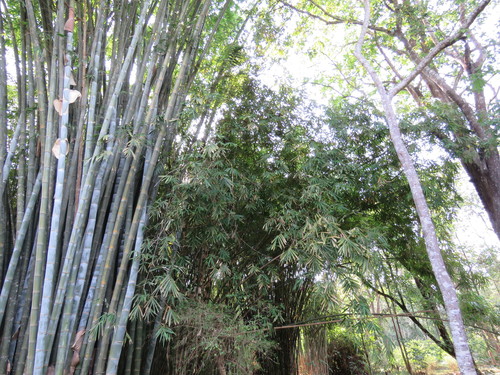
Dendrocalamus giganteus
Giant bamboo, Dragon bamboo
Dendrocalamus hamiltonii
Tufted bamboo
Dendrocalamus latiflorus
Sweet bamboo shoot, Taiwan giant bamboo, Dried bamboo shoot