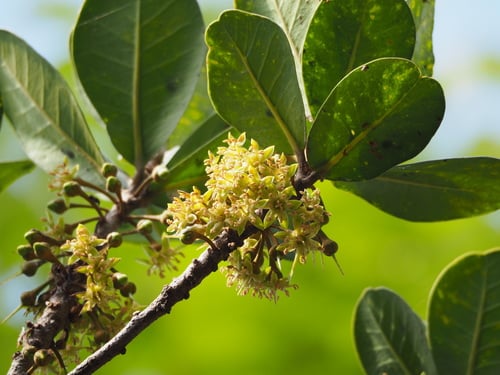
Eberhardtia tonkinensis
H. Lecomte
Cong sua bac bo
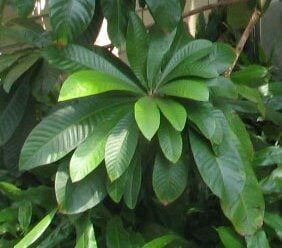
iNaturalist· cc-by-nc
(c) Phan Vũ Phúc Lân, some rights reserved (CC BY-NC)
iNaturalist· cc-by-nc
(c) Phan Vũ Phúc Lân, some rights reserved (CC BY-NC)
iNaturalist· cc-by-nc
(c) Phan Vũ Phúc Lân, some rights reserved (CC BY-NC)
Description
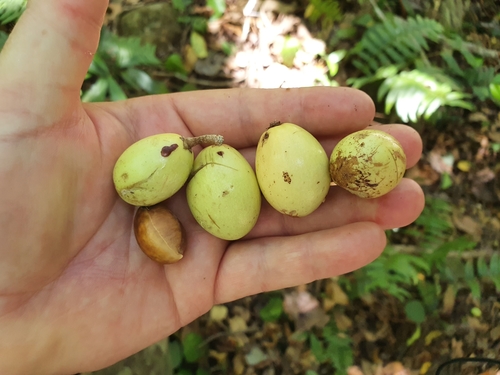
A medium sized tree. It is 18-20 m high. The trunk is straight and 20-40 cm across. The leaves are 15-30 cm long by 7-12 cm wide. The fruit are round or oval and 4-5 cm across. They have 5 seeds. The seeds are flat and shiny and 4 cm long by 2 cm wide.
Edible Uses
The seeds contain oil that can be pressed out and used for cooking or eaten directly.
Traditional Uses
The seeds have oil which can be pressed out and eaten or used for cooking.
This uses section is brief — help expand it
Distribution
A tropical plant. It grows between 100-1,000 m altitude. It occurs in primary and secondary forests. It is a light demanding tree, but needs shade when young. A temperature between 20-25°C is best. A rainfall of 1,300 mm is the minimum. It needs a deep, moist soil. In Yunnan.
Where It Grows
Asia, China, Indochina, Laos, SE Asia, Vietnam,
Cultivation
Young plants are shade tolerant, but become increasingly light-demanding as they grow older. A fast-growing species. Plants respond well to coppicing.
Other Uses
The yellowish-white wood is fine-grained, resistant to termites. It is used for construction and making furniture.
Also Known As
Bara bacbo
References (3)
- Forest Inventory and Planning Institute, 1996, Vietnam Forest Trees. Agriculture Publishing House p 664
- Pham-Hoang Ho, 1999, An Illustrated Flora of Vietnam. Nha Xuat Ban Tre. p 637
- Van Sam, H. et al, 2004, Trees of Laos and Vietnam: A Field Guide to 100 Economically or Ecologically Important Species. Blumea 29 (2004) 201-349