Palaquium gutta
(Hook. f.) Baillon.
Red gutta-percha
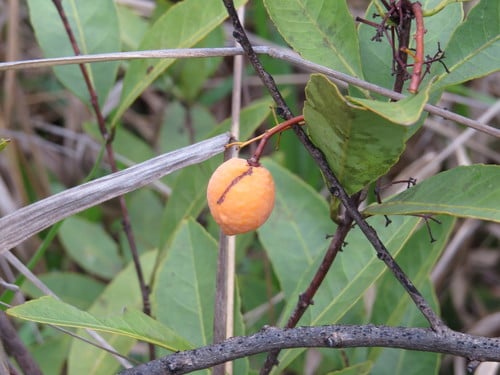
iNaturalist· cc-by
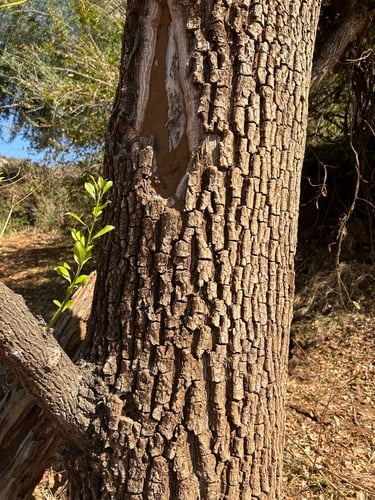
(c) Wendy Cutler, some rights reserved (CC BY)
iNaturalist· cc-by-nc
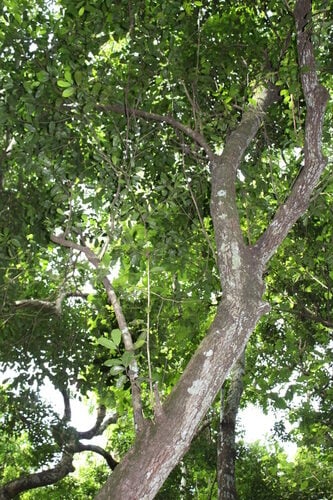
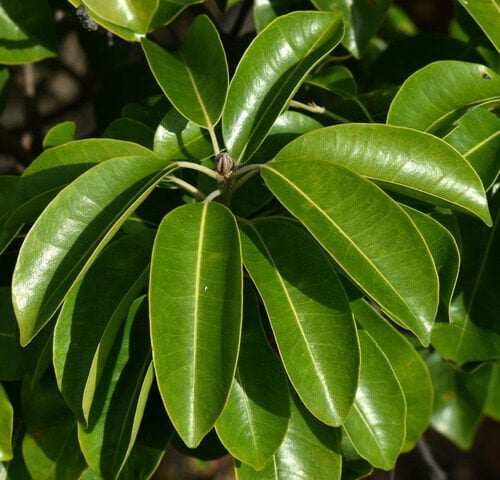
(c) Muhd Nasry, some rights reserved (CC BY-NC)
Summary
Source: WikipediaPalaquium gutta is a tree in the family Sapotaceae. The specific epithet gutta is from the Malay word getah meaning 'sap or latex'.
Description
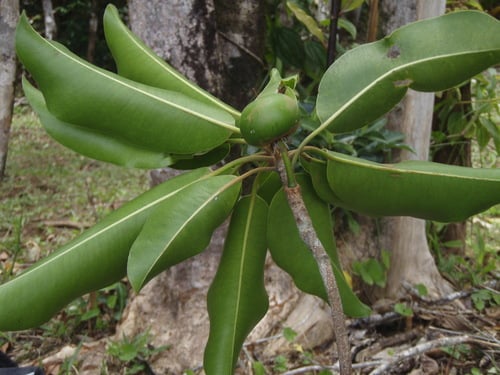
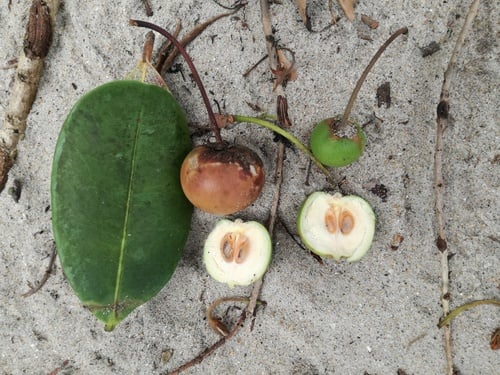
A tree. It grows to 45 m high. The trunk is 50 cm across. The bark is cracked. The twigs are 2-6 mm thick. They have reddish brown hairs. The leaves are scattered along the twigs or clustered at the tips. They are thickly papery. They are oval and 6-22 cm long by 2.5-6 cm wide. They can be larger. They have reddish-brown hairs underneath. The edges of the leaf is flat. The midrib is sunken above. There are 16-33 pairs of secondary veins. The flowers are whitish green or yellow. There are 2-10 per cluster. They are in the axils of leaves or on the leaf scars. The fruit are round or oval and 2-3.5 cm long by 1-3 cm wide. There are 1-2 seeds. The fruit are edible
Edible Uses
The seeds contain a fat that is sometimes used for cooking.
Medicinal Uses
The plant has odontalgic uses; no further details are given.
Distribution
A tropical plant. They occur in freshwater and dryland lowland forests. They can grow up to 1,600 m altitude.
Where It Grows
Asia, Brunei, India, Indochina, Indonesia, Malaysia, SE Asia, Singapore, Vietnam,
Cultivation
Plants are grown from seeds.
Propagation
Seed — best sown as soon as it is ripe, as viability is lost within 2–8 weeks. Fresh seed has a germination rate of 75–85%. Sow in deep nursery beds, as seedlings quickly develop a strong taproot. Young plants require shade and plentiful water; they grow rapidly and are ready for planting out at around 25 cm tall. Mortality after transplanting is typically high, at up to 35%.
Other Uses
This species is the primary source of gutta-percha, a natural latex obtained from the tree's sap. When the fluid is allowed to evaporate and coagulate in sunlight, it produces a hard, durable, non-brittle, and non-elastic latex that becomes flexible again when heated above 50°C, retaining any shape given to it as it cools. Before synthetic materials became available, gutta-percha was used extensively — most notably as insulation for electrical wiring and underwater telegraph cables, for which it is particularly well suited due to its bio-inert nature and resistance to attack by marine organisms. It has been moulded into ornate furniture, pistol grips, acid-resistant containers, and dark-coloured mourning jewellery. It has been widely used as the core material in golf balls and remains in use in modern dentistry, where its bio-inertness makes it suitable both as a temporary filling and as an internal filling material. Locally it is used to fix tool handles. Leaves of around 10 months of age are considered to yield the best quality latex. The seeds contain 58–63% fat, used in the manufacture of soaps and candles. The timber is used for planks not exposed to weather or ground contact, for panelling, and for fine furniture, decorative doors, and veneers. This species belongs to the timber group collectively known as 'Nyatoh'. Nyatoh heartwood is dark pink to red-brown, clearly demarcated from a sapwood band 4–9 cm wide. The texture is medium with straight or interlocked, sometimes wavy grain. The wood is light in weight and soft to moderately hard, reasonably durable and resistant to dry wood borers, moderately resistant to fungi, but susceptible to termites. It seasons somewhat slowly with a high risk of checking and distortion, though once dry it is stable in service. Silica content varies considerably between species, but in general the wood has a high blunting effect on tools, so stellite-tipped or tungsten-carbide tools are recommended. Nailing and screwing are good but require pre-boring; gluing is satisfactory. Uses include high-class furniture and cabinet making, panelling, joinery, flooring, light carpentry, turnery, moulding, and veneer.
Other Information
It is a cultivated plant.
Synonyms
Also Known As
Getah merah, Oloi sambun, Pohon nyatoh getah merah, Rambu, Rapok palung, Sambun utip, Xaydao mu
References (12)
- Ambasta, S.P. (Ed.), 2000, The Useful Plants of India. CSIR India. p 422
- Argent, G et al, nd, Manual of the Larger and More important non Dipterocarp Trees of Central Kalimantan Indonesia. Volume 2 Forest Research Institute, Samarinda, Indonesia. p 583
- Menninger, E.A., 1977, Edible Nuts of the World. Horticultural Books. Florida p 32
- Pham-Hoang Ho, 1999, An Illustrated Flora of Vietnam. Nha Xuat Ban Tre. p 635
- Purseglove, J.W., 1968, Tropical Crops Dicotyledons, Longmans. p 648
Show all 12 references Hide references
- Sukarya, D. G., (Ed.) 2013, 3,500 Plant Species of the Botanic Gardens of Indonesia. LIPI p 427
- Traite bot. med. phan. add. 1500. 1884
- Wickens, G.E., 1995, Edible Nuts. FAO Non-wood forest products. FAO, Rome. p152
- Wiersema, J. H. & Leon, B., 2013, World Economic Plants. A Standard Reference CRC Press. 2nd Ed. p 490
- Williams, C.N., Chew, W.Y., and Rajaratnam, J.A., 1989, Tree and Field Crops of the Wetter Regions of the Tropics. Longman, p 179
- World Checklist of Useful Plant Species 2020. Royal Botanic Gardens, Kew
- Zeven, A. C. & de West, J. M. J., 1982, Dictionary of cultivated plants and their regions of diversity. Wageningen. p 63