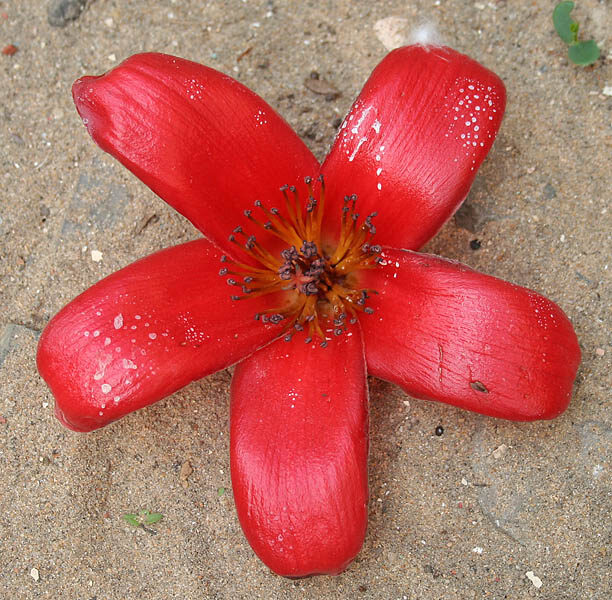
Hibiscus sinosyriacus
L. H. Bailey
Rose of Sharon, Chinese Hibiscus, Large-flowered Hibiscus
iNaturalist· cc-by-nc
(c) tuirnee, some rights reserved (CC BY-NC), uploaded by tuirnee
iNaturalist· cc-by-nc
(c) tuirnee, some rights reserved (CC BY-NC), uploaded by tuirnee
Summary
Source: WikipediaHibiscus sinosyriacus, the Chinese rose of Sharon, is a species of flowering plant in the family Malvaceae, native to southern China. The Royal Horticultural Society considers it a good plant for chalky soils. A number of cultivars are available, including 'Lilac Queen' and 'Ruby Glow'.
Description
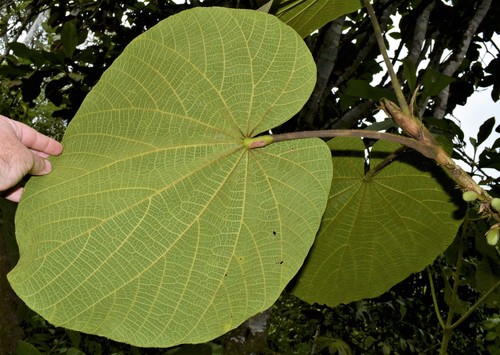
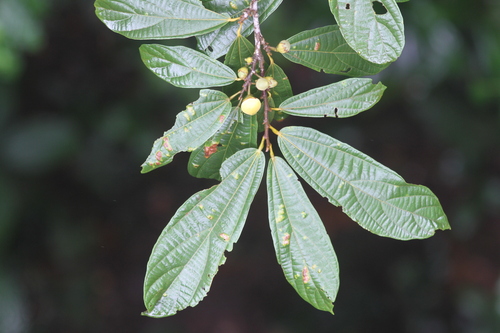
A shrub about 3 m high. It loses its leaves during the year. The branches have hairs only when young. The leaf stalk is 3-6 cm long. The leaf blade is oval or wedge shaped and 7-12 cm long by 7-12 cm wide. Usually they have 3 lobes. These are triangle shape and the centre one is largest.
Edible Uses
The following notes apply to the closely related H. syriacus and very probably apply to this species as well. Young leaves can be eaten raw or cooked; they have a very mild flavour, though they are slightly tough, and make an acceptable salad addition. A tea can be made from either the leaves or the flowers. Flowers are edible raw or cooked, with a mild flavour and mucilaginous texture that makes them attractive in salads both visually and in taste. Roots are edible but highly fibrous, with a mucilaginous texture and little flavour.
Traditional Uses
Young leaves are eaten raw or cooked. A tea is made from the leaves and flowers. The root is edible but fibrous.
This uses section is brief — help expand it
Medicinal Uses
The following notes apply to the closely related H. syriacus and may well apply to this species too. The plant is ophthalmic and styptic. The leaves are diuretic, expectorant and stomachic. A flower decoction is diuretic, ophthalmic and stomachic, and is used to treat itch and other skin diseases, dizziness, and bloody stools accompanied by much gas. A decoction of the root bark is antiphlogistic, demulcent, emollient, febrifuge, haemostatic and vermifuge, used in the treatment of diarrhoea, dysentery, dysmenorrhoea and dermaphytosis.
Distribution
It is a subtropical plant. It prefers a well drained soil. It requires full sun. Plants can stand cool climates but flowers are damaged by frosts. In China it grows in valleys between 500-1000 m altitude.
Where It Grows
Asia, China,
Cultivation
Prefers a well-drained humus-rich fertile soil in a sheltered position in full sun. Succeeds in any soil of good or moderate quality. Dislikes shade or badly drained soils. Plants grow best with their roots in cool moist soil and their tops in a hot sunny position. Plants are hardy in most parts of the country, tolerating temperatures down to around -15°c. They are best grown in the milder areas, however, because of their habit of flowering late in the season and thus being subject to frost damage. When planted in colder parts of the country, they will need some protection for the first few winters. This species is closely related to H. syriacus, differing mainly in the larger leaves and larger epicalyx. Plants rarely require pruning, though they respond well to pruning and trimming, and this is best carried out in the spring or just after flowering. The flowers are produced on the current season's growth. And they only open in sunny weather. Plants are late coming into leaf, usually around the end of May or early June. There are some named varieties selected for their ornamental value. Hibiscus sinosyriacus can be self-pollinated, but self-pollination can reduce vigour in seedlings.
Propagation
Sow seed in early spring in a greenhouse; germination is usually fairly quick. Prick seedlings into individual pots when large enough to handle and grow on in the greenhouse for the first year. Plant out into permanent positions in late spring or early summer. Some reports indicate seed can be sown directly outdoors with a good germination rate. Half-ripe cuttings taken in July or August root well in a frame, as do cuttings of mature wood taken in early autumn. Layering can be carried out from midsummer to early autumn.
Other Uses
The following notes apply to the closely related H. syriacus and very probably apply to this species as well. A low-quality fibre from the stems is used for cordage and paper. The seeds contain about 25% oil; no further details are given, but it is likely to be edible. A hair shampoo is made from the leaves. A blue dye is obtained from the flowers. The plant is used as a hedge in southern Europe.
Production
Flowers are produced on the current seasons growth.
Notes
There are about 220 Hibiscus species.
Also Known As
Dahua mujin, Hua mu jin
References (5)
- Gentes Herb. 1:109. 1922
- Lyle, S., 2006, Discovering fruit and nuts. Land Links. p 240
- Plants for a Future database, The Field, Penpol, Lostwithiel, Cornwall, PL22 0NG, UK. http://www.scs.leeds.ac.uk/pfaf/
- Tang ya, Malvaceae. Flora of China. p
- Valder, P., 1999, The Garden Plants of China. Florilegium. p 292