Aglaomorpha quercifolia
(L.) J. Smith
Rock fern, Oak fern, Oak leaf fern
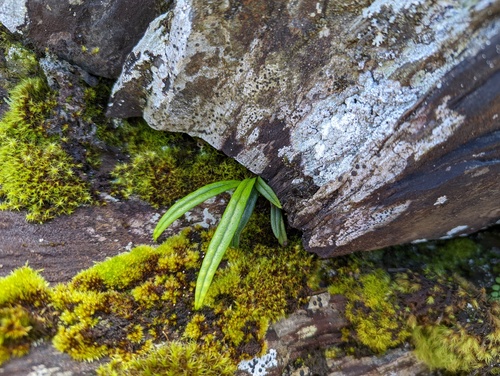
iNaturalist· cc-by-nc
(c) Braden J. Judson, some rights reserved (CC BY-NC)
iNaturalist· cc-by-nc
(c) Braden J. Judson, some rights reserved (CC BY-NC)
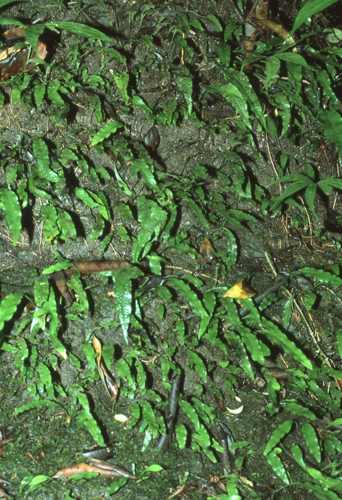
iNaturalist· cc-by-nc
(c) Aurélien Bour, some rights reserved (CC BY-NC)
Description
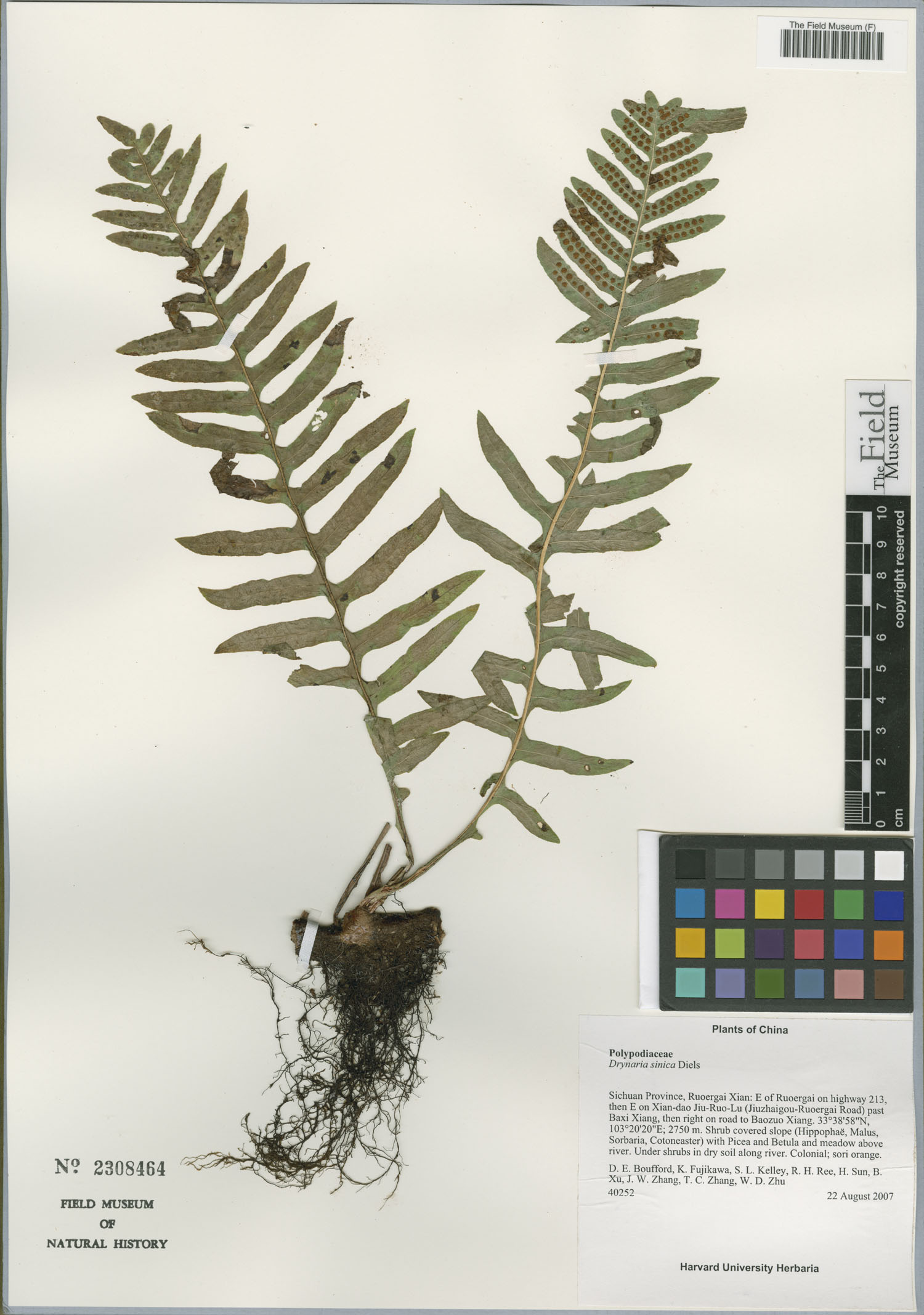
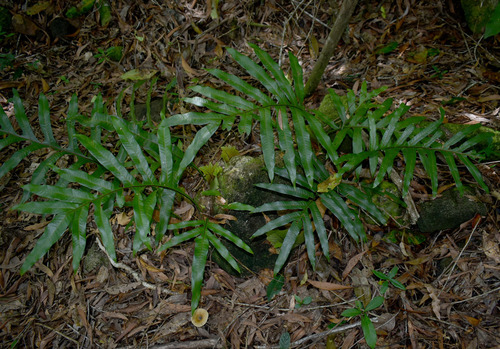
A large fern which grows attached to other plants. It climbs on trees. It can be 1 m high. It forms large spreading clumps. The rootstock is thick and fleshy. There are two kinds of fronds. One forms the "nest" and these do not have a stem and the others which are more like leaves and have a stem. The second ones have stems which are 30 cm long. The frond is one m long by 40 cm wide. It has deep lobes. The first kind of fronds have lobes and teeth around the edge. These turn brown with age but do not fall off the fern. The young fronds of this fern are different shape from the mature fronds on established ferns.
Edible Uses
The thick fleshy rhizome is collected during the dry season, cleaned, pounded, and mixed with rice flour to bake cakes. Young fronds are also eaten.
Traditional Uses
The rhizome is eaten. The fleshy rhizome is collected during the dry season, cleaned and pounded and mixed with rice flour to bake cakes.
This uses section is brief — help expand it
Distribution
It is a tropical plant. It grows in lowland rainforest. It does best in warm humid conditions. It can tolerate cool temperatures. It can grow on rocks and trees in open forests in the tropics. In Hainan in China it grows from sea level to 1,000 m above sea level.
Where It Grows
Asia, Australia, Cambodia, China, East Timor, Hawaii, Himalayas, India, Indochina, Indonesia, Laos, Malaysia, Nepal, Northeastern India, Pacific, Papua New Guinea, PNG, Philippines, SE Asia, Sri Lanka, Timor-Leste, USA, Vietnam, West Timor,
Cultivation
Pieces of the thick rhizome can be planted in soil or attached to wood. They should be in light shade while getting established. In cool weather the roots should be allowed to dry out. Plants can loose all their fronds and then regrow in the wet season. Plants can also be grown from spores. These should be sown fresh. Plants can be grown from spores.
Notes
There are about 20 Drynaria species.
Synonyms
Also Known As
Ashvakatri, Basingh, Garur, Gurar, Jurntuma, Kabkab, Kadikapana, Kammaru, Koi hin, Kupana thinga kop, Mudavaatukkal, Pakis kepala tupai, Pakpak lawin, Pannakilhan-numanavala, Waluminikima
References (23)
- Andrews, S.B., 1990, Ferns of Queensland. A handbook to the ferns and fern allies. Queensland DPI p 274 (As Drynaria quercifolia)
- Borrell, O.W., 1989, An Annotated Checklist of the Flora of Kairiru Island, New Guinea. Marcellin College, Victoria Australia. p 6 (As Drynaria quercifolia)
- Brock, J., 1993, Native Plants of Northern Australia, Reed. p 143 (As Drynaria quercifolia)
- Chaffey, C.H., 1999, Australian Ferns. Growing them successfully. Kangaroo Press. p 151 (As Drynaria quercifolia)
- Cherikoff V. & Isaacs, J., The Bush Food Handbook. How to gather, grow, process and cook Australian Wild Foods. Ti Tree Press, Australia p 199 (As Drynaria quercifolia)
Show all 23 references Hide references
- Chin, W.Y., 1998, Ferns in the Tropics. Kangaroo. p 123 (As Drynaria quercifolia)
- Costa, H. R., et al, 2021, Aglaomorpha quercifolia (L.) Hovenkamp & S. Linds a Wild Fern Used in Timorese Cuisine. Foods 2021, 10, 87
- Cowie, I, 2006, A Survey of Flora and vegetation of the proposed Jaco-Tutuala-Lore National Park. Timor-Lests (East Timor) www.territorystories.nt/gov.au p 52 (As Drynaria quercifolia)
- Elliot, W.R., & Jones, D.L., 1984, Encyclopedia of Australian Plants suitable for cultivation. Vol 3. Lothian. p 370 (As Drynaria quercifolia)
- J. Bot. (Hooker) 3:398. 1841 (As Drynaria quercifolia)
- Lazarides, M. & Hince, B., 1993, Handbook of Economic Plants of Australia, CSIRO. p 85 (As Drynaria quercifolia)
- Levitt, D., 1981, Plants and people. Aboriginal uses of plants on Groote Eylandt, Australian Institute of Aboriginal Studies, Canberra. (As Drynaria quercifolia)
- Macmillan, H.F. (Revised Barlow, H.S., et al), 1991, Tropical Planting and Gardening. Sixth edition. Malayan Nature Society. Kuala Lumpur. p 356 (As Drynaria quercifolia)
- Medhi, P., Sarma, A and Borthakur, S. K., 2014, Wild edible plants from the Dima Hasao district of Assam, India. Pleione 8(1): 133-148 (As Drynaria quercifolia)
- Miya, M. S. & Gautum, D., 2021, Checklist of floral species at the Institute of Forestry, Pokhara Campus, Pokhara, Nepal. Journal of Institute of Forestry, Nepal 18 (2021) 133-177
- Paczkowska, G. & Chapman, A.R., 2000, The Western Australian Flora. A Descriptive Calatogue. Western Australian Herbarium. p 25 (As Drynaria quercifolia)
- Pham-Hoang Ho, 1999, An Illustrated Flora of Vietnam. Nha Xuat Ban Tre. p 83 (As Drynaria quercifolia)
- Samydurai, P., et al, 2012, Wild habits of Kolli Hills being staple food of inhabitant tribes of eastern Ghats, Tamil Nadu, India. Indian Journal of Natural Products and Resources. 3(3) September 2012 pp 432-437 (As Drynaria quercifolia)
- Staples, G.W. and Herbst, D.R., 2005, A tropical Garden Flora. Bishop Museum Press, Honolulu, Hawaii. p 46 (As Drynaria quercifolia)
- Sukarya, D. G., (Ed.) 2013, 3,500 Plant Species of the Botanic Gardens of Indonesia. LIPI p 868 (As Drynaria quercifolia)
- Tiwi Plants and Animals. 2001, Aboriginal flora and fauna knowledge from Bathurst and Melville Islands, northern Australia. Northern Territory Botanical Bulletin; No. 24 p 45 (As Drynaria quercifolia)
- Townsend, K., 1994, Across the Top. Gardening with Australian Plants in the tropics. Society for Growing Australian Plants, Townsville Branch Inc. p 170 (As Drynaria quercifolia)
- World Checklist of Useful Plant Species 2020. Royal Botanic Gardens, Kew (As Drynaria quercifolia)