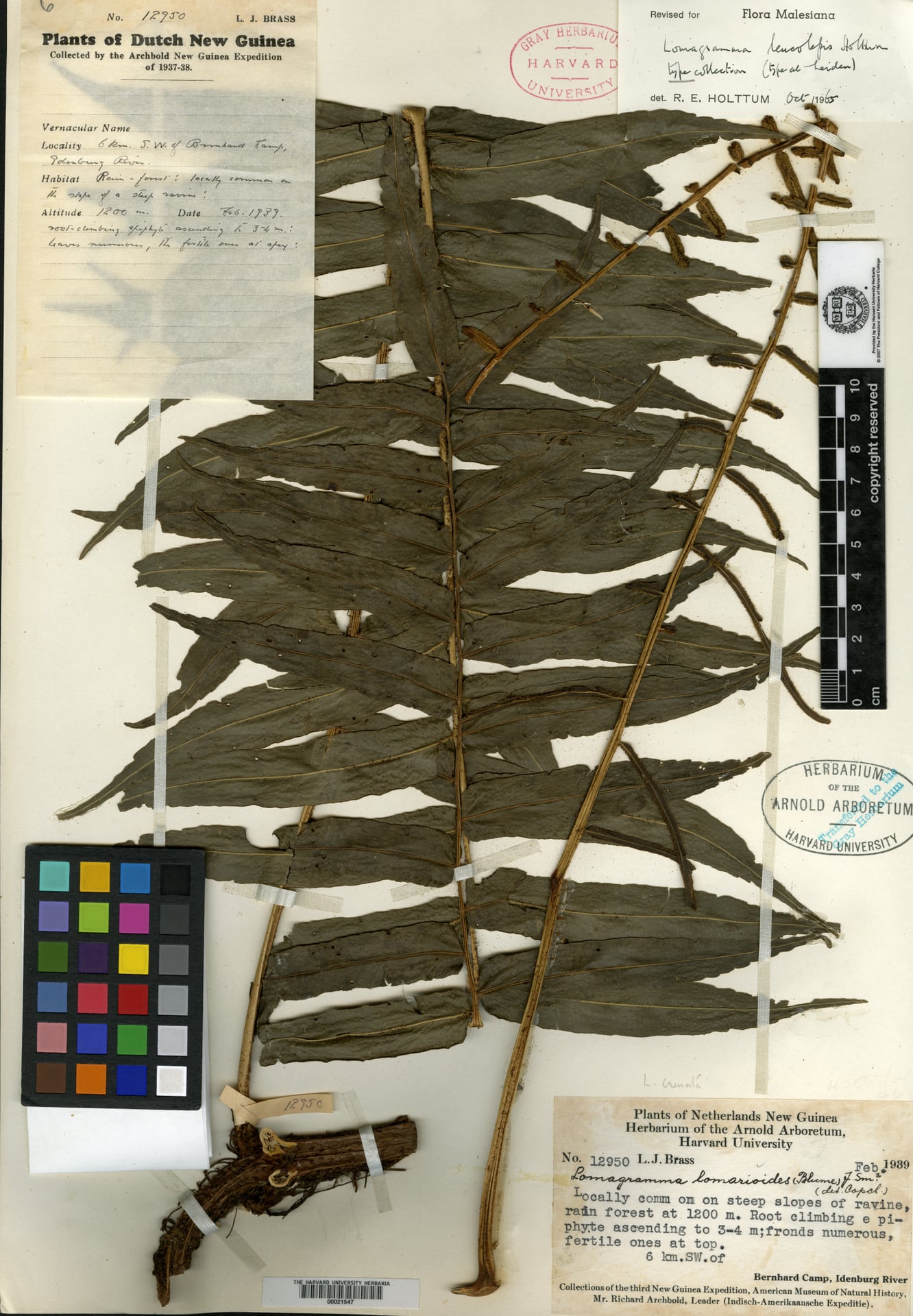
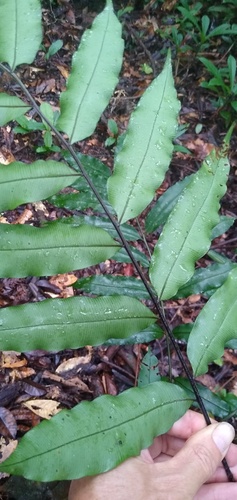
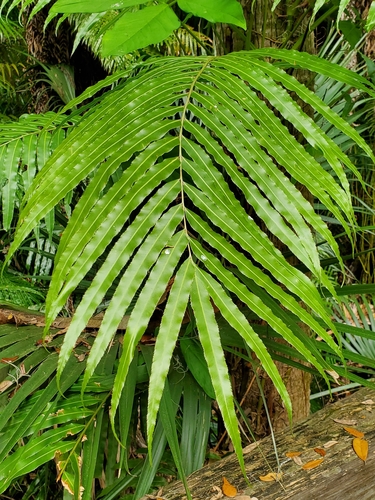
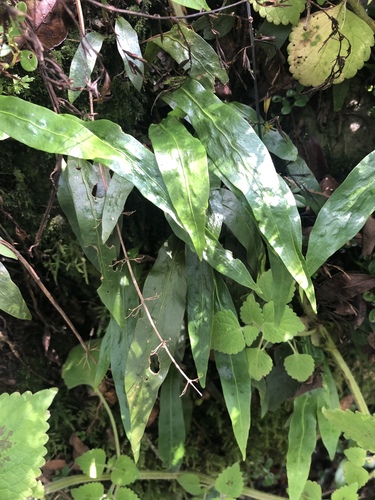
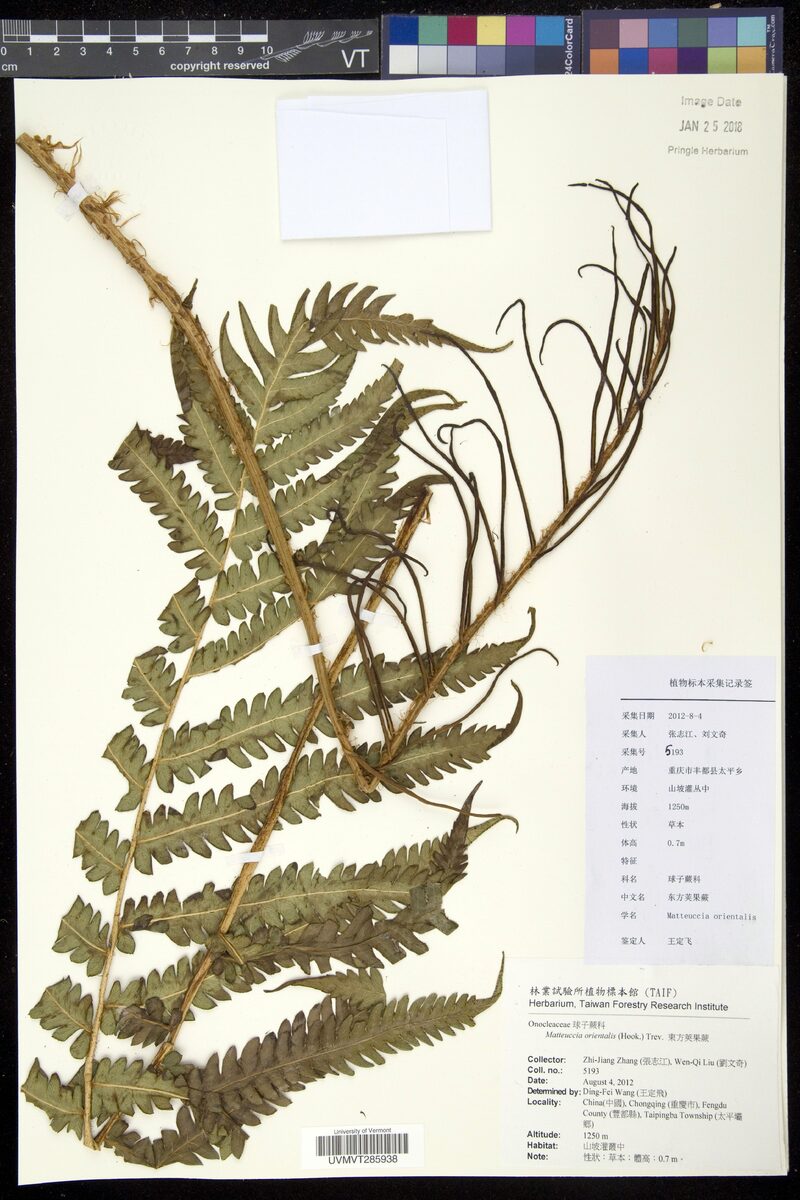
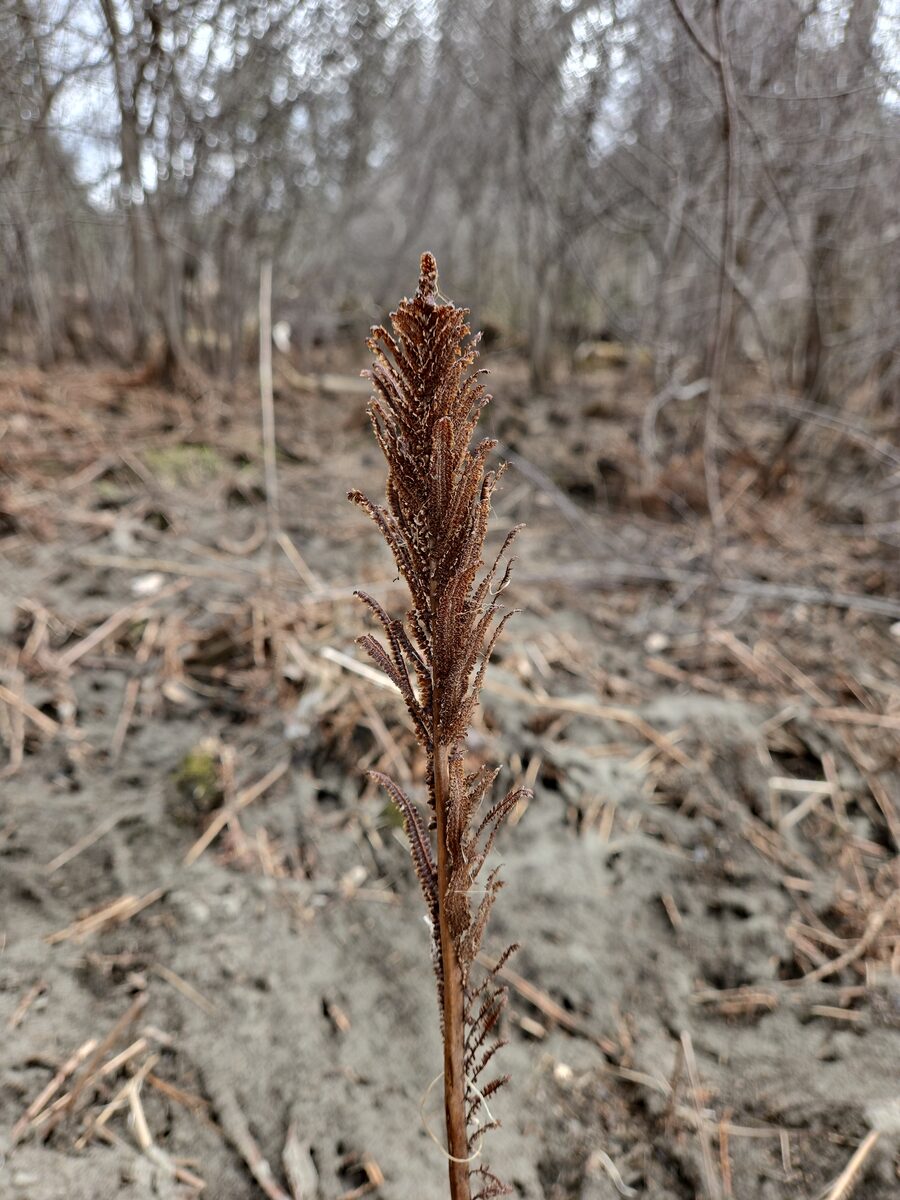
Drynaria roosii
Nakaike
iNaturalist· cc0
no rights reserved, uploaded by 葉子
iNaturalist· cc0
no rights reserved, uploaded by 葉子
iNaturalist· cc0
no rights reserved, uploaded by 葉子
Summary
Source: WikipediaDrynaria roosii, commonly known as gu-sui-bu, is a species of basket fern of the family Polypodiaceae. The plant is native to Eastern Asia, including eastern China. It is used in traditional Chinese medicine. This species is also more frequently cited by Asian studies by its synonym, Drynaria fortunei; however, this is an illegitimate name.
Description
An epiphytic fern of the Polypodiaceae family found in temperate regions, growing on trees.
This description is brief — help expand it
Edible Uses
The rhizome and roots are edible portions.
Medicinal Uses
Preparations from the rhizomes of Drynaria roosii are used in traditional herbal medicine for aiding in the healing of bone fractures and for treating rheumatoid arthritis. Modern studies of Drynaria roosii have identified in vitro effects on isolated bone cells. Flavan-3-ols and propelargonidins can be isolated from the rhizomes.
Distribution
It is a temperate plant.
Where It Grows
Asia, China, Korea, SE Asia, Vietnam,
Cultivation
The rhizome is used in traditional Chinese medicine as a medicinal herb, known as a kind of 'Gu sui bu', a medicine more commonly derived from Davallia. Once dried, fertile fronds can be removed from the plant in the dormant season; the smaller, dried sterile fronds, however, should be allowed to remain, however, since they serve to trap leaves and other debris which rots down and feeds the plant.
Notes
The root is used for medicine.
Synonyms
Also Known As
Gol-se-bo, Hu jue
References (1)
- Lim, T. K., 2015, Edible Medicinal and Non Medicinal Plants. Volume 9, Modified Stems, Roots, Bulbs. Springer p 40