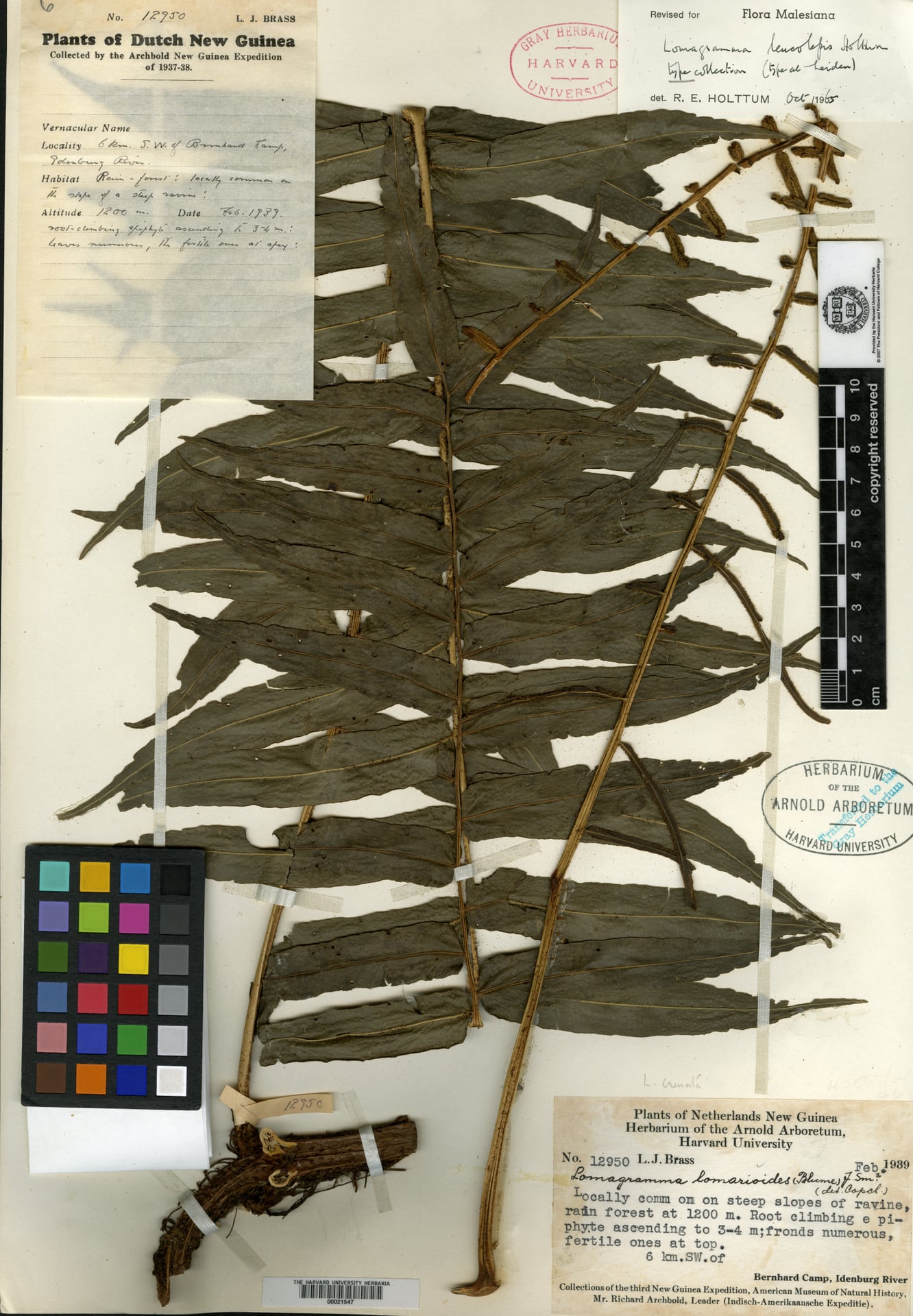
Drynaria rigidula
(Swartz) Beddome
Basket Fern
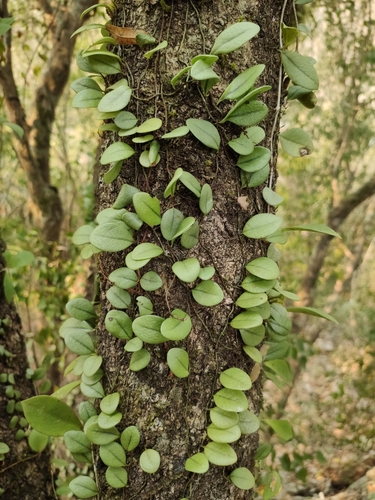
iNaturalist· cc-by
(c) Wendy Cutler, some rights reserved (CC BY)
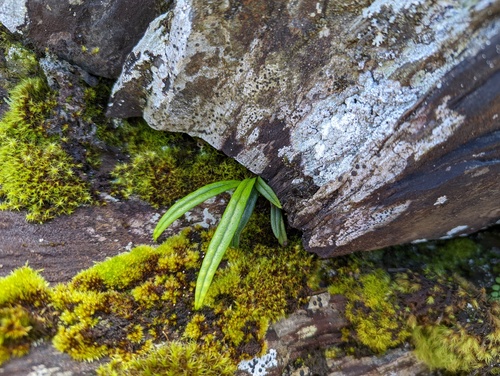
iNaturalist· cc-by-nc
(c) Damon Tighe, some rights reserved (CC BY-NC), uploaded by Damon Tighe
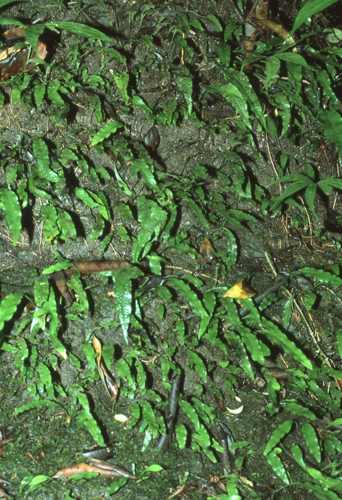
iNaturalist· cc-by-nc
(c) Deborah Metters, some rights reserved (CC BY-NC), uploaded by Deborah Metters
Summary
Source: WikipediaDrynaria rigidula is a species of tropical fern in genus Drynaria widely distributed throughout Southeast Asia, from Southwest China to Queensland and New South Wales in Australia. Growing as an epiphyte or lithophyte, its green fronds are up to 1.22 metres (4 ft 0 in) in length. This fern develops two types of fronds, some of which near the base of the plant are shorter, sterile, and rust-colored which form a basket-like shape that trap moisture and organic components that nourish it. Especially in colder weather, this basket acts as prime habitat for animals such as the Amethystine python. The rhizomes of D. rigidula are sometimes used in traditional medicine as a folk remedy, and do have some antioxidant properties though valid medical application has yet to be found through pharmacological studies.
Description
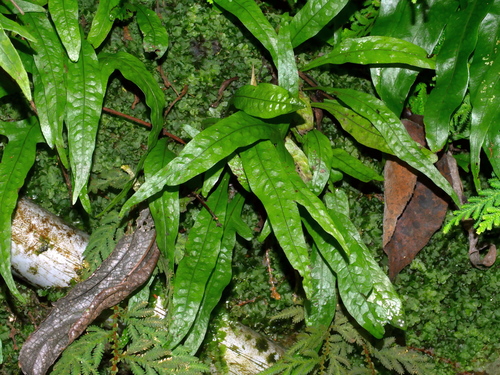
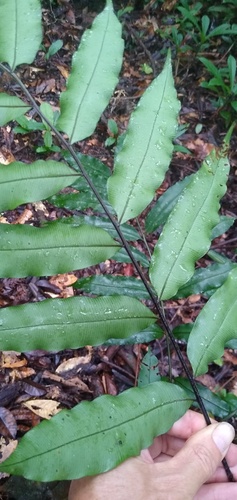
A very large fern. It usually grows attached to other plants. It grows 0.3-1.5 m tall. The rootstock is thick and fleshy. The nest leaves are short, narrow and deeply lobed. The sterile fronds are 10-36 cm long by 5-10 cm wide. They are sword shaped. The fertile fronds are very long and have leaflets along the stalk. The fronds are 0.3-1.5 cm long and erect or arching. The segments are 5-20 cm long and narrowly sword shaped. There are small teeth along the edge. The spore bodies are round and in a single row.
Edible Uses
Young fronds are eaten.
Medicinal Uses
The rhizome is astringent. It is used locally to treat persistent diarrhoea and virulent gonorrhoea. The rhizomes are said to treat similar diseases to those treated by the rhizomes of Drynaria quercifolia, such as diarrhoea, dysentery and gonorrhoea. The fertile fronds have shown a moderately high antioxidant activity
Known Hazards
Although we have found no reports of toxicity for this species, a number of ferns contain carcinogens so some caution is advisable. Many ferns also contain thiaminase, an enzyme that robs the body of its vitamin B complex. In small quantities this enzyme will do no harm to people eating an adequate diet that is rich in vitamin B, though large quantities can cause severe health problems. The enzyme is destroyed by heat or thorough drying, so cooking the plant will remove the thiaminase.
Distribution
A tropical plant. It grows in the tropics and subtropics. It grows on trees and rocks. It favours moist forest and rainforest.
Where It Grows
Asia, Australia, China, Fiji, Hawaii, India, Indochina, Indonesia, Laos, Malaysia, Myanmar, Pacific, Papua New Guinea, PNG, Philippines, Polynesia, SE Asia, Solomon Islands, Thailand, USA, Vietnam,
Cultivation
Plants can be grown by spores or by division of the plant.
Propagation
Spores - Division of the rootstock. Larger divisions with shoots establish best, but even smaller sections without shoots are able to produce adventitious shoots.
Notes
There are about 20 Drynaria species.
Synonyms
Also Known As
Pakis kalakas, Simbar layangan
References (13)
- Andrews, S.B., 1990, Ferns of Queensland. A handbook to the ferns and fern allies. Queensland DPI p 275
- Chaffey, C.H., 1999, Australian Ferns. Growing them successfully. Kangaroo Press. p 11, 28, 38, 154
- Chin, W.Y., 1998, Ferns in the Tropics. Kangaroo. p 127
- Cronin, L., 1989, The Concise Australian Flora. Reed. p 272
- Elliot, W.R., & Jones, D.L., 1984, Encyclopedia of Australian Plants suitable for cultivation. Vol 3. Lothian. p 370
Show all 13 references Hide references
- Ferns Brit. India. t. 314. 1869
- Franklin, J., Keppel, G., & Whistler, W., 2008, The vegetation and flora of Lakeba, Nayau and Aiwa Islands, Central Lau Group, Fiji. Micronesica 40(1/2): 169–225, 2008
- Goudey, C.J., 1988, A Handbook of Ferns for Australia and New Zealand. Lothian. p 100
- Haslam, S., 2004, Noosa's Native Plants. Noosa Integrated Catchment Assn. Inc. p 108
- Ratcliffe D & P., 1987, Australian Native Plants for Indoors. Little Hills press. p 86
- Staples, G.W. and Herbst, D.R., 2005, A tropical Garden Flora. Bishop Museum Press, Honolulu, Hawaii. p 46
- Sukarya, D. G., (Ed.) 2013, 3,500 Plant Species of the Botanic Gardens of Indonesia. LIPI p 868
- Uphof, J. C., 1959, Dictionary of Economic Plants.