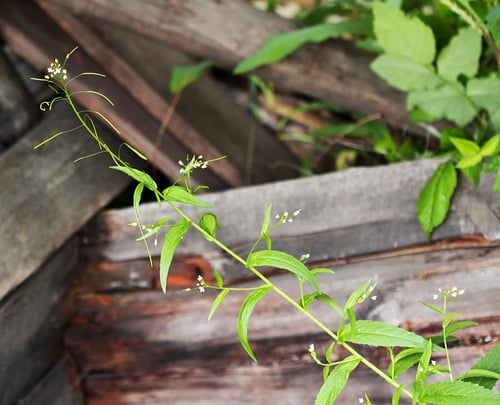
Draba muralis
L.
Wall whitlow grass
iNaturalist· cc-by-nc
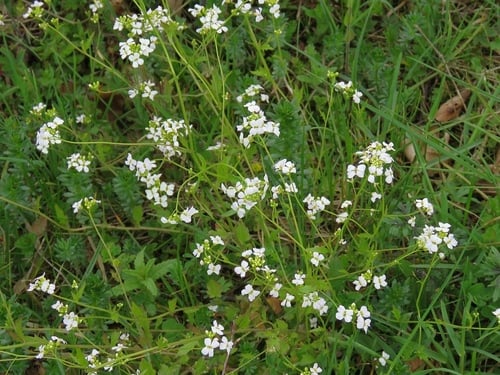
(c) Radim Paulič, some rights reserved (CC BY-NC), uploaded by Radim Paulič
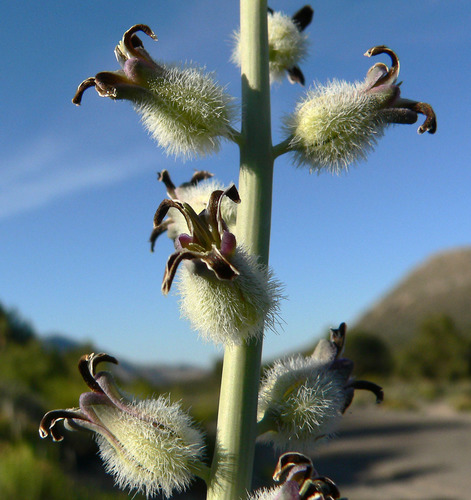
iNaturalist· cc-by-nc
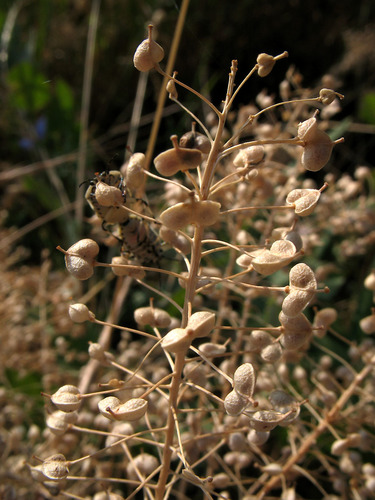
(c) Jan Doležal, some rights reserved (CC BY-NC)
Summary
Source: WikipediaA small annual or biennial herb reaching 0.3 meters in height. Flowers from April to May. Hermaphroditic and frost-hardy. Adapts to light, medium, and heavy soils with a preference for well-drained conditions. Tolerates mildly acid, neutral, and basic soils. Grows in semi-shade or full sun with either dry or moist soil preferences.
Description
A cabbage family herb. It grows each year from seed. It has a slender taproot. The leaves at the base are in a ring and 4 cm long. The leaves on the stem are broadly oval and have sharp teeth. The rounded base clasps the stem. The flowering stems are erect. They have many flowers. The flowers are 2-3 mm across.
Edible Uses
The plant is rich in vitamin C, though whether it is actually used as food is uncertain.
Medicinal Uses
The plant is antiscorbutic.
Distribution
It is a temperate plant.
Where It Grows
Asia, Australia, Britain, Europe, India, Luxembourg, Spain, Tasmania,
Cultivation
See the plants native habitat for ideas on its cultivation needs.
Propagation
Sow seed in spring directly in situ.
Other Uses
No other uses are known for this plant.
Notes
There are 350 Draba species. They mostly grow in cold places.
Synonyms
References (3)
- Ambasta, S.P. (Ed.), 2000, The Useful Plants of India. CSIR India. p 182
- Baker, M. L. & de Salas, M. F., 2012, A Census of the Vascular Plants of Tasmania. (On line)
- Plants for a Future database, The Field, Penpol, Lostwithiel, Cornwall, PL22 0NG, UK. http://www.scs.leeds.ac.uk/pfaf/