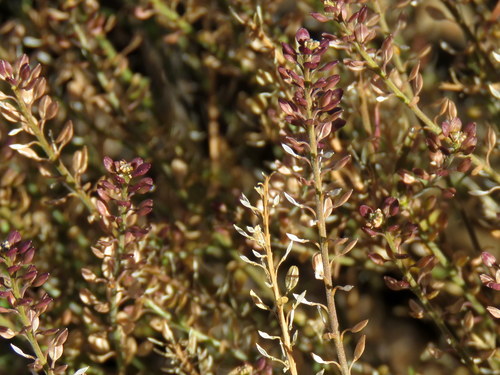
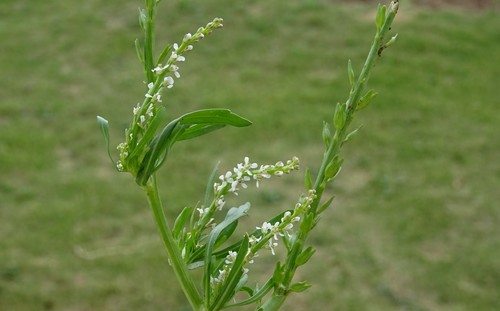
Brassica nigra
S. Kohl ex Koch
Black mustard
iNaturalist· cc-by
(c) naturalist charlie, some rights reserved (CC BY)
iNaturalist· cc-by-nc
(c) R.J. Adams, some rights reserved (CC BY-NC)
iNaturalist· cc-by-nc
(c) R.J. Adams, some rights reserved (CC BY-NC)
Summary
Source: WikipediaAn annual reaching 1.2 m tall and 0.6 m wide, hardy to UK zone 7. Flowers June to August, seeds ripen July to September. Hermaphrodite, pollinated by bees and flies, self-fertile. Grows in light sandy and medium loamy well-drained soils. Tolerates mildly acid to very acid pH, semi-shade or full sun, and maritime exposure. Prefers moist soil.
Description
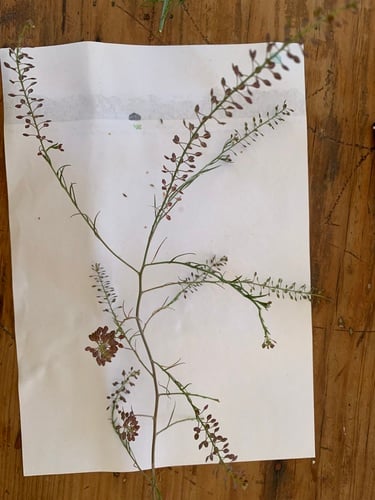
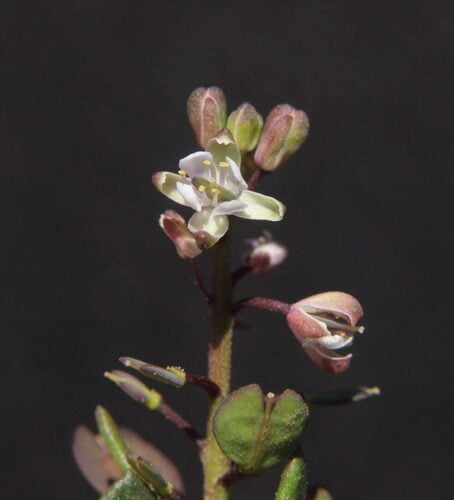
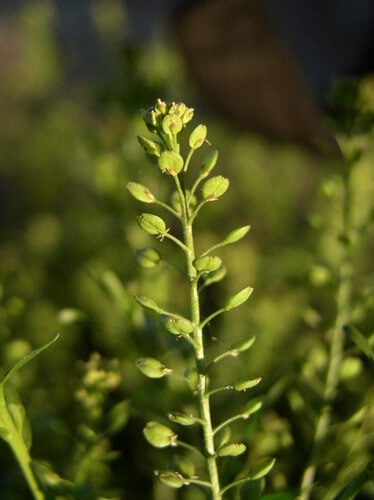
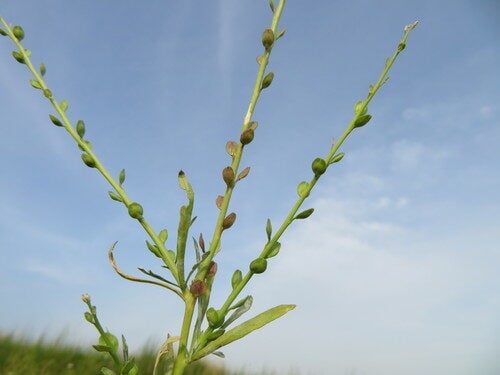
A cabbage family herb. It is an annual plant. It grows about 1-3 m high. The leaves are stalked and clasp the stem. The upper leaves are sword shaped. Leaves are 10-20 cm long. Flowers are yellow. The fruit is a pod. It is erect, smooth and 2 cm long. It can have 3-5 seeds. The seeds are reddish-brown to almost black. They are 1.5 mm across.
Edible Uses
Edible Parts: Leaves Oil Oil Seed Stem Edible Uses: Oil Oil Leaves - raw or cooked. A hot flavour, they can be finely chopped and added to salads or cooked as a potherb. The seedlings can also be used as a salading when about one week old, adding a hot pungency to a salad[2, 27, 183, K]. Immature flowering stems - cooked and eaten like broccoli. Mustard seed is commonly ground into a powder and used as a food flavouring and relish. This is the black mustard of commerce, it is widely used as a food relish and as an ingredient of curry. Pungency of mustard develops when cold water is added to the ground-up seed - an enzyme (myrosin) acts on a glycoside (sinigrin) to produce a sulphur compound. The reaction takes 10 - 15 minutes. Mixing with hot water or vinegar, or adding salt, inhibits the enzyme and produces a mild bitter mustard. The seed can also be used whole to season pickles, curries, sauerkraut etc. Black mustard has a stronger more pungent flavour than white mustard (Sinapis alba) and brown mustard (B. juncea). An edible oil is obtained from the seed.
Traditional Uses
The young basal leaves and shoots are cooked and eaten as a vegetable. The seed oil is used for cooking. The ripe seeds can be used as flavouring. They are used in pickles and sausages. The seeds are sprouted and eaten. They are also powdered and eaten with honey. The flowers are used like broccoli.
Medicinal Uses
Antirheumatic Appetizer Digestive Diuretic Emetic Epilepsy Rubefacient Stimulant Mustard seed is often used in herbal medicine, especially as a rubefacient poultice. The seed is ground and made into a paste then applied to the skin in the treatment of rheumatism, as a means of reducing congestion in internal organs. Applied externally, mustard relieves congestion by drawing the blood to the surface as in head afflictions, neuralgia and spasms. Hot water poured on bruised seeds makes a stimulant foot bath, good for colds and headaches. Old herbals suggested mustard for treating alopecia, epilepsy, snakebite, and toothache. Care must be taken not to overdo it, since poultices can sometimes cause quite severe irritation to the skin. The seed is also used internally, when it is appetizer, digestive, diuretic, emetic and tonic. Swallowed whole when mixed with molasses, it acts as a laxative. A decoction of the seeds is used in the treatment of indurations of the liver and spleen. It is also used to treat carcinoma, throat tumours, and imposthumes. A liquid prepared from the seed, when gargled, is said to help tumours of the "sinax.". The seed is eaten as a tonic and appetite stimulant. Hot water poured onto bruised mustard seeds makes a stimulating foot bath and can also be used as an inhaler where it acts to throw off a cold or dispel a headache. Mustard Oil is said to stimulate hair growth. Mustard is also recommended as an aperient ingredient of tea, useful in hiccup. Mustard flour is considered antiseptic.
Known Hazards
When eaten in large quantities, the seed and pods have sometimes proved toxic to grazing animals.
Distribution
It is a temperate and Mediterranean climate plant. In China it grows on slopes, steppe, field margins between 900–2800 m altitude. In Nepal it grows to 2000 m altitude. In Ethiopia it grows between 1,500-2,600 m above sea level. Tasmania Herbarium.
Where It Grows
Afghanistan, Africa, Andorra, Argentina, Asia, Australia, Balkans, Bangladesh, Bolivia, Bosnia, Brazil, Britain, Canada, Cape Verde, Central Asia, Chile, China, Crete, Cuba, Cyprus, East Africa, Ecuador, Ethiopia, Europe*, Fiji, Greece, Hawaii, Himalayas, Hungary, India, Indochina, Iran, Ireland, Italy, Kashmir, Kazakhstan, Luxembourg, Macedonia, Mediterranean, Middle East, Morocco, Mozambique, Myanmar, Nepal, North Africa, North America, Northeastern India, Pacific, Pakistan, Palestine, Philippines, Portugal, Russia, SE Asia, Serbia, Sicily, Sikkim, Slovakia, Slovenia, South America, Sri Lanka, Tasmania, USA, Turkey, Türkiye, Uruguay, Vietnam, West Indies, SW Asia,
Cultivation
Plants are grown from seed.
Propagation
Seed - sow in situ from early spring until late summer in order to obtain a succession of crops. The main crop for seed is sown in April.
Other Uses
Green manure Oil Oil Repellent A semi-drying oil is obtained from the seed, as well as being edible it is also used as a lubricant, illuminant and in making soap. The plant is often grown as a green manure, it is very fast, producing a bulk suitable for digging into the soil in about 8 weeks. Not very winter hardy, it is generally used in spring and summer. It does harbour the pests and diseases of the cabbage family so is probably best avoided where these plants are grown in a short rotation and especially if club root is a problem. Mustard oil (allyl isothiocyanate) is used in commercial cat and dog repellent mixtures. Special Uses Scented Plants
Production
The seeds need to be hand picked as they shed their seeds at maturity. They can be harvested after 90-100 days.
Other Information
It is a commercially cultivated vegetable. Leaves are sold in local markets.
Notes
There are about 30 Brassica species and many cultivated varieties. A recent publication revised the name to Rhamphospermum nigrum (L.) Al-Shehbaz.
Nutrition
| Part | Moisture | kJ | kcal | Protein | Vit A | Vit C | Iron | Zinc |
|---|---|---|---|---|---|---|---|---|
| Seeds | 8.5 | 2261 | 541 | 20 | — | 0 | 17.9 | — |
| Leaves | — | — | — | — | — | — | — | — |
| Flowers | — | — | — | — | — | — | — | — |
| Sprouts | — | — | — | — | — | — | — | — |
Synonyms
Also Known As
Ankam, Asnab, Cavuliceddu niuru, Crn sinap, Crna zelka, Esek turpu, Franciamustar, Gan-aba, Hardala, Hot-cai den, Huoirruoi, Kadugu, Kalo sorisha, Kalo tori, Kalu aba, Karahardal, Kerkaz, Mazzaredda amara, Monnyin-net, Mostacilla, Mostarda negra, Mostaza negra, Nzeyicheu, Rama negra, Rayo, Saiso, Sarso, Senafich, Sinapi, True mustard, Yaolaisa gisim
References (77)
- Addis, G., et al, 2005, Ethnobotanical Study of Edible Wild Plants in Some Selected Districts of Ethiopia. Human Ecology, Vol. 33, No. 1, pp. 83-118
- Ali, A. M. S., 2005, Homegardens in Smallholder Farming Systems: Examples from Bangladesh. Human Ecology, Vol. 33, No. 2 pp. 245-270
- Ambasta, S.P. (Ed.), 2000, The Useful Plants of India. CSIR India. p 83
- Ara, R. I. T., 2015, Leafy Vegetables in Bangladesh. Photon eBooks. p 50
- Balkrishna, A., et al, 2022, Indigenous Uses of Plants among Forest-dependent Communities of Seijosa, Arunachal Pradesh. International Journal of Economic Plants 2022, 9(1):064-080
Show all 77 references Hide references
- Beckstrom-Sternberg, Stephen M., and James A. Duke. "The Foodplant Database." http://probe.nalusda.gov:8300/cgi-bin/browse/foodplantdb.(ACEDB version 4.0 - data version July 1994)
- Bianchini, F., Corbetta, F., and Pistoia, M., 1975, Fruits of the Earth. Cassell. p 208
- Biscotti, N. et al, 2018, The traditional food use of wild vegetables in Apulia (Italy) in the light of Italian ethnobotanical literature. Italian Botanist 5:1-24
- Bodkin, F., 1991, Encyclopedia Botanica. Cornstalk publishing, p 169
- Bremness, L., 1994, Herbs. Collins Eyewitness Handbooks. Harper Collins. p 234
- Brown, D., 2002, The Royal Horticultural Society encyclopedia of Herbs and their uses. DK Books. p 146
- Cerne, M., 1992, Wild Plants from Slovenia used as Vegetables. Acta Horticulturae 318
- Curtis, W.M., 1956, The Students Flora of Tasmania Vol 1 p 40
- Della, A., et al, 2006, An ethnobotanical survey of wild edible plants of Paphos and Larnaca countryside of Cyprus. J. Ethnobiol. Ethnomed. 2:34
- Denes, A., et al, 2012, Wild plants used for food by Hungarian ethnic groups living in the Carpathian Basin. Acta Societatis Botanicorum Poloniae 81 (4): 381-396
- Dogan, Y., 2012, Traditionally used wild edible greens in the Aegean Region of Turkey. Acta Societatis Botanicorum Poloniae 81(4): 329-342
- Duarte, M. C., et al, 2022, Diversity of Useful Plants in Cabo Verde Islands: A Biogeographic and Conservation Perspective. Plants 2022, 11, 1313 p 10
- Duke, J.A., 1992, Handbook of Edible Weeds. CRC Press. p 50
- Elias, T.S. & Dykeman P.A., 1990, Edible Wild Plants. A North American Field guide. Sterling, New York p 100
- Ertug, F., 2004, Wild Edible Plants of the Bodrum Area. (Mugla, Turkey). Turk. J. Bot. 28 (2004): 161-174
- Ertug, F, Yenen Bitkiler. Resimli Türkiye Florası -I- Flora of Turkey - Ethnobotany supplement
- Esperanca, M. J., 1988. Surviving in the wild. A glance at the wild plants and their uses. Vol. 1. p 121
- Facciola, S., 1998, Cornucopia 2: a Source Book of Edible Plants. Kampong Publications, p 53
- Flora of China @ efloras.org Volume 8
- Flora of Australia, Volume 8, Lecythidales to Batales, Australian Government Publishing Service, Canberra (1982) p 241
- Geraci, A., et al, 2018, The wild taxa utilized as vegetables in Sicily (Italy): a traditional component of the Mediterranean diet. Journal of Ethnobiology and Ethnomedicine (2018) 14:14
- Gunes, S. et al, 2018, Survey of wild food plants for human consumption in Karaisali (Adana-Turkey). Indian Journal of Traditional Knowledge. Vol. 17(2), April 2018, pp 290-298
- Hadjichambis, A. C., et al, 2007, Wild and semi-domesticated food plant consumption in seven circum-Mediterranean areas. International Journal of Food Sciences and Nutrition. 2007, 1-32.
- Hedrick, U.P., 1919, (Ed.), Sturtevant's edible plants of the world. p 121
- Hemingway, J.S., 1979, Mustards, in Simmonds N.W.,(ed), Crop Plant Evolution. Longmans. London. p 56
- Hemphill, I, 2002, Spice Notes. Macmillan. p 249
- Heywood, V. H. & Zohary, D.,1995, A Catalogue of the Wild Relatives of Cultivated Plants Native to Europe. Flora Mediterranea 5 - 1995, p 391
- Hussey, B.M.J., Keighery, G.J., Cousens, R.D., Dodd, J., Lloyd, S.G., 1997, Western Weeds. A guide to the weeds of Western Australia. Plant Protection Society of Western Australia. p 113
- Huxley, A. (Ed.), 1977, The Encyclopedia of the Plant Kingdom. Chartweil Books. p 150
- Irving, M., 2009, The Forager Handbook, A Guide to the Edible Plants of Britain. Ebury Press p 81
- Kays, S. J., and Dias, J. C. S., 1995, Common Names of Commercially Cultivated Vegetables of the World in 15 languages. Economic Botany, Vol. 49, No. 2, pp. 115-152
- Kew Plants of the World Online
- Khanal, R., et al, 2014, Documenting abundance and use of underutilized plant species in the mid hill region of Nepal. ECOPRINT 21: 63-71, 2014
- Kiple, K.F. & Ornelas, K.C., (eds), 2000, The Cambridge World History of Food. CUP p 1820
- Kohila, A. & Kensa, V. M., 2019, Survey of Wild Edible Plants of Dhanakarkulam Panchayath, Tirunelveli District, Tamil Nadu, India. Kong. Res. J. 6(2): 20-27, 2019
- Kybal, J., 1980, Herbs and Spices, A Hamlyn Colour Guide, Hamlyn Sydney p 58
- Lazarides, M. & Hince, B., 1993, Handbook of Economic Plants of Australia, CSIRO. p 38
- Low, T., 1991, Wild Herbs of Australia and New Zealand. Angus & Robertson. p 51
- Luczaj, L., 2012, Ethnobotanical review of wild edible plants of Slovakia. Acta Societatis Botanicorum Poloniae 81(4):245-255
- Mabey, R., 1973, Food for Free. A Guide to the edible wild plants of Britain, Collins. p 147
- MacKinnon, A., et al, 2009, Edible & Medicinal Plants of Canada. Lone Pine. p 212
- Malezas Comestibles del Cono Sur, INTA, 2009, Buernos Aires
- Manandhar, N.P., 2002, Plants and People of Nepal. Timber Press. Portland, Oregon. p 121
- Medhi, P. & Borthakur, S. K., 2012, Phytoresources from North Cachur Hills of Assam -3: Edible plants sold at Hflong market. Indian Journal or Natural Products and Resources. 3(1) pp 84-109
- Miskoska-Milevska, E. et al, 2020, Traditional uses of wild edible plants in the Republic of North Macedonia. PHYTOLOGIA BALCANICA 26(1): 155–162, Sofia, 2020 p 158
- Molla, A., Ethiopian Plant Names. http://www.ethiopic.com/aplants.htm
- Mulherin, J., 1994, Spices and natural flavourings. Tiger Books, London. p 62
- Nassif, F., & Tanji, A., 2013, Gathered food plants in Morocco: The long forgotten species in Ethnobotanical Research. Life Science Leaflets 3:17-54
- Özdemir, E. and Kültür, S., 2017, Wild Edible Plants of Savaştepe District (Balıkesir, Turkey), Marmara Pharm J 21/3: 578-589
- Paczkowska, G. & Chapman, A.R., 2000, The Western Australian Flora. A Descriptive Catalogue. Western Australian Herbarium. p 185
- Pasta, S., et al, 2020, An Updated Checklist of the Sicilian Native Edible Plants: Preserving the Traditional Ecological Knowledge of Century-Old Agro-Pastoral Landscapes. Frontiers in Plant Science. Volume 11|Article 388
- Pham-Hoang Ho, 1999, An Illustrated Flora of Vietnam. Nha Xuat Ban Tre. p 607 (As Sinapis nigra)
- Plants for a Future database, The Field, Penpol, Lostwithiel, Cornwall, PL22 0NG, UK. http://www.scs.leeds.ac.uk/pfaf/
- PROSEA (Plant Resources of South East Asia) handbook, Volume 13, 1999, Spices.
- Purseglove, J.W., 1968, Tropical Crops Dicotyledons, Longmans. p 92
- Rajapaksha, U., 1998, Traditional Food Plants in Sri Lanka. HARTI, Sri Lanka. p 133
- Redzic, S. J., 2006, Wild Edible Plants and their Traditional Use in the Human Nutrition in Bosnia-Herzegovina. Ecology of Food and Nutrition, 45:189-232
- Redzic, S., 2010, Use of Wild and Semi-Wild Edible Plants in Nutrition and Survival of People in 1430 Days of Siege of Sarajevo during the War in Bosnia and Herzegovina (1992–1995). Coll. Antropol 34 (2010) 2:551-570
- Roehl., Deutschl. Fl. ed. 3, 4:713. 1833
- Salvatore, S., et al, 2005, Antioxidant Characterization of Some Sicilian Edible Wild Greens. Journal of Agricultural and Food Chemistry. 53: 9465-9471 (As Sinapis nigra)
- Seidemann J., 2005, World Spice Plants. Economic Usage, Botany, Taxonomy. Springer. p 70
- Skoula, M & Sarpaki, A., 2005, Traditional knowledge on the uses of wild plants in Crete, Greece.
- Solomon, C., 2001, Encyclopedia of Asian Food. New Holland. p 241
- Tasmanian Herbarium Vascular Plants list p 16
- Terra, G.J.A., 1973, Tropical Vegetables. Communication 54e Royal Tropical Institute, Amsterdam, p 31
- Torre, de la, L., et al, 2008, Enciclopedia de las Plantas Útiles del Ecuador. Herbario QCA. Pontificia Universidad Católica del Ecuador. p 256
- Tozer, F., 2007, The Uses of Wild Plants. Green Man Publishing. p 47
- Tyagi, R. K., et al, 2004, Conservation of Spices Germplasm in India. Indian J. Plant Genet. Resour. 17(3): 163-174
- van Wyk, B., 2005, Food Plants of the World. An illustrated guide. Timber press. p 97
- Wiersema, J. H. & Leon, B., 2013, World Economic Plants. A Standard Reference CRC Press. 2nd Ed. p 113
- World Checklist of Useful Plant Species 2020. Royal Botanic Gardens, Kew
- Zhou Taiyan, Lu Lianli, Yang Guang, Ihsan A. Al-Shehbaz, BRASSICACEAE (CRUCIFERAE), Flora of China.