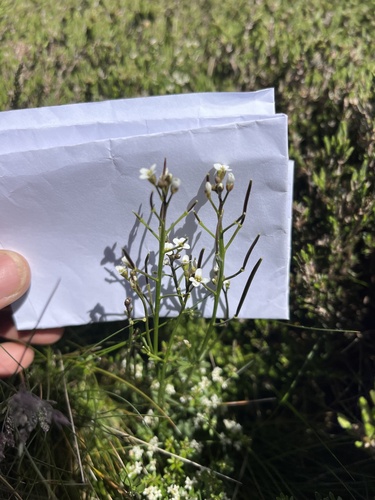
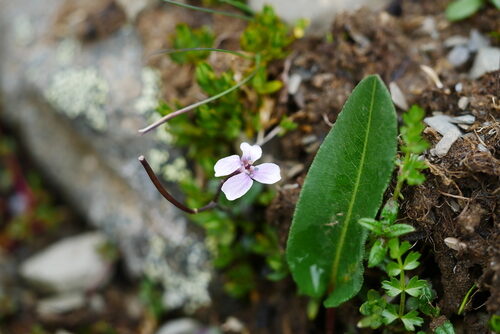
Brassica napus var. pabularia
(DC.) Rchb.
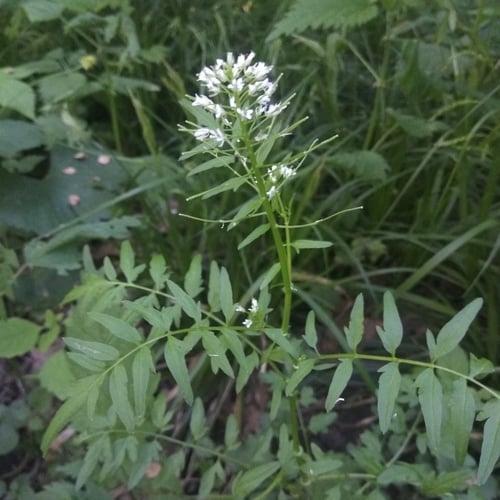
Curled kitchen kale
iNaturalist· cc-by
(c) Pavel Kacl, some rights reserved (CC BY), uploaded by Pavel Kacl
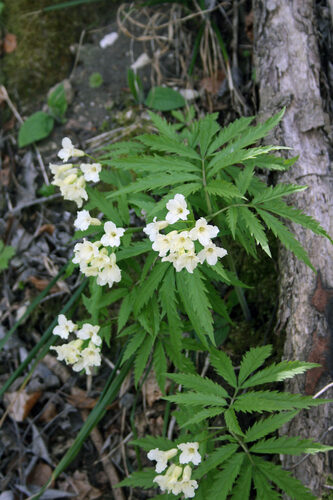
iNaturalist· cc-by
(c) Thomas Ebner, some rights reserved (CC BY)
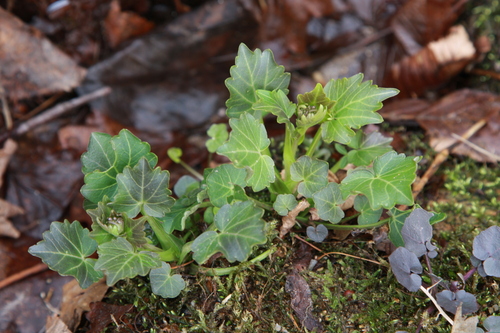
iNaturalist· cc-by
(c) Thomas Ebner, some rights reserved (CC BY)
Description
A cold-hardy cabbage family herb with spinach-like leaves, commercially cultivated in hardiness zones 8-11.
This description is brief — help expand it
Edible Uses
Rapeseed is grown for the production of edible vegetable oils, animal feed, and biodiesel. Rapeseed was the third-leading source of vegetable oil in the world in 2000, after soybean and palm oil. It is the world's second-leading source of protein meal after soybean.
Traditional Uses
The leaves are used in salads and cooked as a vegetable.
This uses section is brief — help expand it
Distribution
It suits hardiness zones 8-11. Plants are cold hardy.
Where It Grows
Africa, Australia, East Africa, Ethiopia, Europe, Germany, Kenya, Mali, Tanzania, West Africa, Zimbabwe,
Other Information
It is a commercially cultivated vegetable.
Notes
There are about 30 Brassica species and many cultivated varieties.
Nutrition
| Part | Moisture | kJ | kcal | Protein | Vit A | Vit C | Iron | Zinc |
|---|---|---|---|---|---|---|---|---|
| Leaves - raw | 87 | 176 | 42 | 2.8 | 310 | 130 | 3 | 0.4 |
| Leaves | — | — | — | — | — | — | — | — |
| Seeds - oil | — | — | — | — | — | — | — | — |
Synonyms
Also Known As
Hanover kale, Hanover-salad, Rape kale, Siberian kale
References (10)
- Cundall, P., (ed.), 2004, Gardening Australia: flora: the gardener's bible. ABC Books. p 255
- Facciola, S., 1998, Cornucopia 2: a Source Book of Edible Plants. Kampong Publications, p 53
- Grubben, G. J. H. and Denton, O. A. (eds), 2004, Plant Resources of Tropical Africa 2. Vegetables. PROTA, Wageningen, Netherlands. p 123
- Kays, S. J., and Dias, J. C. S., 1995, Common Names of Commercially Cultivated Vegetables of the World in 15 languages. Economic Botany, Vol. 49, No. 2, pp. 115-152
- Kiple, K.F. & Ornelas, K.C., (eds), 2000, The Cambridge World History of Food. CUP p 1783
Show all 10 references Hide references
- Mossler, Handb. Gewachsk. ed. 3, 2:1220. 1833
- Plants for a Future database, The Field, Penpol, Lostwithiel, Cornwall, PL22 0NG, UK. http://www.scs.leeds.ac.uk/pfaf/
- USDA, ARS, National Genetic Resources Program. Germplasm Resources Information Network - (GRIN). [Online Database] National Germplasm Resources Laboratory, Beltsville, Maryland. Available: www.ars-grin.gov/cgi-bin/npgs/html/econ.pl (10 April 2000)
- van Wyk, B., 2005, Food Plants of the World. An illustrated guide. Timber press. p 97
- Wiersema, J. H. & Leon, B., 2013, World Economic Plants. A Standard Reference CRC Press. 2nd Ed. p 113