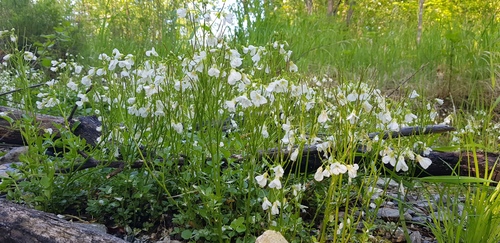
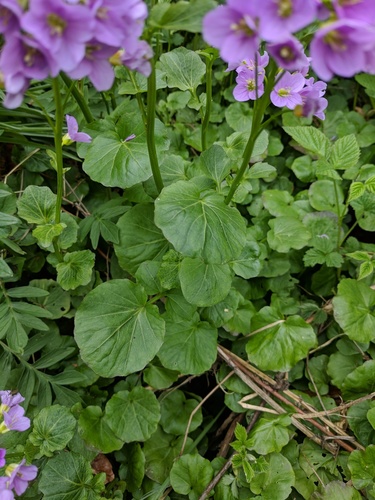
Brassica oleracea
L.
Wild cabbage
wikimedia· cc-by-sa
B. Schroeren, 2003 (via Wikimedia Commons)
wikimedia· cc-by-sa
Rasbak (via Wikimedia Commons)
wikimedia· cc-by
MPF (via Wikimedia Commons)
iNaturalist· cc-by-nc
(c) Miguel A. Casado, some rights reserved (CC BY-NC), uploaded by Miguel A. Casado
iNaturalist· cc-by-nc
(c) Daniel König, some rights reserved (CC BY-NC), uploaded by Daniel König
iNaturalist· cc-by-nc
(c) Morgan Stickrod, some rights reserved (CC BY-NC), uploaded by Morgan Stickrod
Summary
Source: WikipediaBrassica oleracea, also known as wild cabbage in its uncultivated form, is a plant of the family Brassicaceae. The species originated from feral populations of related plants in the Eastern Mediterranean, where it was most likely first cultivated. It has many common cultivars that are used as culinary vegetables, including cabbage, broccoli, cauliflower, romanesco, kale, Brussels sprout, collard, Savoy cabbage, kohlrabi, and gai lan.
Description
A cabbage family herb. It is an annual plant. It grows 1.2 m high and spreads 1 m wide. The stem is erect and woody and branching. The lower leaves are large and rounded and have lobes. The leaves on the stem are narrow and sword shaped. The flowers are creamy yellow and have 4 petals.
Edible Uses
Edible Parts: Leaves Edible Uses: Leaves - raw or cooked. Slightly bitter raw, they can be cooked in one or more changes of water. We find that the slight bitterness actually enhances the flavour, and this is one of our favourite cooked leaves. The plant can usually be harvested all year round, though there will be little to pick in very cold winters. References More on Edible Uses Composition Figures in grams (g) or miligrams (mg) per 100g of food. Leaves (Dry weight) 320 Calories per 100g Water : 0% Protein: 23.5g; Fat: 2.5g; Carbohydrate: 62.5g; Fibre: 13g; Ash: 10.5g; Minerals - Calcium: 430mg; Phosphorus: 450mg; Iron: 10.5mg; Magnesium: 0mg; Sodium: 80mg; Potassium: 3100mg; Zinc: 0mg; Vitamins - A: 15000mg; Thiamine (B1): 0.6mg; Riboflavin (B2): 0.7mg; Niacin: 4.5mg; B6: 0mg; C: 670mg; Reference: Notes: The figures given here are the median of a range that was given in the reference.
Traditional Uses
The leaves are slightly bitter unless cooked in 2 changes of water. The flower buds and green, undeveloped seed pods are stir-fried and eaten.
This uses section is brief — help expand it
Medicinal Uses
Anthelmintic Cardiotonic Diuretic Laxative Stomachic The leaves are cardiotonic and stomachic. They have been used in the treatment of gout and rheumatism. The leaves can be used as a poultice to cleanse infected wounds - the mid-rib is removed and the leaf ironed then placed on the affected area whilst still hot. The poultice should not be left on too long or it an cause blisters. The seeds are anthelmintic, diuretic, laxative and stomachic.
Distribution
A temperate plant. It will grow in most soils. It is frost resistant but damaged by drought. Tasmania Herbarium. In Yunnan.
Where It Grows
Africa, Albania, Asia, Australia, Balkans, Bosnia, Britain, Cameroon, Cape Verde, Caucasus, Central Africa, Central Asia, China, Croatia, Georgia, East Africa, Easter Island, Ecuador, Ethiopia, Europe*, Falklands, Georgia, Haiti, Ireland, Kenya, Mediterranean, Mexico, Middle East, Palestine, South Africa, Southern Africa, Tajikistan, Tasmania, West Indies,
Cultivation
An easily grown plant, it succeeds in full sun in any reasonable soil, though it prefers a well-drained fertile preferably alkaline soil. It does well in heavy clay soils. It is often found wild by the coast and tolerates considerable maritime exposure. The true wild cabbage is a short-lived perennial, though we have seen specimens 5 years old or more. This species has long been cultivated for its edible leaves, stems etc and a wide diversity of forms have been developed, including cabbages, cauliflowers, broccolis and Brussels sprouts. Most of these forms are biennial in cultivation, though there are also some perennial forms. These different forms are detailed below and have each been given their own entry in the database. We have chosen the most up to date classification we can find, as treated in 'World Economic Plants'. B. oleracea alboglabra. Chinese kales are fast-growing plants with tender edible leaves. Although perennials, they are usually grown as annuals and are eaten as a summer and autumn crop whilst still young. B. oleracea botrytis. Cauliflowers are grown mainly for their edible swollen inflorescence. Different cultivars can be used to provide crops all year round. B. oleracea botrytis aparagoides. A short-lived perennial form of cauliflower producing a small cauliflower head in the spring followed by a number of broccoli-like flowering shoots. B. oleracea capitata. These are the cultivated cabbages, grown for their edible leaves that usually form a compact head. Reasonably winter hardy, different cultivars can be used to provide edible plants all year round. B. oleracea costata. Couve tronchuda is a tall-growing form of cabbage. It is less hardy than most other forms of this genus. B. oleracea gemmifera. Brussels sprouts form large edible axillary buds 5cm or more long. They are mainly used as late autumn to spring crops. B. oleracea gongylodes. Kohl rabi produces an edible swollen stem 8cm or more in diameter. It is reasonably cold hardy and provides crops from mid summer to the winter. B. oleracea italica. The calabreses and sprouting broccolis, grown mainly for their edible flowering shoots. Calabrese is the less hardy and is used mainly as an autumn and early winter crop. The sprouting broccolis are very winter hardy and are grown outdoors through the winter to provide a spring to early summer crop. B. oleracea medullosa. Marrowstem kales have edible leaves and stems. B. oleracea palmifolia. The Jersey kale produces a very tall stem which has been used as a walking stick. B. oleracea ramosa. The thousand-headed and perennial kales are very cold hardy. Their flavour is stronger than most of the other cultivated forms and they are mainly used as a winter crop. This form is very close to the wild species and has the most potential for developing perennial cultivars. B. oleracea subauda. The savoy cabbages form large heads like the cultivated cabbages (B. oleracea capitata). They have a stronger flavour, crinkly leaves and are generally more cold-hardy so can provide a winter crop in areas with quite severe winters. B. oleracea sabellica. The curly kales have attractively curled leaves. These are quite cold-tolerant plants and are mainly used to provide edible leaves in winter and spring. B. oleracea viridis. Collards are a cold-hardy non-heading form of cabbage, used mainly to provide green leaves in the spring.
Propagation
Seed - sow April in situ. Seedlings transplant very well and so, if you sow the seed too thickly, it is a simple matter to move some of the plants to give them more space. Cuttings root very easily at almost any time in the growing season. Use shoots about 8cm long of the current year's growth and place them in individual pots in the cuttings frame.
Other Uses
A dynamic accumulator gathering minerals or nutrients from the soil and storing them in a more bioavailable form - used as fertilizer or to improve mulch. Special Uses Carbon Farming Dynamic accumulator Food Forest
Notes
There are about 30 Brassica species and many cultivated varieties.
Synonyms
Also Known As
Ntsu
References (38)
- Benvenuti, S. & Mazzoncini, M., 2021, The Biodiversity of Edible Flowers: Discovering New Tastes and New Health Benefits. Frontiers in Plant Science Article 569499.
- Bodkin, F., 1991, Encyclopedia Botanica. Cornstalk publishing, p 169
- Bremness, L., 1994, Herbs. Collins Eyewitness Handbooks. Harper Collins. p 235
- Bussman, R. W., et al, 2016, A comparative ethnobotany of Khevsureti, Samtskhe-Javakheti, Tusheti, Svaneti, and Racha-Lechkhumi, Republic of Georgia (Sakartvelo), Caucasus. Journal of Ethnobiology and Ethnomedicine (2016) 12:4
- Bussman, R. W., et al, 2021, Unity in diversity—food plants and fungi of Sakartvelo (Republic of Georgia), Caucasus. Journal of Ethnobiology and Ethnomedicine (2021) 17:72 p 7
Show all 38 references Hide references
- Cundall, P., (ed.), 2004, Gardening Australia: flora: the gardener's bible. ABC Books. p 255
- Curtis, W.M., 1956, The Students Flora of Tasmania Vol 1 p 40
- Facciola, S., 1998, Cornucopia 2: a Source Book of Edible Plants. Kampong Publications, p 53
- Flora of China @ efloras.org Volume 8
- Flora of Australia, Volume 8, Lecythidales to Batales, Australian Government Publishing Service, Canberra (1982) p 237
- Heywood, V. H. & Zohary, D.,1995, A Catalogue of the Wild Relatives of Cultivated Plants Native to Europe. Flora Mediterranea 5 - 1995, p 388
- Hinnawi, N. S. A., 2010, An ethnobotanical study of wild edible plants in the Northern West Bank "Palestine". An-Najah National University. p 96
- Hussey, B.M.J., Keighery, G.J., Cousens, R.D., Dodd, J., Lloyd, S.G., 1997, Western Weeds. A guide to the weeds of Western Australia. Plant Protection Society of Western Australia. p 113
- Irving, M., 2009, The Forager Handbook, A Guide to the Edible Plants of Britain. Ebury Press p 82
- Liu, Yi-tao, & Long, Chun-Lin, 2002, Studies on Edible Flowers Consumed by Ethnic Groups in Yunnan. Acta Botanica Yunnanica. 24(1):41-56
- Low, T., 1992, Bush Tucker. Australia’s Wild Food Harvest. Angus & Robertson. p 146
- Luczaj et al, 2013, Wild vegetable mixes sold in the markets of Dalmatia (southern Croatia). Journal of Ethnobiology and Ethnomedicine. 8:2
- Mabey, R., 1973, Food for Free. A Guide to the edible wild plants of Britain, Collins. p 103
- Marshall, F., Agriculture and Use of Wild and Weedy Greens by the Piik ap Oom Okiek of Kenya. Economic Botany, Vo. 55, No. 1, pp. 32-47
- Mercy, N. A., et al, 2016, Survey of Wild Vegetables in the Lebialem Highlands of South Western Cameroon. Journal of Plant Sciences 4(6): 172-184
- Michael, P., 2007, Edible Wild Plants and Herbs. Grub Street. London. p 246
- Molla, A., Ethiopian Plant Names. http://www.ethiopic.com/aplants.htm
- Paczkowska, G. & Chapman, A.R., 2000, The Western Australian Flora. A Descriptive Catalogue. Western Australian Herbarium. p 185
- Pascual-Mendoza, S. et al, 2021, Traditional knowledge of edible plants in an indigenous community in the Sierra Norte of Oaxaca, Mexico. Plant Biosystems - An International Journal Dealing with all Aspects of Plant Biology
- Pham-Hoang Ho, 1999, An Illustrated Flora of Vietnam. Nha Xuat Ban Tre. p 602
- Plants for a Future database, The Field, Penpol, Lostwithiel, Cornwall, PL22 0NG, UK. http://www.scs.leeds.ac.uk/pfaf/
- Purseglove, J.W., 1968, Tropical Crops Dicotyledons, Longmans. p 94
- Redzic, S. J., 2006, Wild Edible Plants and their Traditional Use in the Human Nutrition in Bosnia-Herzegovina. Ecology of Food and Nutrition, 45:189-232
- Ruiters-Welcome, A. K., 2019, Food plants of southern Africa. Ph.D. thesis. Univ. of Johannesburg p 39
- Sp. pl. 2:667. 1753
- Tasmanian Herbarium Vascular Plants list p 16
- Terra, G.J.A., 1973, Tropical Vegetables. Communication 54e Royal Tropical Institute, Amsterdam, p 31
- Thompson,K.F., 1979, Cabbages, kales etc, in Simmonds N.W.,(ed), Crop Plant Evolution. Longmans. London. p 49
- Torre, de la, L., et al, 2008, Enciclopedia de las Plantas Útiles del Ecuador. Herbario QCA. Pontificia Universidad Católica del Ecuador. p 256
- Upson, R., & Lewis R., 2014, Updated Vascular Plant Checklist and Atlas for the Falkland Islands. Falklands Conservation and Kew.
- Wiersema, J. H. & Leon, B., 2013, World Economic Plants. A Standard Reference CRC Press. 2nd Ed. p 113
- World Checklist of Useful Plant Species 2020. Royal Botanic Gardens, Kew
- Zhou Taiyan, Lu Lianli, Yang Guang, Ihsan A. Al-Shehbaz, BRASSICACEAE (CRUCIFERAE), Flora of China.