Biancaea decapetala
(Roth) O. Deg.
Mysore thorn
iNaturalist· cc-by-nc
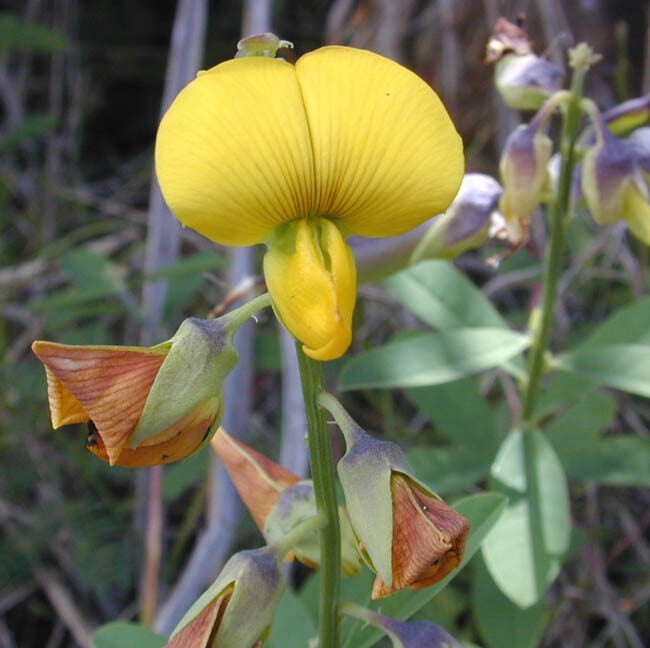
(c) Philippe RABAUTE, some rights reserved (CC BY-NC), uploaded by Philippe RABAUTE
iNaturalist· cc-by-nc
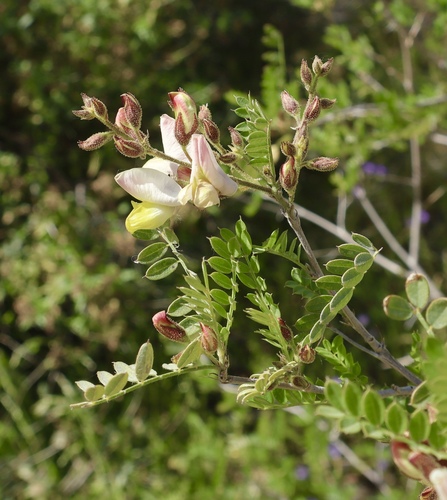
(c) onidiras-iNaturalist, some rights reserved (CC BY-NC)
iNaturalist· cc-by-nc
(c) onidiras-iNaturalist, some rights reserved (CC BY-NC)
Summary
Source: WikipediaBiancaea decapetala, commonly known as shoofly, Mauritius or Mysore thorn or the cat's claw, is a tropical tree species originating in India.
Description
A woody climber. It has many prickles. The bark is dull red. The branches and leaves have hairs and prickles. The leaves are 20-30 cm long with 3-10 pairs of pinnae or leaflets. These have 8-12 pairs of leaflets. The pods are brown and 6-12 cm long by 3 cm wide. There are 6-9 seeds. These are oval and 11 mm long by 6 mm wide.
Edible Uses
The fruit is edible.
Medicinal Uses
The leaves are emmenagogue and laxative. They are bruised and applied externally to burns. The root is purgative. It is used in the treatment of neuralgia. The roots, stems, and pods are used medicinally for relieving pain. The seeds are anthelmintic, antipyretic, analgesic and astringent. They are used to treat dysentery and malaria.
Distribution
It is a tropical plant. In China it grows on mountain slopes and by rivers from sea level to 1,800 m above sea level. In Sichuan and Yunnan.
Where It Grows
Africa, Andes, Asia, Australia, Bangladesh, Bhutan, China, Colombia, Dominican Republic, Himalayas, India, Indochina, Japan, Kenya, Korea, Laos, Malawi, Malaysia, Mauritius, Myanmar, Nepal, Pakistan, Puerto Rico, SE Asia, Southern Africa, Sri Lanka, Thailand, Vietnam, West Indies,
Cultivation
Biancaea decapetala is very widely distributed in South and East Asia, approximately from the equator to 40°N. It succeeds in tropical, subtropical and warm temperate regions at elevations below 1,500 metres. Temperatures in areas where the plant is endemic range from as low as 10 - 20°c in the cool season and as high as 20 to more than 30°c in the hot season. Plants prefer sub-humid to humid climates, but can tolerate a mean annual rainfall ranging from 300 - 3,000mm per yea, with a dry season ranging from 0 - 6 monthsr. Requires a sunny position, succeeding in any moderately fertile well-drained soil including limy soils. Biancaea decapetala is capable of swamping native vegetation, changing the composition of the flora and creating a barrier to the movement of people and animals. It has become invasive in several countries where it was introduced intentionally. It is a declared category 1 weed in South Africa where it is invasive in forest edges and clearings, in managed plantations and along roads and rivers/streams. In Australia, it is classed as a noxious weed (category W2) in New South Wales, where legislation states that it must be completely controlled and destroyed, and is prohibited in Western Australia until a weed risk assessment has been completed. Plants in this genus are notably resistant to honey fungus. Although many species within the family Fabaceae have a symbiotic relationship with soil bacteria, this species is said to be devoid of such a relationship and therefore does not fix atmospheric nitrogen.
Propagation
Seed - pre-soak for 12 - 24 hours in warm water before sowing. Sow in a fairly sunny position in a nursery seedbed. When large enough to handle, prick the seedlings out into individual pots and grow them on until large enough to plant out. Softwood cuttings in sand in a frame. Layering. Branches often self-layer, forming roots where they touch the ground.
Other Uses
The bark is a rich source of tannin. The seeds are rich in oil. They are used as a lubricant and for soap. Seeds and roots are used as an insecticide. Wood - moderately hard. Plants have a dense, thorny growth habit and are excellent when used as a livestock excluding barrier. They are often grown as field boundaries in Nepal. Responding well to trimming, they make an excellent hedge plant. The plant has often been used in soil stabilization projects but, with its ability to escape from cultivation, it is probably best to only use it for this purpose within the plant's native range.
Notes
Also as Caesalpinaceae.
Synonyms
Also Known As
Kanja, Kapitagwilere, Karanj, Karauji, Maimak-ka-leng, Mlunguzi, Suk-yan-bo, Vuot-hum, Yan wang ci
References (5)
- Bunderson, W. T. et al, 2002, Common Agroforestry Species in Malawi. Malawi Agroforestry Extension Project, Pubication No. 46, Lilongwe. p 23 (As Caesalpinia decapetala)
- Dangol, D. R. et al, 2017, Wild Edible Plants in Nepal. Proceedings of 2nd National Workshop on CUAOGR, 2017. (As Caesalpinia decapetala)
- Galego, M. G., et al, 2015, Caesalpinia decapetala Extracts as Inhibitors of Lipid Oxidation in Beef Patties. Molecules 2015, 20, 13913-13926 (As Caesalpinia decapetala)
- Uprety, Y., et al, 2012, Diversity of use and local knowledge of wild edible plant resources in Nepal. Journal of Ethnobotany and Ethnomedicine 8:16 (As Caesalpinia decapetala)
- van Wyk, Ben-Erik, 2019, The diversity and multiple uses of southern African legumes. Australian Systematic Botany, 2019, 32, 519–546