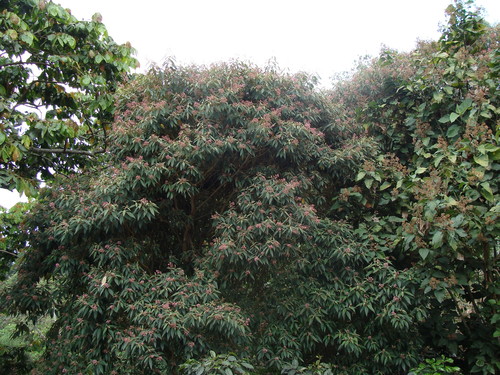
Heterotis rotundifolia
(J. E. Smith) Jacq.
Trailing glory-flower, Spanish shawl, Pink lady
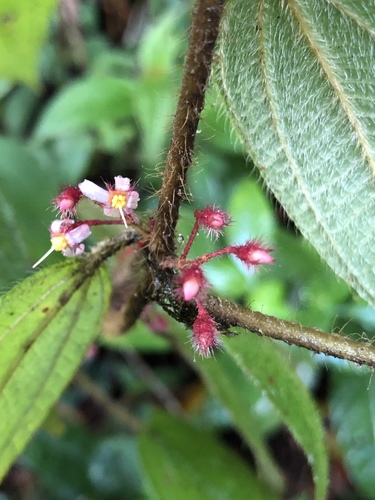
iNaturalist· cc-by
(c) Sandra Keller, some rights reserved (CC BY), uploaded by Sandra Keller
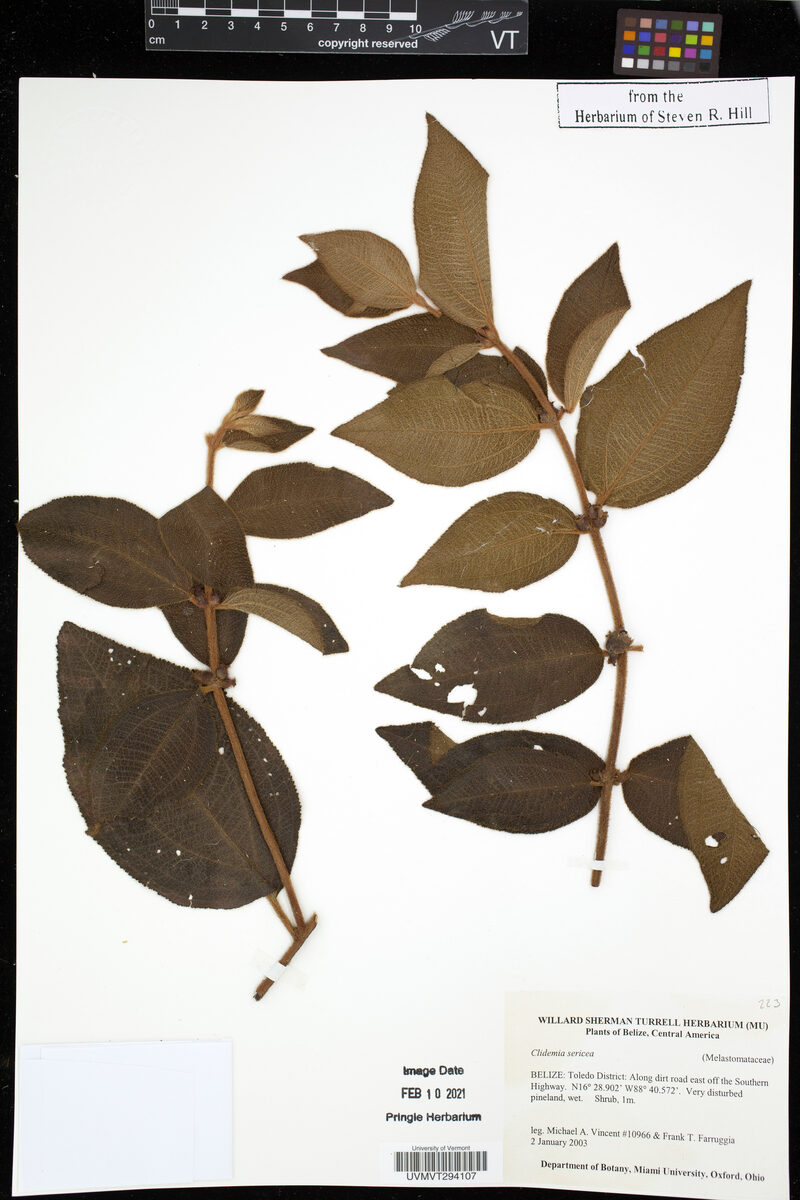
iNaturalist· cc-by-nc-sa
(c) 106611639464075912591, some rights reserved (CC BY-NC-SA), uploaded by 106611639464075912591
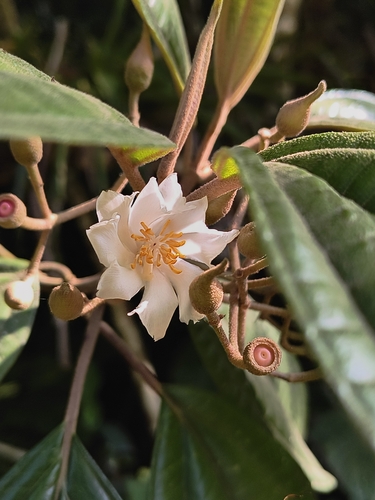
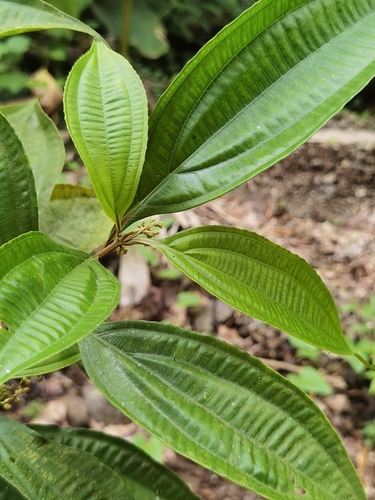
iNaturalist· cc-by-nc
(c) Liu JimFood, some rights reserved (CC BY-NC), uploaded by Liu JimFood
Summary
Source: WikipediaHeterotis rotundifolia, commonly called pink lady, Spanish shawl, or rockrose, is a shrub in the family Melastomataceae that occurs in tropical Africa.
Description
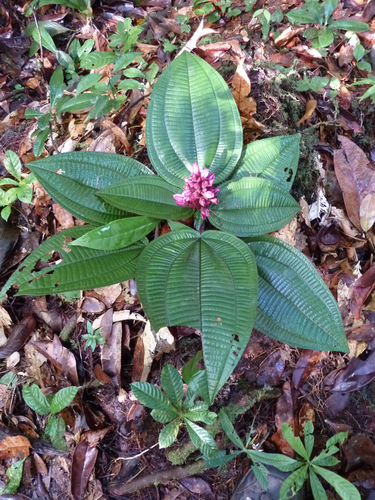
It is an evergreen creeper. It forms roots at the nodes. The stems are pink. The leaves are oval and 1.2 cm long. They have 3 primary veins. The leaf stalk is red. The flowers occur singly and are at the ends of branches. The flowers have 5 violet to pink petals. The flowers are 2.5-4 cm wide. The flowers occur singly. The fruit is a berry about 10 mm across. There are many seeds about 1 mm long.
Edible Uses
The leaves serve as a potherb and spice for sauces.
Traditional Uses
The leaves are used as a potherb and as a spice for sauces.
This uses section is brief — help expand it
Medicinal Uses
The leaves of Heterotis rotundifolia are used as a spice for sauces and as a potherb. In Liberia, the plant is used as a diuretic.
Distribution
It is a tropical plant. It needs regular moisture or wet conditions. It needs fertile, humus-rich, well-drained soil. It needs an acid pH. It is best in full sunlight. It grows in wet locations throughout the forest zone in West Africa. In Zimbabwe it grows up to 1,200 m above sea level. It suits hardiness zones 10-12.
Where It Grows
Africa, Angola, Australia, Benin, Cameroon, Central Africa, Congo DR, Congo R, East Africa, Equatorial-Guinea, Guinea, Guinée, Guinea-Bissau, Hawaii, Indonesia, Kenya, Liberia, Mozambique, Nigeria, Pacific, Sao Tome and Principe, SE Asia, Senegal, Sierra Leone, Southern Africa, Uganda, USA, West Africa, Zambia, Zimbabwe,
Cultivation
It easily forms roots from cuttings.
Synonyms
Also Known As
Ebafo, Felebune, Febungi, Mandafnade, Rock rose
References (14)
- Burkill, H. M., 1985, The useful plants of west tropical Africa, Vol. 4. Kew.
- Cooper, W. and Cooper, W., 2004, Fruits of the Australian Tropical Rainforest. Nokomis Editions, Victoria, Australia. p 281
- Fowler, D. G., 2007, Zambian Plants: Their Vernacular Names and Uses. Kew. p 82
- Glover, et al, 1969,
- Grivetti, L. E., 1980, Agricultural development: present and potential role of edible wild plants. Part 2: Sub-Saharan Africa, Report to the Department of State Agency for International Development. p 33 (As Dissotis rotundifolia)
Show all 14 references Hide references
- Grubben, G. J. H. and Denton, O. A. (eds), 2004, Plant Resources of Tropical Africa 2. Vegetables. PROTA, Wageningen, Netherlands. p 562
- Jardin, C., 1970, List of Foods Used In Africa, FAO Nutrition Information Document Series No 2.p 75
- Llamas, K.A., 2003, Tropical Flowering Plants. Timber Press. p 272
- Moutsambote, J., 1996, Vegetation forestiere et plantes alimentaires de la region de la Sangha. Chp. 11 of Bien Manger et Bien Vivre. ORSTOM p 119 (As Dissotis rotundifolia)
- Peters, C. R., O'Brien, E. M., and Drummond, R.B., 1992, Edible Wild plants of Sub-saharan Africa. Kew. p 146
- Seidemann J., 2005, World Spice Plants. Economic Usage, Botany, Taxonomy. Springer. p 137 (As Dissotis plumosa)
- Staples, G.W. and Herbst, D.R., 2005, A tropical Garden Flora. Bishop Museum Press, Honolulu, Hawaii. p 393 (Drawing)
- Trans. Linn. Soc. London 28:58. 1872
- World Checklist of Useful Plant Species 2020. Royal Botanic Gardens, Kew