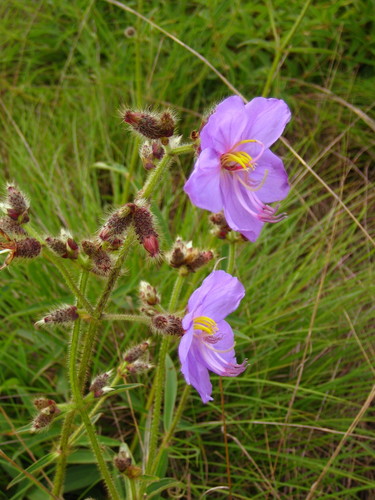
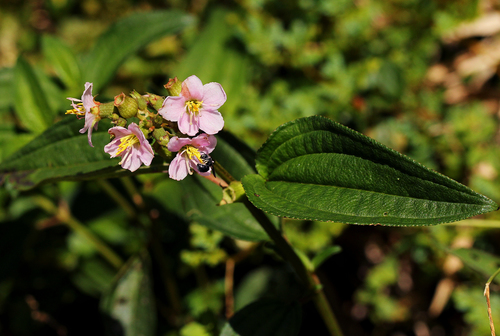
Osbeckia nutans
Wall. ex C. B. Clarke
Dai, Jikenemi
gbif· cc0
Royal Botanic Garden Edinburgh
gbif· cc0
Royal Botanic Garden Edinburgh
gbif· cc-by-nc-sa
MBG
Description
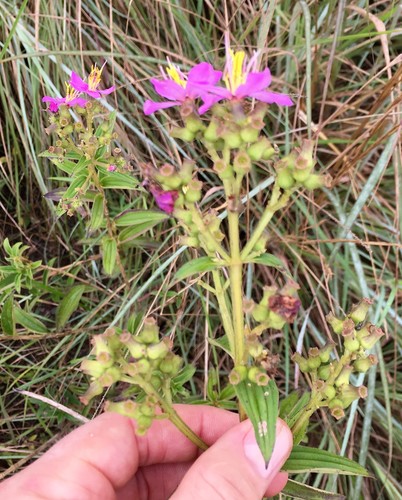
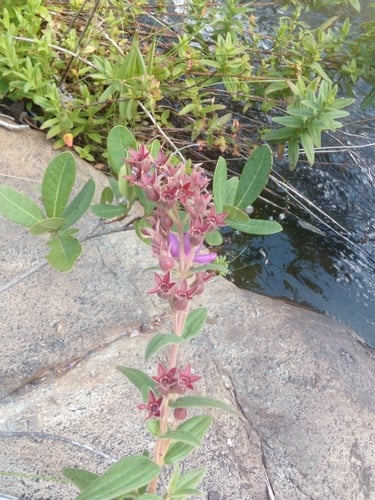
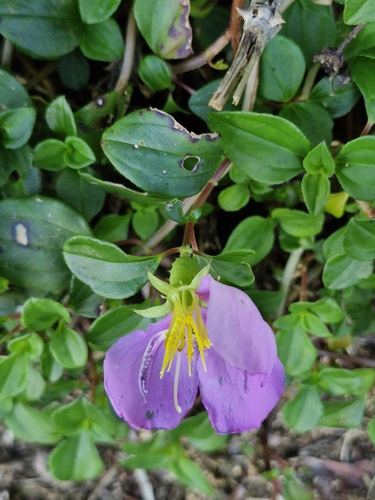
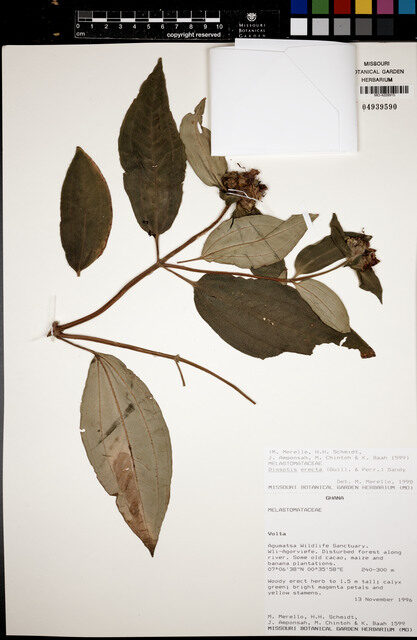
A shrub. It grows 1.5 m tall The branches have dense hairs. The leaves are oval and 4-6 cm long by 1 cm wide. The flowers are in clusters of up to 4 at the ends of branches. The fruit is a nodding capsule 7-9 mm long by 5-7 mm wide.
Edible Uses
The ripe fruits are eaten, and are particularly popular among children.
Traditional Uses
The ripe fruit are eaten.
This uses section is brief — help expand it
Distribution
It is a subtropical plant. It grows in grassland between 2,000-3,000 m above sea level.
Where It Grows
Asia, Bhutan, Himalayas, India, Nepal, Northeastern India, Tibet,
Other Information
The fruit are especially eaten by children.
Also Known As
Dai, Rasa
References (6)
- Dobriyal, M. J. R. & Dobriyal, R., 2014, Non Wood Forest Produce an Option for Ethnic Food and Nutritional Security in India. Int. J. of Usuf. Mngt. 15(1):17-37
- J. D. Hooker, Fl. Brit. India 2:521. 1879
- Murtem, G. & Chaudhrey, P., 2016, An ethnobotanical note on wild edible plants of Upper Eastern Himalaya, India. Brazilian Journal of Biological Sciences, 2016, v. 3, no. 5, p. 63-81
- Srivastava, R. C., 2009, Traditional knowledge of Adi tribe of Arunachal Pradesh on plants. Indian Journal of Traditional Knowledge. 8(2): 146-153
- Srivastava, R. C., 2010, Traditional knowledge of Nyishi (Daffla) tribe of Arunachal Pradesh. Indian Journal of Traditional Knowledge. 9(1):26-37
Show all 6 references Hide references
- Thothathri, K., & Pal, G.D., 1987, Further Contribution to the Ethnobotany of Subansiri District, Aranchal Pradesh. J. Econ. Tax. Bot. Vol. 10 No. 1 pp 149-157