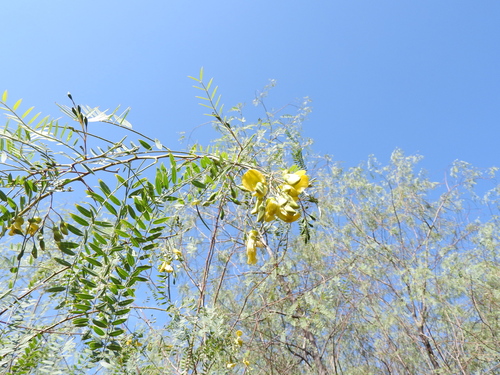
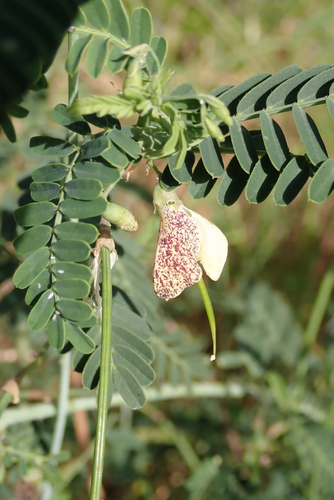
Dipogon lignosus
(L.) Verdc.
Australian-pea, Dolichos-pea
iNaturalist· cc-by-nc
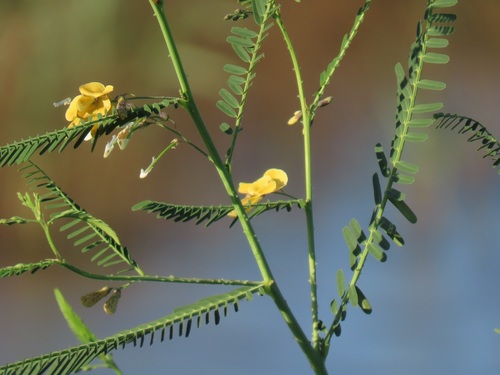
(c) Stephen Thorpe, some rights reserved (CC BY-NC), uploaded by Stephen Thorpe
iNaturalist· cc-by-nc-sa
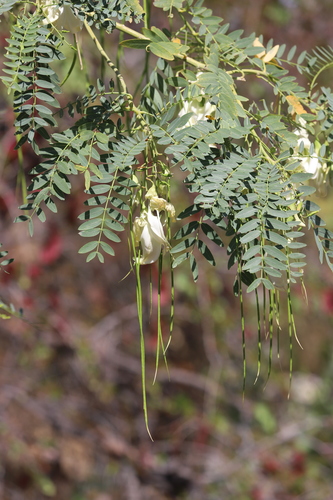
(c) Louisa Billeter, some rights reserved (CC BY-NC-SA)
iNaturalist· cc-by-sa
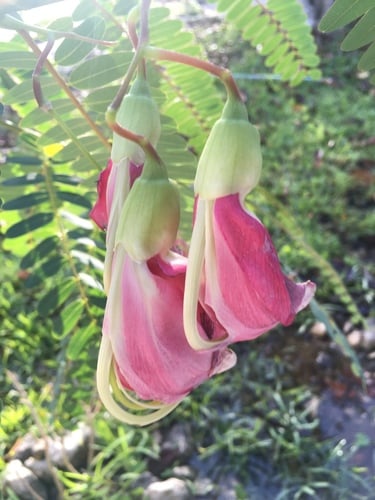
(c) Nicola van Berkel, some rights reserved (CC BY-SA), uploaded by Nicola van Berkel
Description
A twining shrub or climber. It keeps growing from year to year. It grows 4 m long. The stems are slender. The leaves have 3 leaflets. They are 4 cm long. The flowers can be white, pink or purple. They are in groups in the axils of leaves. The fruit are straight pods. They are 4 cm long.
Edible Uses
The young seeds are eaten fried, cooked and salted, or dried and cooked. The green pods are eaten cooked.
Traditional Uses
The young seeds are eaten fried or cooked and salted. The green pods are eaten cooked. The dried seeds are also cooked and eaten.
This uses section is brief — help expand it
Distribution
It grows in warm temperate regions. It needs a light to medium, well-drained soil. It needs a protected, sunny position. It is resistant to drought and frost. Tasmania Herbarium.
Where It Grows
Africa, Asia, Australia, Brazil, New Zealand, South Africa, Southern Africa, South America, Tasmania,
Cultivation
Plants can be grown by seeds or cuttings.
Nutrition
| Part | Moisture | kJ | kcal | Protein | Vit A | Vit C | Iron | Zinc |
|---|---|---|---|---|---|---|---|---|
| Seeds | 9.2 | 1421 | 340 | 24.6 | — | — | 3.9 | — |
Synonyms
Also Known As
Ballar, Okie bean
References (18)
- Bodkin, F., 1991, Encyclopedia Botanica. Cornstalk publishing, p 348
- Dashorst, G.R.M., and Jessop, J.P., 1998, Plants of the Adelaide Plains & Hills. Botanic Gardens of Adelaide and State Herbarium. p 82
- Facciola, S., 1998, Cornucopia 2: a Source Book of Edible Plants. Kampong Publications, p 104 (As Dolichos lignosus)
- Food Composition Tables for use in East Asia FAO http://www.fao.org/infoods/directory No. 180
- GRIN
Show all 18 references Hide references
- Hussey, B.M.J., Keighery, G.J., Cousens, R.D., Dodd, J., Lloyd, S.G., 1997, Western Weeds. A guide to the weeds of Western Australia. Plant Protection Society of Western Australia. p 150
- Lazarides, M. & Hince, B., 1993, Handbook of Economic Plants of Australia, CSIRO. p 83
- Paczkowska, G . & Chapman, A.R., 2000, The Western Australian Flora. A Descriptive Calatogue. Western Australian Herbarium. p 429
- Ruiters-Welcome, A. K., 2019, Food plants of southern Africa. Ph.D. thesis. Univ. of Johannesburg p 57
- Tanaka,
- Tasmanian Herbarium Vascular Plants list p 29
- Taxon 17:537. 1968
- USDA, ARS, National Genetic Resources Program. Germplasm Resources Information Network - (GRIN). [Online Database] National Germplasm Resources Laboratory, Beltsville, Maryland. Available: www.ars-grin.gov/cgi-bin/npgs/html/econ.pl (10 April 2000)
- van Wyk, Ben-Erik, 2019, The diversity and multiple uses of southern African legumes. Australian Systematic Botany, 2019, 32, 519–546
- Welcome, A. K. & Van Wyk, B.-E., 2019, An inventory and analysis of the food plants of southern Africa. South African Journal of Botany 122 (2019) 136–179
- Wiersema, J. H. & Leon, B., 2013, World Economic Plants. A Standard Reference CRC Press. 2nd Ed. p 251
- World Checklist of Useful Plant Species 2020. Royal Botanic Gardens, Kew
- www.desert-tropicals.com