Aframomum melegueta
K. Schum.
Grains of Paradise, Melegueta pepper
iNaturalist· cc-by-nc
(c) Mathias D'haen, some rights reserved (CC BY-NC), uploaded by Mathias D'haen
iNaturalist· cc-by-nc
(c) Mathias D'haen, some rights reserved (CC BY-NC), uploaded by Mathias D'haen
Description
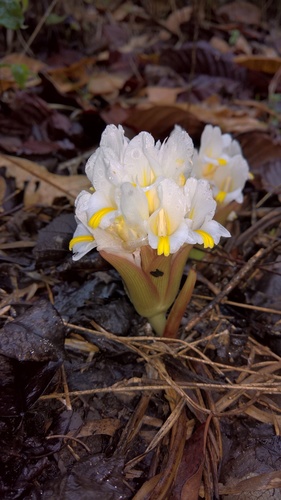
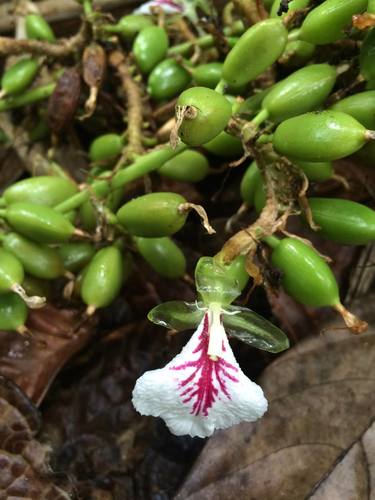
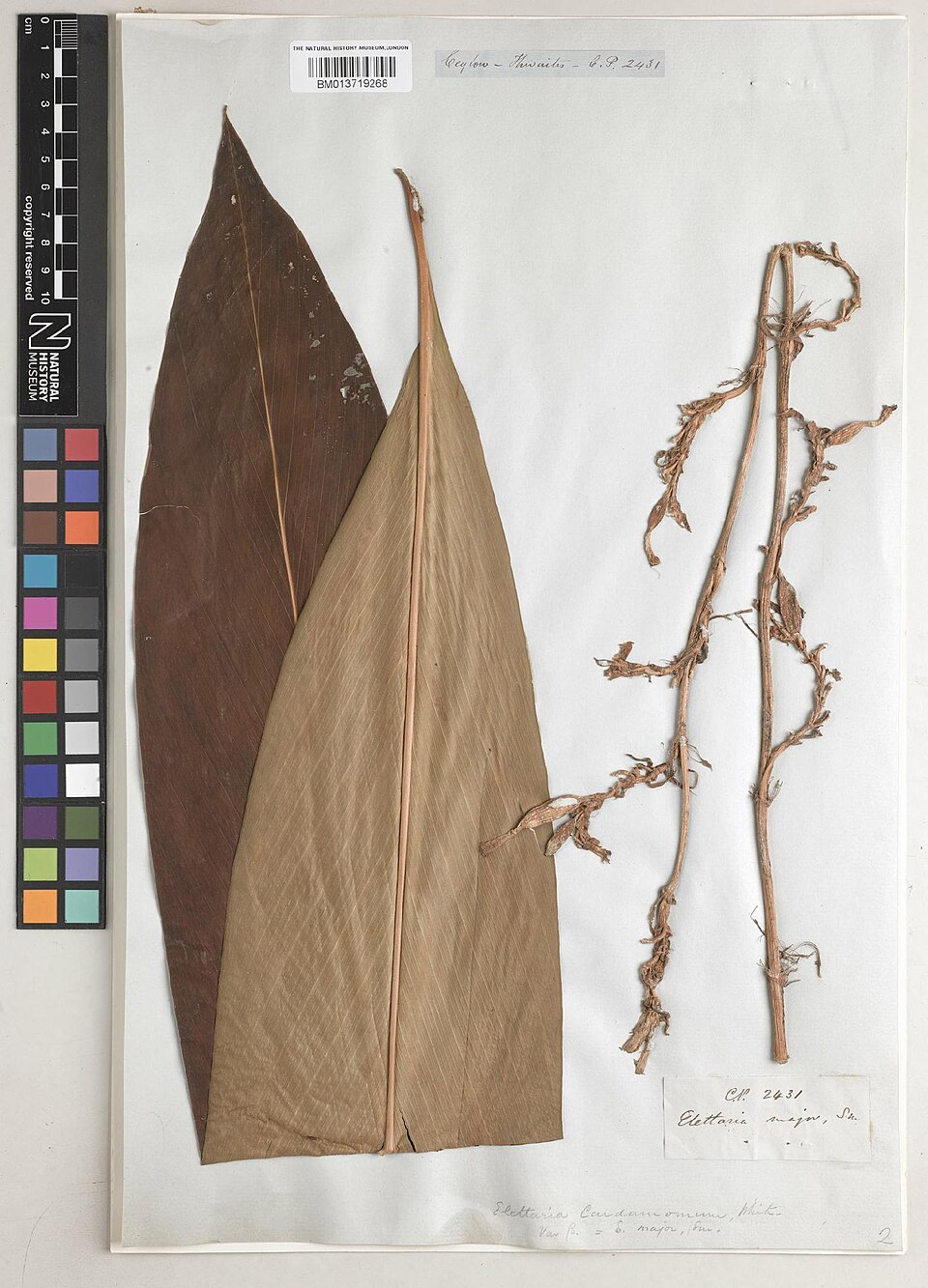
A ginger family herb. It keeps growing from year to year. It has underground stems or rhizomes. These are 2-3 mm thick and short. The leaves are broadly sword shaped. They are 35 cm long and 15 cm wide. The leaves reach 0.8-2 m high. The flowers are on 5 cm stems that emerge just above ground level. They are purple and trumpet shaped. The fruit are pear shaped and 10 cm long. They are red to orange and contain many seeds. The seeds are light grey and dull. They are almost round with irregular flat spots.
Edible Uses
Melegueta pepper is commonly used in the cuisines of West and North Africa, from where it has been traditionally transported by camel caravan routes through the Sahara desert and distributed to Sicily and the rest of Italy. Mentioned by Pliny as "African pepper" but subsequently forgotten in Europe, they were renamed "grains of paradise" and became a popular substitute for black pepper in Europe in the 14th and 15th centuries. The Ménagier de Paris recommends it for improving wine that "smells stale". Through the Middle Ages and into the early modern period, the theory of the four humors governed theories about nourishment on the part of doctors, herbalists, and druggists. In this context, John Russell characterized grains of paradise in The Boke of Nurture as "hot and moist". In 1469, King Afonso V of Portugal granted the monopoly of trade in the Gulf of Guinea to Lisbon merchant Fernão Gomes. This included the exclusivity in trade of Aframomum melegueta, then called malagueta pepper. The grant came at the cost of 100,000 real annually and agreement to explore 160 kilometres (100 mi) of the coast of Africa per year for five years; this gives some indication of the European value of the spice. After Christopher Columbus reached the New World in 1492 and brought the first samples of the chili pepper (Capsicum frutescens) back with him to Europe, the name malagueta, and Spanish and Portuguese spelling, was then applied to the new chili "pepper" because its piquancy was reminiscent of grains of paradise. Malagueta, thanks to its low price, remained popular in Europe even after the Portuguese opened the direct maritime route to the Spice Islands around 1500. This namesake, the malagueta chili, remains popular in Brazil, the Caribbean, Portugal, and Mozambique. The importance of the A. melegueta spice is shown by the area's designation from the St. John River (near present-day Buchanan) to Harper in Liberia as the Grain Coast or Pepper Coast in honor of the availability of grains of paradise. Later, the craze for the spice waned, and its uses were reduced to a flavoring for sausages and beer. In the 18th century, its importation to Great Britain collapsed after an act of Parliament during the reign of George III forbade its use in alcoholic beverages. In 1855, England imported about 6,800 to 8,600 kilograms (15,000 to 19,000 lb) per year legally (duty paid). By 1880, the 9th edition of the Encyclopædia Britannica reported: "Grains of paradise are to some extent used in veterinary practice, but for the most part illegally to give a fictitious strength to malt liquors, gin, and cordials". The presence of the seeds in the diets of lowland gorillas in the wild seems to have some sort of beneficial effect on their cardiovascular health. They also eat the leaves and use them for bedding material. The absence of seeds in the diets of captive lowland gorillas may contribute to their occasionally poor cardiovascular health in zoos. Today, the condiment is sometimes used in gourmet cuisine as a replacement for pepper, and to give a unique flavor in some craft beers, gins, and Norwegian akvavit. Alton Brown is a fan of the condiment, and he uses it in okra stew and his apple-pie recipe on an episode of the TV cooking show Good Eats.
Traditional Uses
The seeds have a flavour like mild cardamom. They are hot and peppery. They are used to flavour wines, beer, cordials, liqueurs, meats and breads. They are used in soups and stews. The fruit pulp around the seeds are eaten or chewed as a stimulant. The leaves are used for tea.
Medicinal Uses
In West African folk medicine, grains of paradise are valued for their warming and digestive properties, and among the Efik people in Nigeria have been used for divination and ordeals determining guilt. A. melegueta has been introduced to the Caribbean and Latin America, where it is used in Voodoo religious rites. It is also found widely among Protestant Christian practitioners of African-American hoodoo and rootwork, where the seeds are employed in luck-bringing and may be held in the mouth or chewed to prove sincerity.
Distribution
It is a tropical plant. It can grow in arid places. It grows in forest and savannah. It is often in swampy locations. It grows in shade.
Where It Grows
Africa, Angola, Benin, Burkina Faso, Cameroon, Central Africa, Central America, Congo R, Congo DR, Côte d'Ivoire, East Africa, Equatorial Guinea, Ethiopia, Gabon, Gambia, Ghana, Guinea, Guinée, Guyana, Haiti, India, Ivory Coast, Liberia, Mali, Nigeria, North Africa, Sao Tome and Principe, Sierra Leone, Togo, Uganda, West Africa, West Indies,
Cultivation
Plants are grown by division. It can be grown from seeds.
Propagation
Seed - Division of rhizomes as new growth begins.
Other Uses
The seed oil is used as a flavouring agent in perfumery. This report almost certainly refers to the essential oil in the seed.
Production
Plants begin fruiting after 3 years and produce for another 4 years. The seeds are removed from their pod for drying.
Other Information
It is a cultivated food plant.
Notes
There are about 50 Aframomum species.
Synonyms
Also Known As
Alegata pepper, Alligator pepper, Guinea pepper, Guinea grains, Ketchou, Maniguette, Ndon, Ndondo, Ndungu zi nzo, Ntondo, Ntuenubokk, Ose oji, Poivre de Guinee, Taku
References (44)
- Altschul, S.V.R., 1973, Drugs and Foods from Little-known Plants. Notes in Harvard University Herbaria. Harvard Univ. Press. Massachusetts. no. 455 (As Aframomum granum-paradisi)
- Ambasta S.P. (Ed.), 2000, The Useful Plants of India. CSIR India. p 18
- Bircher, A. G. & Bircher, W. H., 2000, Encyclopedia of Fruit Trees and Edible Flowering Plants in Egypt and the Subtropics. AUC Press. p 11
- Brouk, B., 1975, Plants Consumed by Man. Academic Press, London. p 304
- Brown, D., 2002, The Royal Horticultural Society encyclopedia of Herbs and their uses. DK Books. p 105
Show all 44 references Hide references
- Burkill, H. M., 1985, The useful plants of west tropical Africa, Vol. 5. Kew. (Also as Aframomum granum-paradisi)
- Chapman, J. D. & Chapman, H. M., 2001, The Forest Flora of Taraba and Andamawa States, Nigeria. WWF & University of Canterbury. p 213
- Dibong, S. D., et al, 2011, Inventory and Biodiversity of species edible wild fruits sold in the markets of Douala, Cameroon. International Journal of Applied Biology and Pharmaceutical Technology. 2(3). (Also as Aframomum granum-paradisi)
- e-monocot.org/taxon/urn:kew.org:wcs:taxon:218404
- H. G. A. Engler, Pflanzenr. IV. 46(Heft 20):204. 1904 :213. 1904 (Also as Aframomum granum-paradisi)
- Facciola, S., 1998, Cornucopia 2: a Source Book of Edible Plants. Kampong Publications, p 247
- FAO Corporate Document Repository. The Major Significance of 'Minor' Forest Products. Appendix 3
- Global Plants JSTOR (As Aframomum granum-paradisi)
- Grivetti, L. E., 1980, Agricultural development: present and potential role of edible wild plants. Part 2: Sub-Saharan Africa, Report to the Department of State Agency for International Development. p 33
- Hedrick, U.P., 1919, (Ed.), Sturtevant's edible plants of the world. p 50 (As Amomum melegueta); (Also as Amomum granum-paradisi)
- Hemphill, I, 2002, Spice Notes Macmillan. p 204
- Heywood, V.H., Brummitt, R.K., Culham, A., and Seberg, O., 2007, Flowering Plant Families of the World. Royal Botanical Gardens, Kew. p 408
- Hwang, L. C., et al, 2020, Traditional Botanical Uses of Non-Timber Forest Products (NTFP) in Seven Counties in Liberia. ACS Symposium Series; American Chemical Society: Washington, DC, 2020.
- Ingram, V. & Schure, J. 2010, Review of Non Timber Forest Products (NTFPs) in Central Africa, Cameroon. Center for International Forestry Research (CIFR). p
- Kafoutchoni, K. M., et al, 2018, Species richness, cultural importance, and prioritization of wild spices for conservation in the Sudano-Guinean zone of Benin (West Africa). Journal of Ethnobiology and Ethnomedicine. 14:67
- Kiple, K.F. & Ornelas, K.C., (eds), 2000, The Cambridge World History of Food. CUP p 433, 1890
- Koni, J. M. & Bostein, K., 2008, Noms et usages des plantes utiles chez les Nsong, DR Congo. University of Gothenburg. Department of Oriental and African Languages. p 38
- Latham, P., 2004, Useful Plants of Bas-Congo province. Latham & DFID p 17
- Latham, P. & Mbuta, A. K., 2014, Useful Plants of Bas-Congo Province, Democratic Republic of Congo. Volume 1. p 20
- Latham, P. & Mbuta, A. K., 2017, Plants of Kongo Central Province, Democratic Republic of Congo. Volume 1. 3rd ed p 28
- Lautenschläger, T., et al, 2018, First large-scale ethnobotanical survey in the province of Uíge, northern Angola. Journal of Ethnobiology and Ethnomedicine (2018) 14:51
- Liengola, I. B., 2001, A contribution to the study of native edible plants by the Turumbu and Lokele of the Tshopo District, Province Orientale, D. R. Congo. Syst. Geogr. Pl. 71:687-698
- Lykke, A. M., Mertz, O, and Ganaba, S., 2002, Food Consumption in Rural Burkina Faso, Ecology of Food and Nutrition, 41:119-152
- Macmillan, H.F. (Revised Barlow, H.S., et al), 1991, Tropical Planting and Gardening. Sixth edition. Malayan Nature Society. Kuala Lumpur. p 381
- Martin, F.W. & Ruberte, R.M., 1979, Edible Leaves of the Tropics. Antillian College Press, Mayaguez, Puerto Rico. p 225 (As Aframomum granum-paradisi)
- Menninger, E.A., 1977, Edible Nuts of the World. Horticultural Books. Florida p 80
- Mercy, N. A., et al, 2016, Survey of Wild Vegetables in the Lebialem Highlands of South Western Cameroon. Journal of Plant Sciences 4(6): 172-184
- Meregini, O. A., 2005, Some endangered plants producing edible fruits and seeds in Southeastern Nigeria. Fruits, Vol. 60 pp 211-220
- Morton, J.K., 1961, West African Lilies and Orchids. Longmans. p 33
- Mulherin, J., 1994, Spices and natural flavourings. Tiger Books, London. p 16
- Peters, C. R., O'Brien, E. M., and Drummond, R.B., 1992, Edible Wild plants of Sub-saharan Africa. Kew. p 42
- Purseglove, J.W., 1972, Tropical Crops. Monocotyledons. Longmans p 520
- Royal Botanic Gardens, Kew (1999). Survey of Economic Plants for Arid and Semi-Arid Lands (SEPASAL) database. Published on the Internet; http://www.rbgkew.org.uk/ceb/sepasal/internet [Accessed 13th June 2011]
- Seidemann J., 2005, World Spice Plants. Economic Usage, Botany, Taxonomy. Springer. p 10
- Sneyd, L. Q., 2013. Wild Food, Prices, Diets and Development: Sustainability and Food Security in Urban Cameroon. Sustainability 2013, 5, 4728-4759
- Vivien, J., & Faure, J.J., 1996, Fruitiers Sauvages d'Afrique. Especes du Cameroun. CTA p 369
- Vouleng, I. K., et al, 2012, Antibacterial and antibiotic-potentiation activities of the methanol extract of some cameroonian spices against Gram-negative multi-drug resistant phenotypes. BMC Research Notes, 5:299
- Wiersema, J. H. & Leon, B., 2013, World Economic Plants. A Standard Reference CRC Press. 2nd Ed. p 22
- World Checklist of Useful Plant Species 2020. Royal Botanic Gardens, Kew