Afraegle paniculata
(Schum. et Thonn.) Engl.
African afraegle, Nigerian powder-flask-fruit
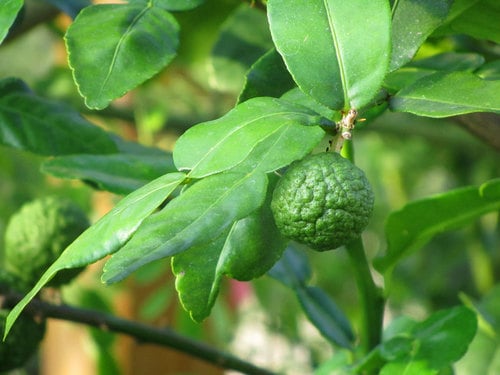
iNaturalist· cc-by-nc-sa
(c) marcoschmidt.frankfurt, some rights reserved (CC BY-NC-SA), uploaded by marcoschmidt.frankfurt
iNaturalist· cc-by-nc-sa
(c) Marco Schmidt, some rights reserved (CC BY-NC-SA), uploaded by Marco Schmidt
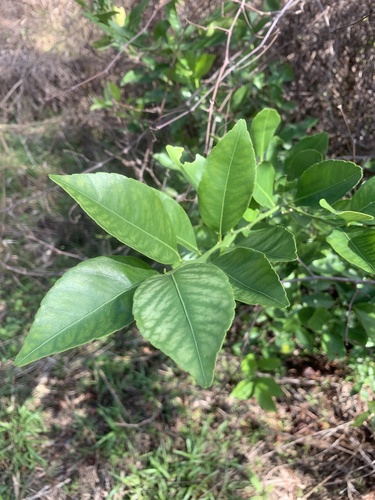
iNaturalist· cc-by-nc-sa
(c) Marco Schmidt, some rights reserved (CC BY-NC-SA), uploaded by Marco Schmidt
Summary
Source: WikipediaAn evergreen tree reaching 12 m tall by 10 m wide at a fast growth rate. Hardy to UK zone 10. Requires light sandy or medium loamy well-drained soil. Prefers mildly acid, neutral, or mildly alkaline pH. Cannot grow in shade and tolerates both dry and moist soil.
Description
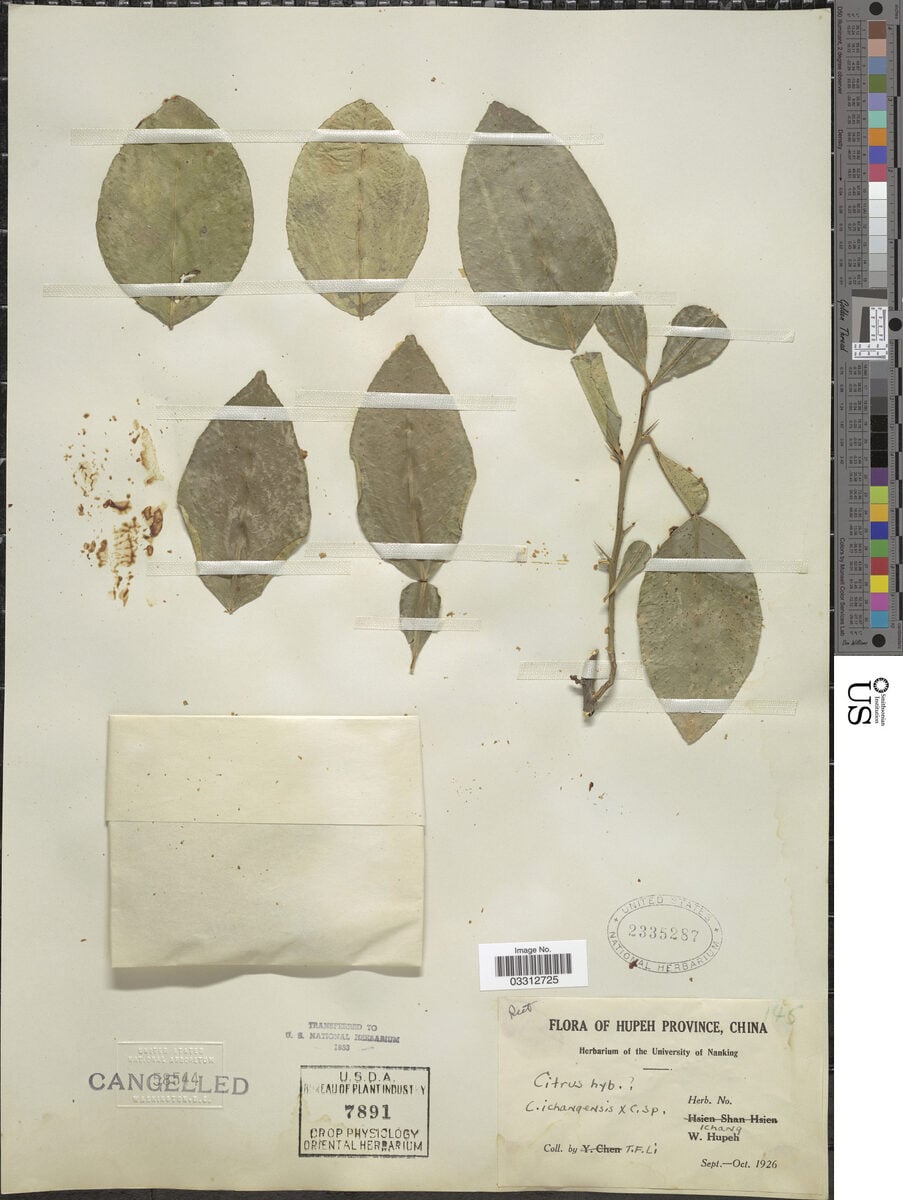
A shrub or small tree. It grows 15 m high. The trunk is up to 2 m long until branches and 25-40 cm across. It has spiny branches. The thorns are about 5 cm long. The leaves have 3 leaflets. The leaflets are broadly sword shaped. The flowers are white. The fruit are 7-8 cm across. They have a hard shell.
Edible Uses
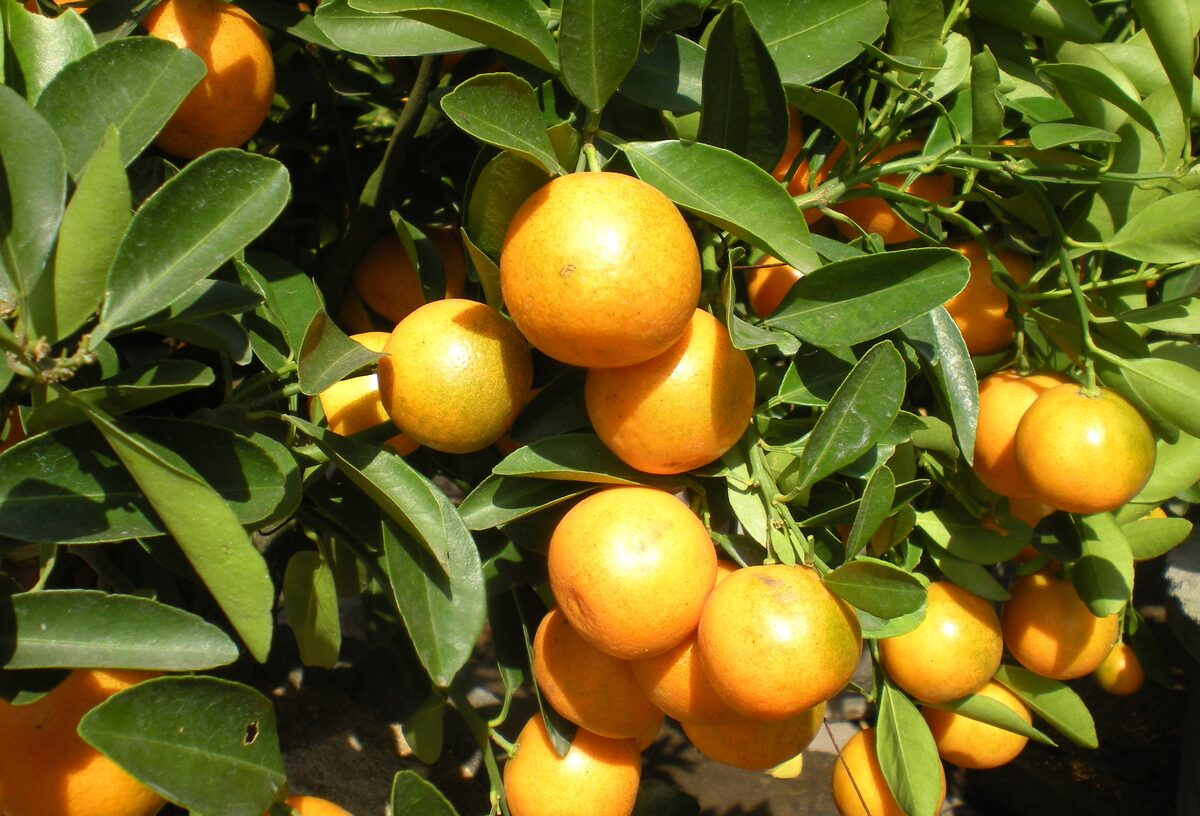
The seeds yield an edible oil. Leaves are edible when cooked, though they are only rarely used for this purpose. The fruit is globose or obovoid, as large as a big orange (6–8cm in diameter when mature), wrinkled on the surface, and lacks odorous glands — however, there is no report confirming that the fruit itself is edible.
Traditional Uses
The seeds contain a fat that is used as food. The leaves are made into soups.
This uses section is brief — help expand it
Medicinal Uses
The plant has a range of medicinal uses.
Distribution
A tropical plant. It grows in lowland thickets near the edge of forests. In grows in savannah woodlands.
Where It Grows
Africa, Benin, Burkina Faso, Côte d'Ivoire, Ghana, Guinea, Guinée, Guinea-Bissau, Ivory Coast, Liberia, Nigeria, Senegal, Togo, Gold Coast, West Africa,
Cultivation
In the quasi-tropical coastal region near Miami, Florida, which has an unusual type of soil consisting largely of porous-limestone rock intermingled with fine sand or very sandy loam, this species, when well fertilized, makes extraordinary growth - a specimen growing near Coconut Grove, when only four or five years old and only 1.6 - 1.8 metres tall, had a lateral spread of 4.5 - 6 metres. As it grew older, it became much taller but still had long branches.
Propagation
Seed.
Other Uses
This species is being tested as a rootstock for bael fruit (Aegle marmelos), which often does not grow well on its own roots. The leaves are sometimes macerated and added to bathing water. The wood is used to make household, domestic, and personal items.
Nutrition
| Part | Moisture | kJ | kcal | Protein | Vit A | Vit C | Iron | Zinc |
|---|---|---|---|---|---|---|---|---|
| Leaves raw | 76.5 | 309 | 74 | 6.4 | — | — | — | — |
| Seed | — | — | — | — | — | — | — | — |
Synonyms
Also Known As
Bonquete-cunhide, Boranabo, Citron d'éléphant, Cursadje, Cursam-o
References (16)
- Achigan-Dako, E, et al (Eds), 2009, Catalogue of Traditional Vegetables in Benin. International Foundation for Science.
- Achigan-Dako, E. G., et al, (Eds.), 2010, Traditional vegetables in Benin. Institut National des Recherches Agricoles du Bénin. Imprimeries du CENAP, Cotonou.
- Bircher, A. G. & Bircher, W. H., 2000, Encyclopedia of Fruit Trees and Edible Flowering Plants in Egypt and the Subtropics. AUC Press. p 11
- Burkill, H. M., 1985, The useful plants of west tropical Africa, Vol. 4. Kew.
- Busson, 1965,
Show all 16 references Hide references
- Codjia, J. T. C., et al, 2003, Diversity and local valorisation of vegetal edible products in Benin. Cahiers Agricultures 12:1-12
- Dalziel, J. M., 1937, The Useful plants of west tropical Africa. Crown Agents for the Colonies London.
- H. G. A. Engler & C. G. O. Drude, Veg. Erde 9(III,1):761. 1915 (Pflanzenw. Afrikas)
- Jardin, C., 1970, List of Foods Used In Africa, FAO Nutrition Information Document Series No 2.p 38, 51
- Martin, F.W. & Ruberte, R.M., 1979, Edible Leaves of the Tropics. Antillian College Press, Mayaguez, Puerto Rico. p 217
- Martin, F. W., et al, 1987, Perennial Edible Fruits of the Tropics. USDA Handbook 642 p 73
- Menninger, E.A., 1977, Edible Nuts of the World. Horticultural Books. Florida p 113
- Okigbo, B.N., Vegetables in Tropical Africa, in Opena, R.T. & Kyomo, M.L., 1990, Vegetable Research and development in SADCC countries. Asian Vegetable Research and development Centre. Taiwan. p 45
- Peters, C. R., O'Brien, E. M., and Drummond, R.B., 1992, Edible Wild plants of Sub-saharan Africa. Kew. p 178
- Wiersema, J. H. & Leon, B., 2013, World Economic Plants. A Standard Reference CRC Press. 2nd Ed. p 22
- World Checklist of Useful Plant Species 2020. Royal Botanic Gardens, Kew