Cordyline rubra
Otto & A. Dietr.
Red-fruited palm lily
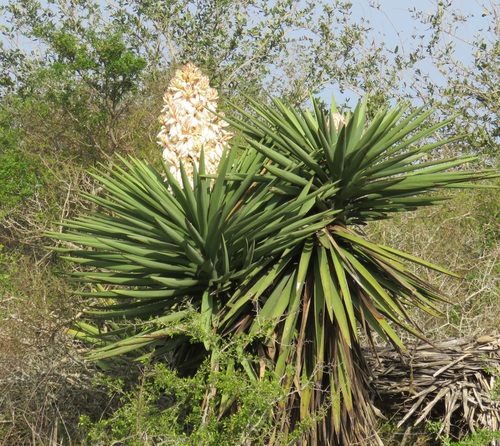
iNaturalist· cc-by-nc
(c) Geoffrey Sinclair, some rights reserved (CC BY-NC), uploaded by Geoffrey Sinclair
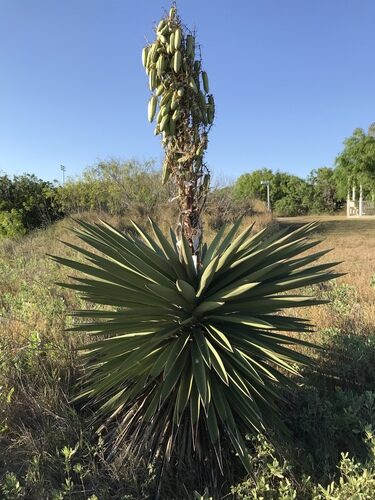
iNaturalist· cc-by-nc
(c) Joanne Ryves, some rights reserved (CC BY-NC)
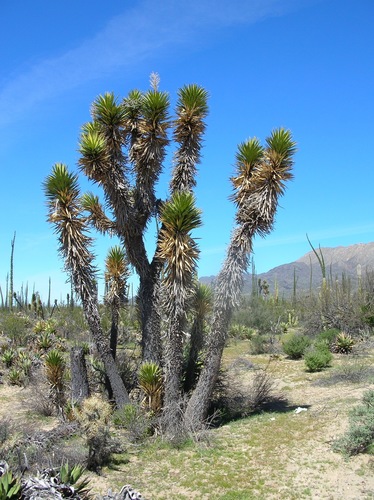
iNaturalist· cc-by-nc
(c) Joanne Ryves, some rights reserved (CC BY-NC)
Summary
Source: WikipediaCordyline rubra, known as the palm lily, is an evergreen Australian plant. Growing as a shrub to around 4 metres (13 ft) tall, it is found in warm rainforest and moist eucalyptus forest. The range of natural distribution is from Lismore to near Bundaberg, Queensland. It was first described by the German botanists Christoph Friedrich Otto and Albert Gottfried Dietrich in 1848. The Latin species name rubra means "red". Cordyline rubra is mainly identified by the leaf stems, which grow from 5 to 20 cm (2–8 in) long. They are flat or somewhat concave in shape. The leaves 15 to 50 cm (6–20 in) long, and 3 to 5.5 cm (1.4–2.2 in) wide, narrow elliptic in shape. Flowering occurs from summer, being lilac in colour. The fruit is a bright red berry, 10 mm (0.4 in) in diameter. It grows on panicles 10 to 40 cm (4–16 in) long. This species propagates easily from seeds or stem cuttings. Cordyline rubra is not as widely seen in cultivation as C. australis, however it is also well suited to gardens with moist soils in semi shade. It is a resilient plant and can tolerate neglect. Also suited as an indoor pot plant. Occasionally it hybridizes with Cordyline petiolaris in the wild.
Description
A subtropical shrub growing to 3 m high in the Asparagaceae family, found in rainforest understoreys. It produces red berries.
This description is brief — help expand it
Edible Uses
The fruit are eaten fresh.
Traditional Uses
The fruit are reported as edible.
This uses section is brief — help expand it
Distribution
It is a subtropical plant. It grows in the understorey in the rainforest.
Notes
Also put in the family Laxmanniaceae.
Synonyms
References (1)
- Plant Species available from the Noosa & District Landcare Resource Centre, Pomona, November 2012. Off internet.