Dichelostemma volubile
(Kellogg.) A.A.Heller
iNaturalist· cc-by-nc-sa
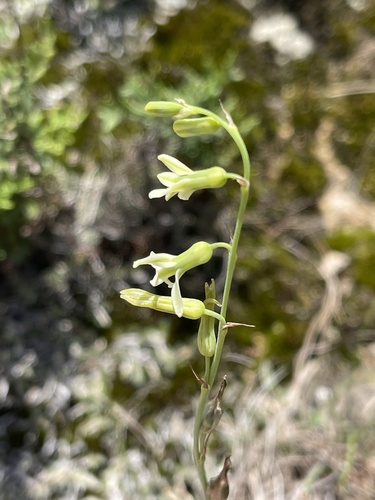
(c) randomtruth, some rights reserved (CC BY-NC-SA)
iNaturalist· cc-by-nc
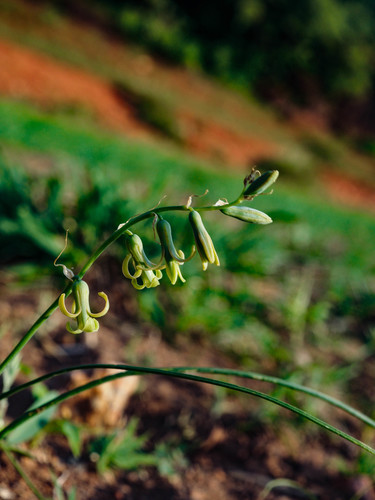
(c) rufdiamond, some rights reserved (CC BY-NC), uploaded by rufdiamond
iNaturalist· cc-by-nc
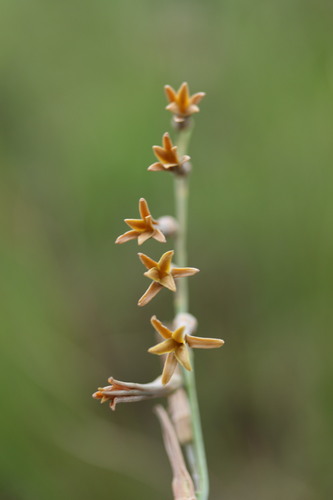
(c) Isaac Kreger, some rights reserved (CC BY-NC)
Summary
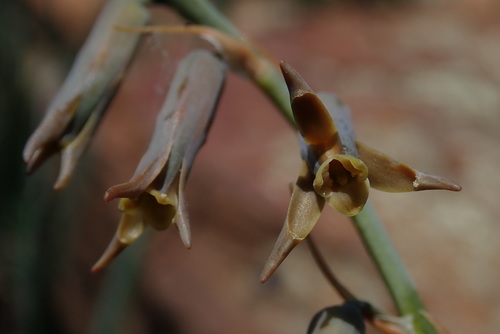
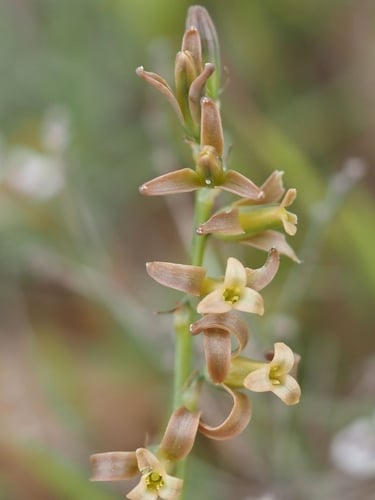
Source: WikipediaDichelostemma volubile is a species of flowering plant known by the common names twining snakelily and twining brodiaea. This wildflower is endemic to the mountain foothills of California, where it grows in scrub and woodland. Dichelostemma volubile grows tall, erect, naked stems topped with spherical inflorescences of up to 30 densely packed pink flowers. Each flower is a tube up to a centimeter long with a spreading corolla of six petal-like lobes. The purplish or reddish stems may twine tightly around each other and occasionally other plants.
Description
A corm-forming plant reaching 3.6 m in height, hardy to UK zone 9. Hermaphroditic flowers appear in July. Grows in light sandy or medium loamy well-drained soils across a range of pH levels from mildly acid to basic. Tolerates semi-shade to full sun and adapts to both dry and moist soil conditions.
Edible Uses
The corm can be eaten raw or cooked.
Medicinal Uses
No medicinal uses are known for this plant.
Distribution
It is a temperate plant.
Where It Grows
North America, USA,
Propagation
Seed: best sown as soon as ripe in free-draining compost in a cold frame; stored seed can be sown in spring in a cold frame. Seedlings are prone to damping off and should be kept well ventilated. Germination takes 1–3 months at 15°C. If sown thinly enough, seedlings can remain undisturbed for their first year, after which dormant bulbs can be potted 2–3 per pot. Otherwise, prick out when large enough to handle, planting 2–3 per pot. Grow on in a greenhouse for at least two years before planting out in late spring after the last expected frosts. Division: in autumn, lift clumps of offsets that have reached flowering size, replant the larger ones directly into permanent positions, and pot up smaller ones to grow on for a year in a cold frame before planting out.
Other Uses
No other uses are known for this plant.
Notes
Also put in the family Themidaceae.
Synonyms
References (3)
- Beckstrom-Sternberg, Stephen M., and James A. Duke. "The Foodplant Database." http://probe.nalusda.gov:8300/cgi-bin/browse/foodplantdb.(ACEDB version 4.0 - data version July 1994) (As Dichelostemma californicum)
- Plants for a Future database, The Field, Penpol, Lostwithiel, Cornwall, PL22 0NG, UK. http://www.scs.leeds.ac.uk/pfaf/
- Stromberg, M. R. et al, California Grasslands: Ecology and Management. p 63