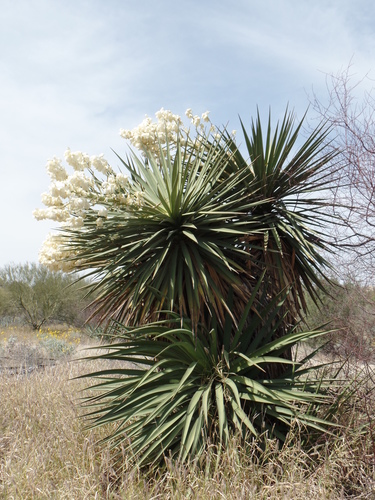
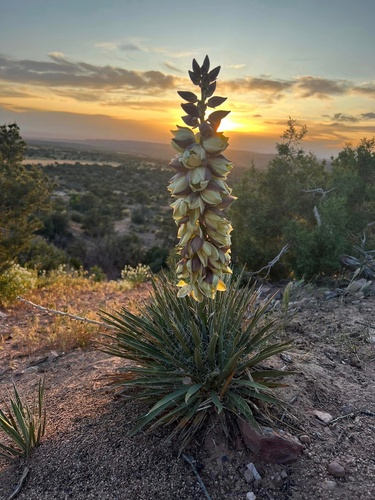
Camassia scilloides
(Raf.) Cory
Eastern Camass, Camass lily, Wild hyacinth, Atlantic Camas
iNaturalist· cc-by
(c) John B., some rights reserved (CC BY)
iNaturalist· cc-by-sa
(c) Frank Mayfield, some rights reserved (CC BY-SA)
iNaturalist· cc-by-nc-sa
(c) amy_b, some rights reserved (CC BY-NC-SA)
Summary
Source: WikipediaCamassia scilloides is a perennial herb known commonly as Atlantic camas, wild hyacinth, and eastern camas. It is native to the eastern half of North America, including Ontario and the eastern United States.
Description
A slender herb. It grows 50 cm tall. It has a brown, smooth bulb. This can be 1-2.5 cm across. The leaves are narrow. They are 20-50 cm long by 5-15 mm wide. They are at the base. The flower stalks are in narrow clusters. The flowers are pale blue. The fruit is small and has 3 parts. It is a round capsule. They are edible.
Edible Uses
Edible Parts: Root Edible Uses: Bulb - raw or cooked. The bulb was an important food for several native North American Indian tribes who used it in a variety of ways. It can be baked or dried and made into a powder which can be used as a thickener in stews or as an additive to cereal flours when making bread, cakes etc[62, K]. The bulb is about 4cm long and 15mm wide.
Traditional Uses
The onion like bulbs can be boiled or baked. They are also eaten raw. The bulbs can be dried and stored.
This uses section is brief — help expand it
Medicinal Uses
None known
Distribution
It is a temperate plant. It grows in moist meadows.
Where It Grows
Canada, North America, USA,
Cultivation
It can be grown from seeds or by transplanting bulbs.
Propagation
Seed - best sown as soon as it is ripe in a cold frame. The seed can also be sown in a cold frame in spring. It usually germinates in 1 - 6 months at 15°c, but it can be erratic. Sow the seed thinly so that it does not need to be thinned and allow the seedlings to grow on undisturbed for their first year. Give an occasional liquid feed to ensure that the plants do not become nutrient deficient. When the plants are dormant in late summer, pot up the small bulbs putting 2 - 3 bulbs in each pot. Grow them on for another one or two years in a cold frame before planting them out when dormant in late summer. Offsets in late summer. The bulb has to be scored in order to produce offsets.
Other Uses
None known Special Uses Attracts Wildlife
Notes
There are 6 Camassia species. Also put in the family Hyacinthaceae.
Synonyms
References (12)
- Bircher, A. G. & Bircher, W. H., 2000, Encyclopedia of Fruit Trees and Edible Flowering Plants in Egypt and the Subtropics. AUC Press. p 75
- Bremness, L., 1994, Herbs. Collins Eyewitness Handbooks. Harper Collins. p 156
- Brickell, C. (Ed.), 1999, The Royal Horticultural Society A-Z Encyclopedia of Garden Plants. Convent Garden Books. p 213
- Crawford, M., 2012, How to grow Perennial Vegetables. Green Books. p 154
- Elias, T.S. & Dykeman P.A., 1990, Edible Wild Plants. A North American Field guide. Sterling, New York p 65
Show all 12 references Hide references
- Esperanca, M. J., 1988. Surviving in the wild. A glance at the wild plants and their uses. Vol. 1. p 322
- Facciola, S., 1998, Cornucopia 2: a Source Book of Edible Plants. Kampong Publications, p 143
- http://en.hortipedia.com
- Kiple, K.F. & Ornelas, K.C., (eds), 2000, The Cambridge World History of Food. CUP p 1743
- MacKinnon, A., et al, 2009, Edible & Medicinal Plants of Canada. Lone Pine. p 199
- Plants for a Future database, The Field, Penpol, Lostwithiel, Cornwall, PL22 0NG, UK. http://www.scs.leeds.ac.uk/pfaf/
- Tozer, F., 2007, The Uses of Wild Plants. Green Man Publishing. p 51