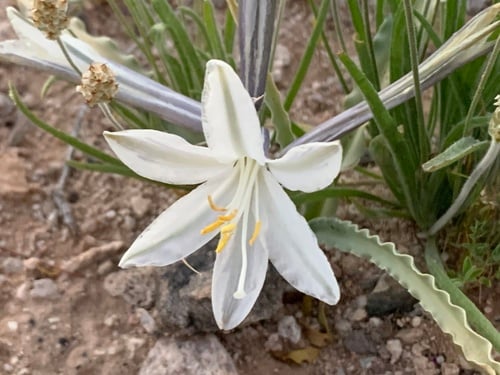
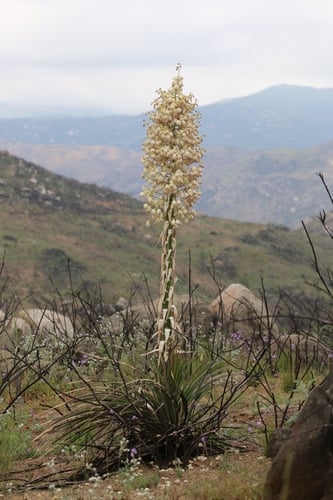
Camassia cusickii
S. Watson
Cusick's camass
iNaturalist· cc-by-nc-sa
(c) Kingsbrae Garden, some rights reserved (CC BY-NC-SA)
iNaturalist· cc-by-nc
(c) Christopher J. Earle, some rights reserved (CC BY-NC)
Summary
Source: WikipediaCamassia cusickii, common name Cusick's camas or Cusick's quamash, is a species of plant in the family Asparagaceae (subfamily Agavoideae). It is native to parts of North America. C. cusickii originally appeared in horticultural journals in the late 1800s.
Description
A bulbous plant growing to 0.9 meters tall with a spread of 0.6 meters at a medium growth rate. Hardy to UK zone 3. Grows in light sandy and medium loamy soils with good drainage. Tolerates a range of soil pH from mildly acidic to mildly alkaline. Can grow in semi-shade or full sun and prefers moist soil conditions.
Edible Uses
Edible Parts: Root Edible Uses: Bulb. The cooked bulb has a sweet, anise-squash flavour. Pressure cook at 250°F or 120°C for nine hours. A larger bulb than other species in this genus but the flavour is considered poorer [1-2]. Considered pungent, slimy, and bitter tasting by some (summitpost.org). The bitter taste is due to saponins in the plant. Commonly confused with C. quamash where Native Americans would harvest the roots to eat raw as a vegetables, or boiled them to create a sweet, molasses-like treat.
Traditional Uses
Canada, North America, USA,
This uses section is brief — help expand it
Medicinal Uses
None Known
Known Hazards
Although no hazards are known Camassia spp. can be mistaken for Zigadenus spp. when not flowering which are very toxic.
Distribution
It is a temperate to subtropical plant. It suits hardiness zones 3-11.
Where It Grows
NORTHERN AMERICA: United States, Idaho (w.-c.), Oregon (northeast),
Cultivation
Hardy Perennial Bulb found in temperate to subtropical locations. Prefers moist, fertile soil in full sun to partial sunlight. Soil chalk, loam or sand which is acid, alkaline or neutral. It tolerates clay and dry soil. Soil moisture moist but well-drained. Unlike most bulbs, it prefers soil that has a bit more moisture but is intolerant of waterlogging. Deer- and rodent-resistant. Flowers spring to early summer. .
Propagation
Propagated by removing the offsets that have formed round the main bulbs. Plant 6 inches (150 mm) deep in late summer or early fall. In very cold areas, the soil should be mulched to protect the bulbs in late autumn.
Other Uses
Uses include food forests, informal gardens, cottage gardens, prairie and meadows. Locations include: garden banks and slopes, beds and borders and can be underplanted with roses and other shrubs. Showy, cut flowers. Thrives among perennials. C. cusickii can naturalize and serve as a good ground cover. Special Uses Food Forest Ground Cover
Production
Also put in the family Hyacinthaceae.
Synonyms
Also Known As
Cussick's camas, Wild hyacinth
References (2)
- Crawford, M., 2012, How to grow Perennial Vegetables. Green Books. p 154
- Jackes, D. A., Edible Forest Gardens