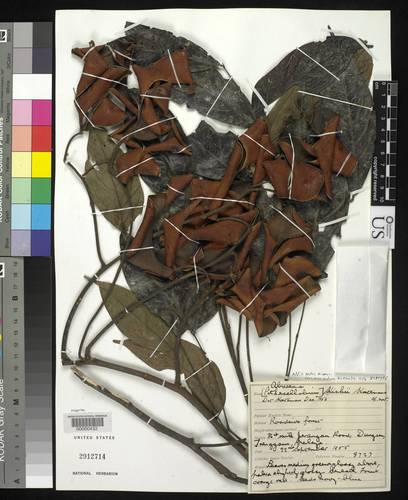
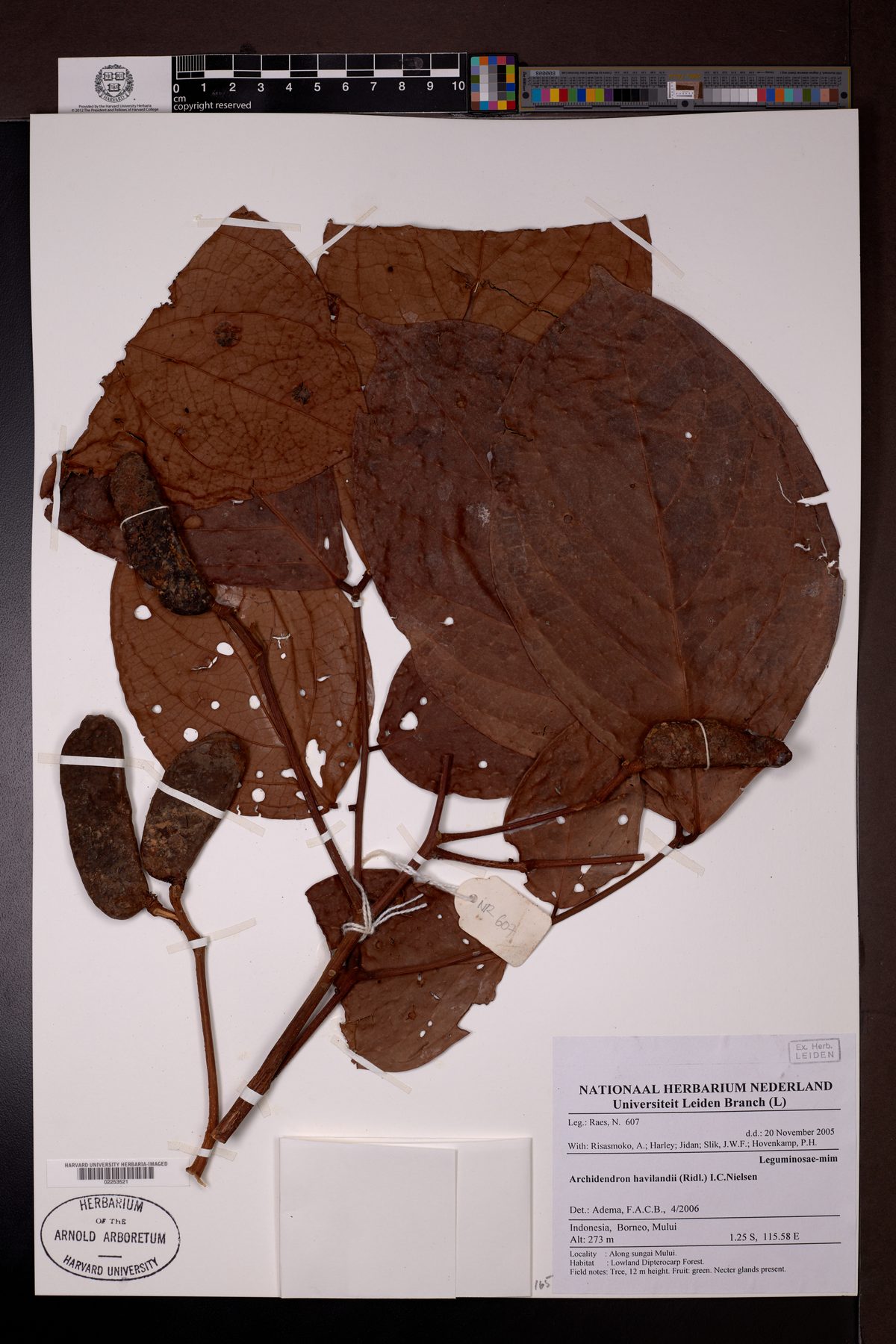
Enterolobium cyclocarpum
(Jacq.) Griseb.
Earpod tree, Mexican walnut tree, Pitchwood tree
iNaturalist· cc-by-nc
(c) Carlos G Velazco-Macias, some rights reserved (CC BY-NC), uploaded by Carlos G Velazco-Macias
iNaturalist· cc-by-nc
(c) FRANCISCO MIGUEL FARRIOLS ESTRADA, some rights reserved (CC BY-NC), uploaded by FRANCISCO MIGUEL FARRIOLS ESTRADA
iNaturalist· cc-by-nc
(c) Martin Reith, some rights reserved (CC BY-NC), uploaded by Martin Reith
Summary
Source: WikipediaEnterolobium cyclocarpum, commonly known as conacaste, guanacaste, caro caro, devil's ear tree, monkey-ear tree, or elephant-ear tree, is a species of flowering tree in the family Fabaceae, that is native to tropical regions of the Americas, from central Mexico south to northern Brazil (Roraima) and Venezuela. It is known for its large proportions, expansive, often spherical crown, and curiously shaped seedpods. The abundance of this tree, especially in Guanacaste Province, Costa Rica, where it is prized for the shady relief it provides from the intense sun, coupled with its immensity, have made it a widely recognized species. It is the national tree of Costa Rica. In North America, it is often called elephant-ear tree, due to the shape of the seedpods. Other common names include devil's ear and earpod tree, parota, and orejón (Spanish) or'huanacaxtle (Nahuatl). In El Salvador, it is known as conacaste. In the Yucatán peninsula, it is known by the Mayan name, pich. In Panama, it is known as a corotú.
Description
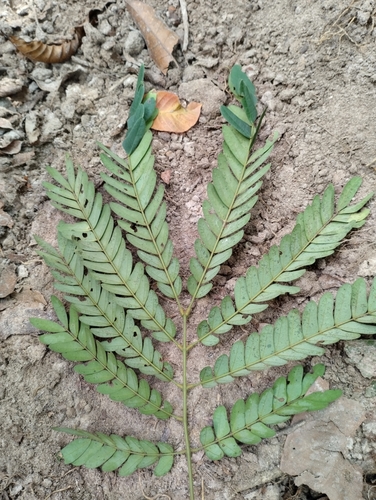
A deciduous tree. It grows up to 30 m high. It has a large stocky trunk. It has small buttresses. The branches are heavy. The leaves are twice divided and feather like. They are deep green and there are 24 pairs of small leaflets and 50 larger leaflets. The flowers are small and greenish white. They occur in heads 1.5 cm across. The fruit is an ear shaped pod. It is 10 cm across and flat and coiled. It has several seeds.
Edible Uses
Young seedpods and seeds are cooked and eaten as a vegetable. The yellow layer of young pods is edible, and the pulp inside the pods is sometimes consumed during times of food shortage. The seeds, which measure about 20 x 15mm and are encased in a thick, contorted, ear-shaped indehiscent pod, can also be prepared as a coffee substitute: the seed coat is removed, and the seeds are roasted and ground. Caution: the seeds contain saponins and can be poisonous; cooking is assumed necessary as saponins are destroyed by heat.
Traditional Uses
The seeds are sometimes toasted and eaten. They are also put in stews. The yellow layer of the young pods is eaten. The seed coat is removed and then the seeds are roasted and used like coffee. Caution: They contain saponins and can be poisonous.
Medicinal Uses
A syrup made from the bark is used to treat colds. A gum obtained from the trunk is used as a remedy for chest complaints.
Known Hazards
Contains saponins and can be poisonous. Cooking is assumed to be necessary as saponins are destroyed by heat.
Distribution
A tropical plant. It is native to tropical America. It grows in dry, lowland forest and savannah. It can tolerate drought. It has some salt tolerance. In Costa Rica it grows from sea level to 1,300 m altitude. It can grow in arid places.
Where It Grows
Africa, Amazon, Antilles, Asia, Australia, Belize, Brazil, British Indian Ocean Terr., BIOT, Central America*, China, Colombia, Costa Rica, Cuba, Dominican Republic, Egypt, El Salvador, Fiji, Ghana, Guatemala, Guianas, Guyana, Haiti, Hawaii, Honduras, India, Indochina, Indonesia, Jamaica, Malaysia, Mexico*, Myanmar, New Zealand, Nicaragua, Nigeria, North Africa, North America, Pacific, Panama, Papua New Guinea, PNG, Peru, Puerto Rico, Reunion, SE Asia, Sierra Leone, Singapore, South America, Suriname, Trinidad-Tobago, USA, Venezuela, Vietnam, West Africa, West Indies,
Cultivation
Plants are grown from seed.
Propagation
The seed coat is extremely thick and hard, requiring treatment before germination. For small quantities, carefully nick the seed coat at the end away from the micropyle (scar) without damaging the embryo, then soak for a few hours in warm water. For larger batches, soak seeds in near-boiling water for 30 seconds, then in room-temperature water for 24 hours. Sow seed at a depth of 1–2 cm with the micropyle pointing downwards to prevent the root from growing upward. Germination begins around day four and is usually complete within 10 days, with a germination rate of about 85%. Seedlings need little shade in the nursery and are ready for field planting after six months. Early growth is exceptionally rapid and vigorous, continuing for several months after transplanting before settling to a rate typical of other fast-growing species. The plant is light-demanding at all stages and susceptible to weed competition early on. Seeds are most easily collected from fallen pods. Storage behaviour is orthodox; seeds tolerate desiccation to 10.7% moisture content and remain viable for several years under cool, dry conditions. Natural regeneration is infrequent because seeds are dispersed mainly by grazing animals that also browse the seedlings, and young plants are vulnerable to fire, shade, drought, and grass competition.
Other Uses
The bark and fruit are used locally as soap, particularly for washing woollen goods, and both contain tannins. A gum known as 'Goma de Caro' is produced by the tree and can substitute for gum arabic from Acacia senegal. Craftspeople often polish the seedpods and sell them as tourist items. The heartwood is walnut-brown, sometimes with reddish shadings, merging gradually into dull white sapwood. The texture is coarse with straight to slightly roey grain, high lustre, and no distinctive odour or taste. The wood ranges from soft and spongy to moderately hard; it is generally moderately durable but very durable in water, resistant to dry-wood termites and Lyctus, and very easy to work. The harder grades take a good polish and season readily without warping or checking. The heavier wood resembles walnut (Juglans spp.) and serves as a reasonable substitute. It is used for interior trim in homes and offices, for making rice and coffee mortars, washboards, trays, and large dugout canoes. It is regarded as comparable to cedro (Cedrela spp.) for construction, valued especially for its resistance to dampness and termites. The pulped wood produces quality paper, and the wood is also considered excellent fuel. Young fruit and leaves provide good animal fodder, though some reports from Brazil indicate this has caused lesions in livestock. The tree's wide-spreading, light canopy and ability to fix atmospheric nitrogen make it a good shade tree for perennial crops such as coffee. Its vigorous coppicing ability also gives it potential as a hedgerow species in alley-cropping systems.
Production
It is a fast growing tree. It takes 5 years before fruiting.
Notes
There are 5 Enterolobium species. It is the emblem tree of Costa Rica. Also as Mimosaceae.
Synonyms
Also Known As
Chaya, Chayamansa, Conacaste, Corotu, Elephant's-ear, Guanacaste, Mulatto ear, Nacaste, Orejero, Parota, Pheoheo, Pohon sengon
References (33)
- Barwick, M., 2004, Tropical and Subtropical Trees. A Worldwide Encyclopedic Guide. Thames and Hudson p 163
- Burkill, H. M., 1985, The useful plants of west tropical Africa, Vol. 3. Kew.
- Condit, R., et al, 2011, Trees of Panama and Costa Rica. Princeton Field Guides. p 188
- Cruz, I. M., et al, 2015, Edible fruits and seeds in the State of Mexico. Revista Mexicana de Ciencias Agricolas. Vol. 6. Num. 2 pp 331-346
- Ekman Herbarium records Haiti
Show all 33 references Hide references
- Ezeagu, I. E. et al, 2002, Seed protein and nitrogen-to-protein conversion factors for some uncultivated tropical plant seeds. Food Chemistry 78:105-109
- FAO, 2012, Forest Genetic Resources Situation in Mexico. Final Report of Project TCP/ 3301 p 287
- Fl. Brit. W. I. 226. 1860
- Forest Genetic Resources Situation in Mexico, FAO 2012 Annex 15 p 286
- Gonzalez-Insuasti, M. S. and Caballero, J., 2007, Managing Plants Resources: How Intensive Can it be? Human Ecology, 35:303-314
- Gonzalez-Insuasti, M. S., et al, 2011, Intra-cultural Differences in the Importance of Plant Resources and Their Impact on Management Intensificaton in the Tehuacan Vallet, Mexico. Human Ecology 39:191-202
- Grandtner, M. M., 2008, World Dictionary of Trees. Wood and Forest Science Department. Laval University, Quebec, Qc Canada. (Internet database http://www.WDT.QC.ca)
- Grandtner, M. M. & Chevrette, J., 2013, Dictionary of Trees, Volume 2: South America: Nomenclature, Taxonomy and Ecology. Academic Press p 219
- Grubben, G. J. H. and Denton, O. A. (eds), 2004, Plant Resources of Tropical Africa 2. Vegetables. PROTA, Wageningen, Netherlands. p 561
- Hibbert, M., 2002, The Aussie Plant Finder 2002, Florilegium. p 92
- Hellmuth, N. M., 2013, Maya Ethnobotany. FLAAR Reports. p 19
- ILDIS Legumes of the World http:www;ildis.org/Legume/Web
- Kermath, B. M., et al, 2014, Food Plants in the Americas: A survey of the domesticated, cultivated and wild plants used for Human food in North, Central and South America and the Caribbean. On line draft. p 336
- Little, E. L., et al, 1974, Trees of Puerto Rico and the Virgin Islands. USDA Handbook 449. Forestry Service. p 258
- Lopez-Diago, D. & Garcia, N., 2021, Wild edible fruits of Colombia. Biota ColomBiana 22 (2) p 37
- Piedra-Malagón, E. M., et al, 2022, Edible native plants of the Gulf of Mexico Province. Biodiversity Data Journal 10: e80565 p 21
- Plants of Haiti Smithsonian Institute http://botany.si.edu/antilles/West Indies
- Recher, P, 2001, Fruit Spirit Botanical Gardens Plant Index. www.nrg.com.au/~recher/ seedlist.html p 5
- Roa, J. A. G. & Boada, D. S. G., 2018, Fundación para el Fortalecimiento de la Fruticultura y Plantas Alimenticias no Convencionales en Colombia.
- Royal Botanic Gardens, Kew (1999). Survey of Economic Plants for Arid and Semi-Arid Lands (SEPASAL) database. Published on the Internet; http://www.rbgkew.org.uk/ceb/sepasal/internet [Accessed 28th April 2011]
- Segura, S., et al, 2018, The edible fruit species in Mexico. Genet Resour Crop Evol (2018) 65:1767–1793
- Staples, G.W. and Herbst, D.R., 2005, A tropical Garden Flora. Bishop Museum Press, Honolulu, Hawaii. p 314
- Sukarya, D. G., (Ed.) 2013, 3,500 Plant Species of the Botanic Gardens of Indonesia. LIPI p 260
- Topp, J. M. W., 1988, An Annotated Check List of the Flora of Diego Garcia, British Ocean Territory. Atoll Research Bulletin No. 313 (Introduced - possibly rare)
- van Roosmalen, M.G.M., 1985, Fruits of the Guianan Flora. Utrecht Univ. & Wageningen Univ. p 232
- World Checklist of Useful Plant Species 2020. Royal Botanic Gardens, Kew
- www.worldagroforestrycentre.org/treedb/
- Zuchowski W., 2007, Tropical Plants of Costa Rica. A Zona Tropical Publication, Comstock Publishing. p 50