Cochlearia officinalis
L.
Scurvy grass, Common scurvy-grass, Spoonwort
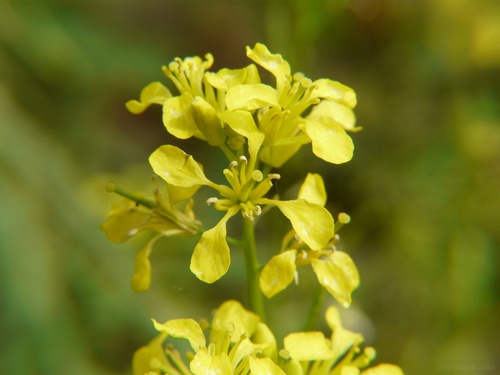
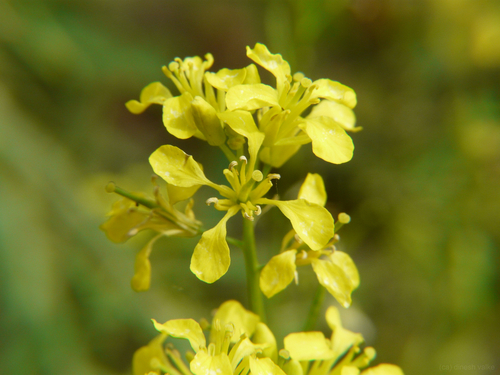
iNaturalist· cc-by-nc
(c) gamlenar, some rights reserved (CC BY-NC)
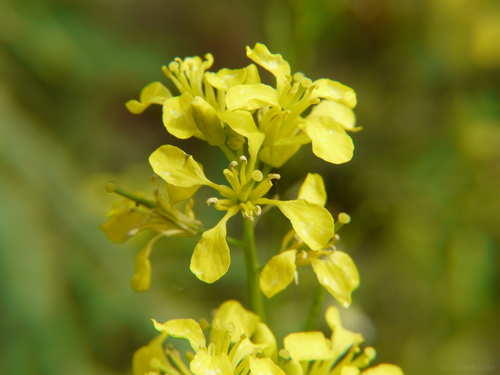
iNaturalist· cc-by-nc
(c) gamlenar, some rights reserved (CC BY-NC)
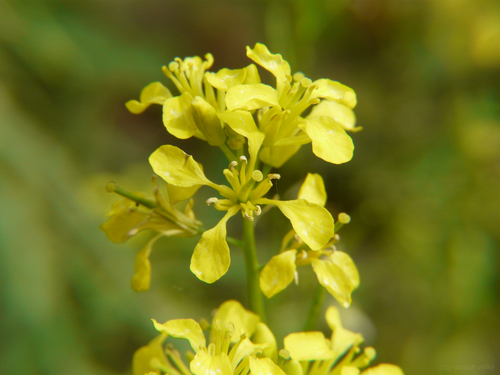
iNaturalist· cc-by-nc-sa
(c) Bas Kers, some rights reserved (CC BY-NC-SA)
Summary
Source: WikipediaCochlearia officinalis, common scurvygrass, scurvy-grass, or spoonwort, is a species of flowering plant in the family Brassicaceae. The plant acquired its common name from the observation that it cured scurvy.
Description
A cabbage family herb. It is a bushy plant about 50 cm tall. It spreads 50 cm wide. It can complete its life-cycle in 2 years or grow for several years. The stem is angular and furrowed. The leaves at the base are thick and fleshy. The leaves are spoon shaped. The flowers are small and white. The fruit are almost round pods. They have small reddish-brown seeds.
Edible Uses
The leaves are eaten raw and have an acrid, tarry flavour. They can be added in small quantities to salads for their high vitamin C content. The taste is pleasantly sharp to some but rather unpleasant to most, with only occasional individuals finding it agreeable.
Traditional Uses
The leaves and flower heads can be added to salads, soups and sauces. The juice from the leaves can be added to orange juice. The leaves can be cooked as edible greens.
Medicinal Uses
The herb is antiscorbutic, aperient, disinfectant, diuretic, and stimulant. It was highly valued by sailors and eaten daily as a preventative against scurvy on long sea voyages. Applied externally, bruised leaves are used to heal ulcers. The herb is best used fresh, though it can be harvested in late spring or early summer and dried for later use.
Distribution
It is a cold temperate plant. It can grow in cold winter conditions. It grows in salty places. It grows in polar regions. It is best in muddy, sandy moist soils. It is resistant to frost but damaged by drought.
Where It Grows
Alaska, Arctic, Argentina, Australia, Britain*, Denmark, Europe, Falklands, Faroe Islands, Iceland, Norway, Scandinavia, South Africa, Southern Africa, South America, USA,
Cultivation
Prefers a cool shady position. Grows wild on acid or calcareous soils, but it avoids shady positions. Prefers a sandy or gritty well-drained soil. At one time this plant was commonly eaten, especially by sailors, for its high Vitamin C content which can prevent or cure scurvy. A polymorphic species, it hybridizes with C. danica and C. anglica. A good bee plant.
Propagation
Sow seed in spring or autumn in situ. Germination usually takes place within 2–3 weeks at 15°c.
Other Uses
No specific other uses recorded.
Synonyms
Also Known As
Cochleaire, Loffelkresse, Skjorbuksurt, Spoon cress
References (22)
- Bodkin, F., 1991, Encyclopedia Botanica. Cornstalk publishing, p 269
- Esperanca, M. J., 1988. Surviving in the wild. A glance at the wild plants and their uses. Vol. 2. p 211
- Facciola, S., 1998, Cornucopia 2: a Source Book of Edible Plants. Kampong Publications, p 58
- Fox, F. W. & Young, M. E. N., 1982, Food from the Veld. Delta Books. p 139
- Girard, N. J., 2020, Sustainable Foraging of Wild Edible Plants in Norway. A Biocultural Approach. M. Sc. thesis Norwegian University. p 129
Show all 22 references Hide references
- Hammer, K. & Spahillari, M., 1999, Crops of European origin. in Report of a networking group on minor crops. IPGRI p 44
- Heller, C. A., 1962, Wild Edible and Poisonous Plants of Alaska. Univ. of Alaska Extension Service. p 13
- Hermandez Bermejo, J.E., and Leon, J. (Eds.), 1994, Neglected Crops. 1492 from a different perspective. FAO Plant Production and Protection Series No 26. FAO, Rome. p 263
- Joshi, A., et al, 2018, Halophytes of Thar Desert: Potential source of nutrition and feedstuff. International Journal of Bioassays 8.1 (2018) pp. 5674-5683
- Kiple, K.F. & Ornelas, K.C., (eds), 2000, The Cambridge World History of Food. CUP p 1849
- Mabey, R., 1973, Food for Free. A Guide to the edible wild plants of Britain, Collins. p 86
- Michael, P., 2007, Edible Wild Plants and Herbs. Grub Street. London. p 208
- Plants for a Future database, The Field, Penpol, Lostwithiel, Cornwall, PL22 0NG, UK. http://www.scs.leeds.ac.uk/pfaf/
- Porsild, A.E., 1953, Edible Plants of the Arctic, Arctic 6:15-34, page 29
- Ruiters-Welcome, A. K., 2019, Food plants of southern Africa. Ph.D. thesis. Univ. of Johannesburg p 39
- Seidemann J., 2005, World Spice Plants. Economic Usage, Botany, Taxonomy. Springer. p 113
- Sp. pl. 2:647. 1753
- Svanberg, I., et al, 2012, Edible wild plant use in the Faroe Islands and Iceland. Acta Societatis Botanicorum Poloniae 81(4): 233-238
- Tozer, F., 2007, The Uses of Wild Plants. Green Man Publishing. p 70
- Upson, R., & Lewis R., 2014, Updated Vascular Plant Checklist and Atlas for the Falkland Islands. Falklands Conservation and Kew.
- van Wyk, B., 2005, Food Plants of the World. An illustrated guide. Timber press. p 227
- Welcome, A. K. & Van Wyk, B.-E., 2019, An inventory and analysis of the food plants of southern Africa. South African Journal of Botany 122 (2019) 136–179