Conringia orientalis
(L.) C. Presl.
Hare's-ear mustard, Wild cabbage, Treacle mustard
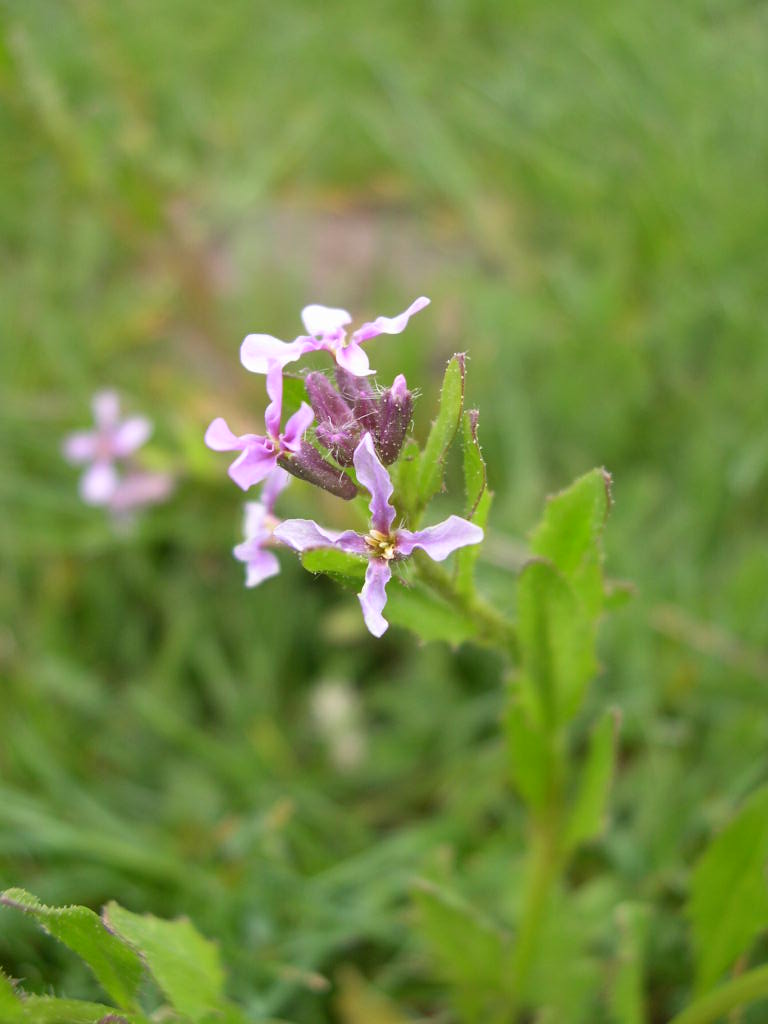
iNaturalist· cc-by-sa
(c) Matt Lavin, some rights reserved (CC BY-SA)
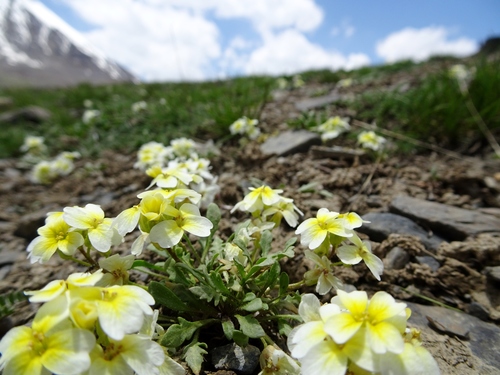
iNaturalist· cc-by-nc
(c) François-Xavier Taxil, some rights reserved (CC BY-NC)
Summary
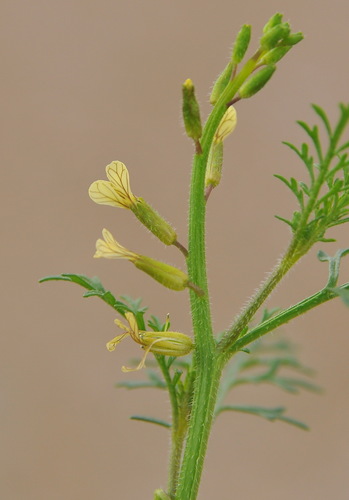
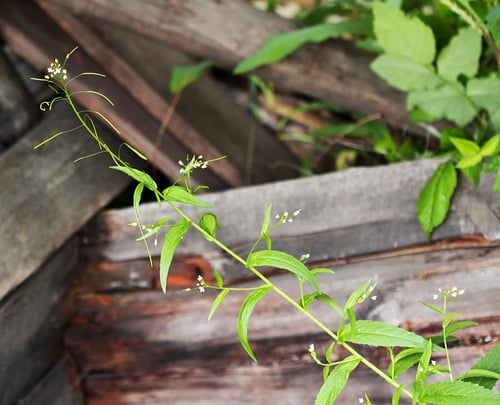
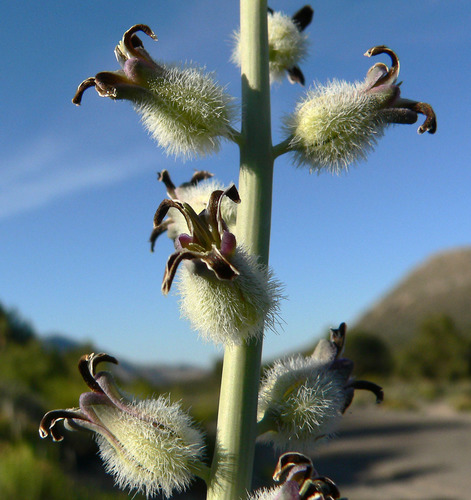
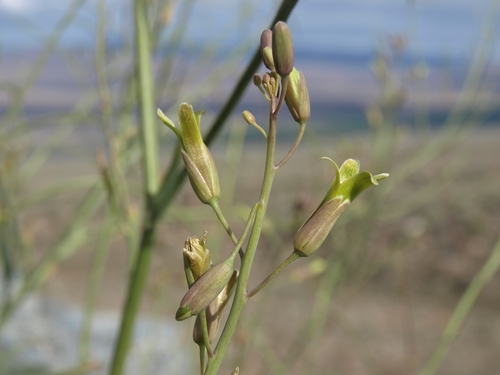
Source: WikipediaConringia orientalis is a species of flowering plant in the mustard family known by the common name hare's ear mustard. It is native to Eurasia but it is known elsewhere as an introduced species and sometimes a noxious weed. It is weedy in its native range and also in North America, where it is a widespread invasive species, especially in central Canada. It is an annual herb producing an unbranched erect stem 30 to 70 centimetres (12 to 28 inches) in height. The thick, waxy leaves are generally oval in shape, up to 9 centimetres (3+1⁄2 inches) long, and clasp the stem at their bases. The flower is enclosed in pointed sepals and has yellow, clawed petals about 1 centimetre (1⁄3 inch) long. The fruit is a beaded silique up to 13 centimetres (5 inches) long. The plant is known to be toxic to livestock.
Description
A cabbage family herb. The plant is about 0.5 m high. It is a stout plant and is an annual. The leaves near the base are broadly oval and narrow towards the base. The leaves on the stem are oblong and clasp the stem. They have two rounded ears or lobes near the stem. The flowers have 4 whitish petals. The flower heads are long. The fruit are long angular pods. There are several seeds in a row.
Edible Uses
A light-yellow edible oil extracted from the seeds is used for cooking. The leaves and young stems can also be eaten raw.
Traditional Uses
Leaves and stems are eaten raw. They are used as a flavouring. They are also roasted with egg. An edible oil used for cooking can be obtained from the seed.
Medicinal Uses
No medicinal uses are known for this plant.
Distribution
It is a temperate plant. It does best in calcareous soils. It needs a sunny position.
Where It Grows
Afghanistan, Africa, Albania, Algeria, Armenia, Australia, Austria, Azerbaijan, Balkans, Bulgaria, Caucasus, Central Asia, Czech, Egypt, Europe, France, Georgia, Germany, Greece, Hungary, Iran, Iraq, Israel, Italy, Kazakhstan, Lebanon, Libya, Luxembourg, Mediterranean, Middle East, Morocco, North Africa, Pakistan, Poland, Romania, Russia, Siberia, Slovakia, Syria, Tajikistan, Tunisia, Turkey, Türkiye, Ukraine, Yugoslavia,
Cultivation
Plants are grown from seed.
Propagation
Sow seed in situ in spring. It may also be worthwhile sowing in situ in September or October to obtain an earlier crop.
Other Uses
No other uses are known.
Notes
There are about 8 Conrigia species.
Synonyms
Also Known As
Horuztasagi, Yabani tutun
References (11)
- Cakir, E. A., 2017, Traditional knowledge of wild edible plants of Iğdır Province (East Anatolia, Turkey). Acta Soc Bot Pol. 2017;86(4):3568.
- Ertug, F, Yenen Bitkiler. Resimli Türkiye Florası -I- Flora of Turkey - Ethnobotany supplement
- Facciola, S., 1998, Cornucopia 2: a Source Book of Edible Plants. Kampong Publications, p 58
- Flora of Pakistan. www.eFloras.org
- Fl. belg. 123. 1827 (Andrz. ex DC., Syst. nat. 2:508. 1821, pro syn.) - authorship given as "(L.) C. Presl, Fl. sicul. 1:79. 1826" fide APNI
Show all 11 references Hide references
- Hammer, K. & Spahillari, M., 1999, Crops of European origin. in Report of a networking group on minor crops. IPGRI p 44
- Lamp, C & Collet F., 1989, Field Guide to Weeds in Australia. Inkata Press. p 82
- Lazarides, M. & Hince, B., 1993, Handbook of Economic Plants of Australia, CSIRO. p 64
- Plants for a Future database, The Field, Penpol, Lostwithiel, Cornwall, PL22 0NG, UK. http://www.scs.leeds.ac.uk/pfaf/
- Wiersema, J. H. & Leon, B., 2013, World Economic Plants. A Standard Reference CRC Press. 2nd Ed. p 196
- World Checklist of Useful Plant Species 2020. Royal Botanic Gardens, Kew