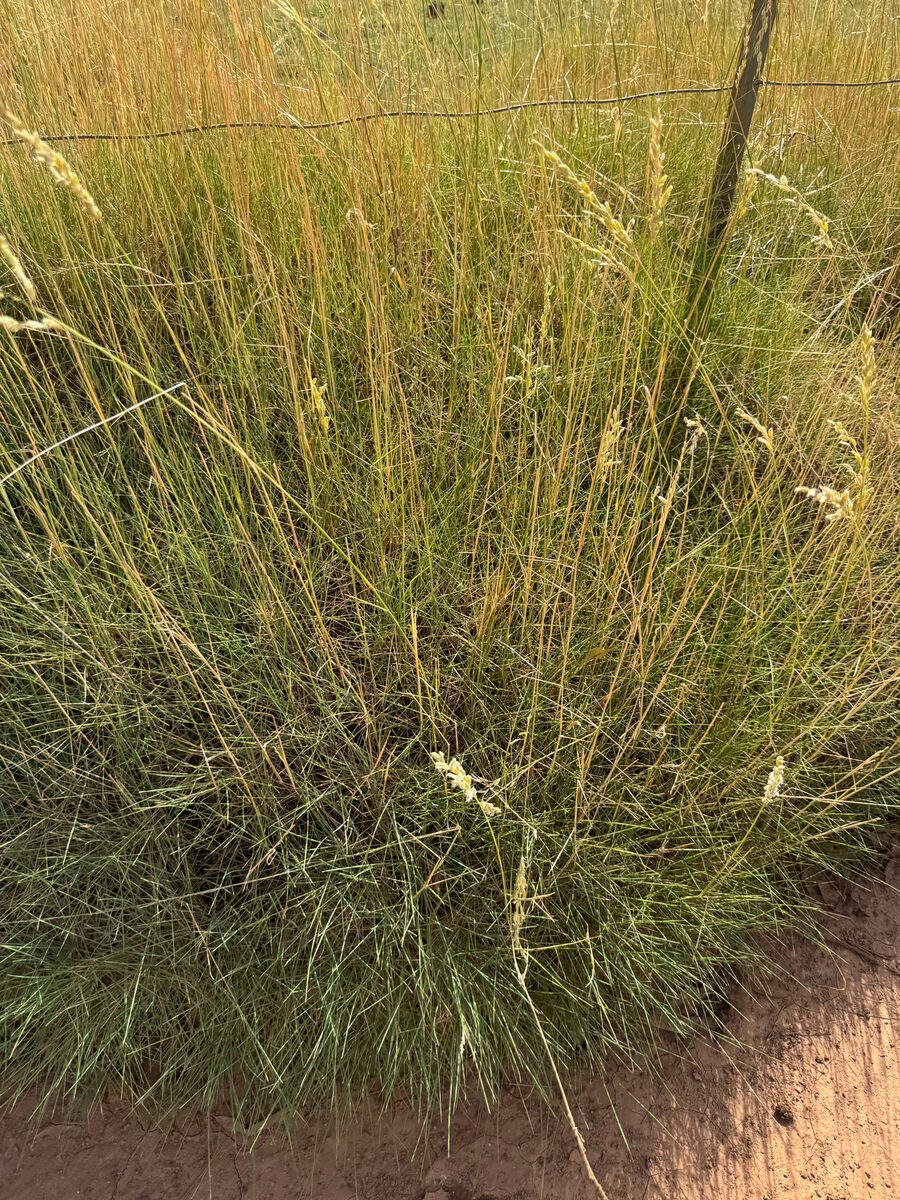
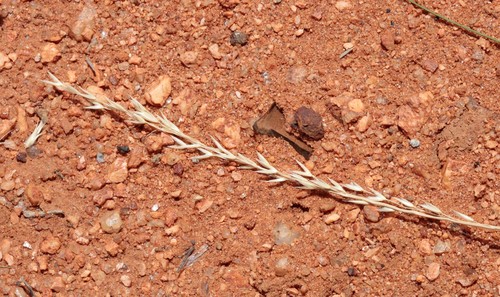
Deschampsia cespitosa
(L.) P.Beauv.
Tussock grass, Tufted Hairgrass
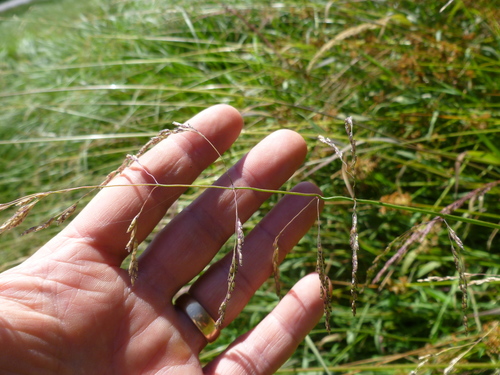
iNaturalist· cc-by-nc
(c) Соколков Юрий Павлович, some rights reserved (CC BY-NC), uploaded by Соколков Юрий Павлович
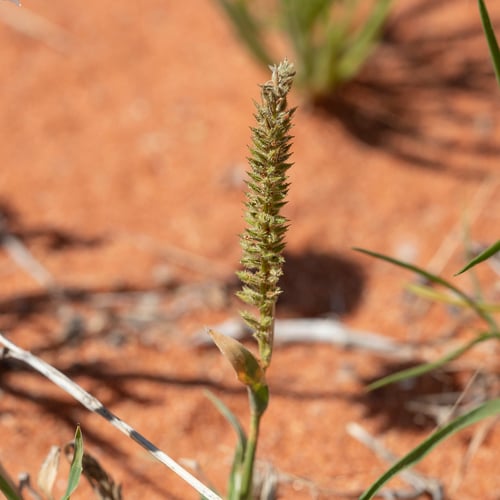
iNaturalist· cc-by
(c) Марина Садыкова, some rights reserved (CC BY), uploaded by Марина Садыкова
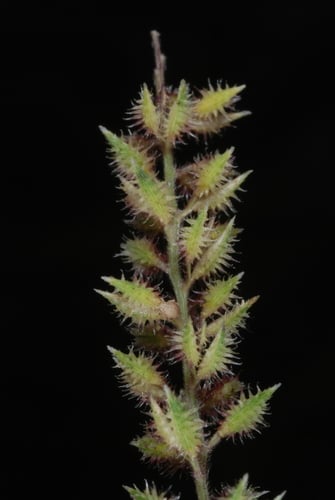
iNaturalist· cc-by-nc
(c) Alycia Matz, some rights reserved (CC BY-NC), uploaded by Alycia Matz
Summary
Source: WikipediaDeschampsia cespitosa, commonly known as tufted hairgrass or tussock grass, is a perennial tufted plant in the grass family Poaceae. The distribution of this species is widespread, with it being native to North America, Central Africa, eastern Australia, New Zealand, and Eurasia and being introduced to South Africa, South Australia and South America.
Description
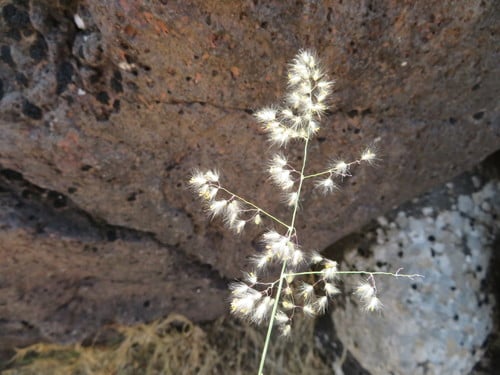
A grass which has leaves year round. It forms erect tussocks. It grows 1.2-1.8 m high and 1.2-1.5 m wide. The leaves are narrow and dark green. They are 10-60 cm long by 0.2-0.5 cm wide. They are often rolled inwards. The form a dense clump. The leaves have sharp tips. The flowers are airy plumes. They start green or purple and change with the season. They are 10-50 cm long by 15-20 cm wide.
Edible Uses
The seeds are used as a cereal.
Distribution
It grows in temperate and arctic regions. It is frost hardy. It grows in highland and subalpine regions. It likes a moist position in full sun. It suits hardiness zones 5-10.
Where It Grows
Africa, Argentina, Asia, Australia, Bhutan, Brazil, Britain, Canada, Central Asia, Chile, China, Europe, Finland, Himalayas, India, Japan, Kazakhstan, Korea, Kyrgyzstan, Macquarie Island, Mongolia, New Zealand, North America, Northeastern India, Pakistan, Russia, Scandinavia, Sikkim, Slovenia, South America, Taiwan, Tajikistan, Tasmania, Tibet, Uzbekistan,
Cultivation
Plants can be grown from seed or by division of the clump.
Notes
There are between 40 and 50 Deschampsia species.
Synonyms
Also Known As
Rušnata masnica
References (15)
- Ambasta, S.P. (Ed.), 2000, The Useful Plants of India. CSIR India. p 167
- Bodkin, F., 1991, Encyclopedia Botanica. Cornstalk publishing, p 335
- Cundall, P., (ed.), 2004, Gardening Australia: flora: the gardener's bible. ABC Books. p 489
- Curtis, W.M., & Morris, D.I., 1994, The Student's Flora of Tasmania. Part 4B St David's Park Publishing, Tasmania, p 242
- Dashorst, G.R.M., and Jessop, J.P., 1998, Plants of the Adelaide Plains & Hills. Botanic Gardens of Adelaide and State Herbarium. p 174
Show all 15 references Hide references
- Ess. Agrostogr. 91, 149, 160. 1812 "caespitosa"
- Hibbert, M., 2002, The Aussie Plant Finder 2002, Florilegium. p 85
- Irving, M., 2009, The Forager Handbook, A Guide to the Edible Plants of Britain. Ebury Press p 326
- Kew Plants of the World onLine
- Kirkpatrick, J., 1997, Alpine Tasmania, An Illustrated guide to the flora and vegetation. Oxford, p 126
- Joyce, D., 1998, The Garden Plant Selector. Ryland, Peters and Small. p 328
- Marinelli, J. (Ed), 2004, Plant. DK. p 270
- Plants for a Future database, The Field, Penpol, Lostwithiel, Cornwall, PL22 0NG, UK. http://www.scs.leeds.ac.uk/pfaf/
- Slocum, P.D. & Robinson, P., 1999, Water Gardening. Water Lilies and Lotuses. Timber Press. p 115
- Tasmanian Herbarium Vascular Plants list p 82, 102