Acacia nilotica subsp. indica
(L.) Delile; (Benth.) Brenan
Black babool
iNaturalist· cc-by-nc
(c) Grant Reed, some rights reserved (CC BY-NC)
iNaturalist· cc-by-nc
(c) Grant Reed, some rights reserved (CC BY-NC)
iNaturalist· cc-by-nc
(c) Grant Reed, some rights reserved (CC BY-NC)
Description
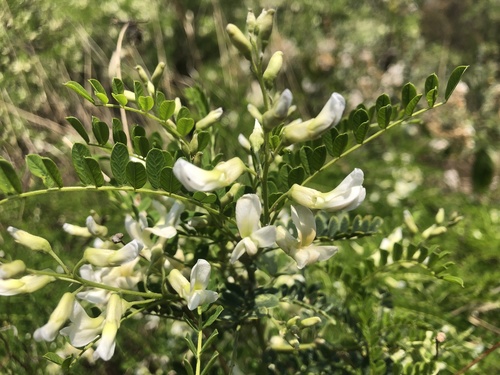
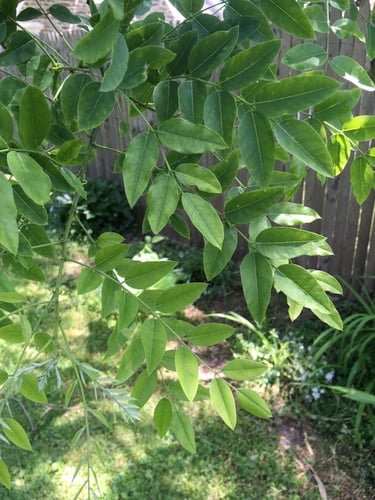
A shrub or small tree. It grows 5 m tall. There are prickles along the stem. The leaves are twice divided and there are 8-18 pairs of pinnae. There are up to 50 pairs of pinnules on each pinnae. The flowers are yellow. They are in large clusters at the ends of branches. The pods are flattened.
Edible Uses
The pods are cooked and eaten, and the seeds are roasted and eaten. The gum and powdered bark are eaten on the Deccan in India. Leaves are also edible.
Traditional Uses
CAUTION: The seeds have been reported as eaten but are toxic. The seeds eaten over long periods of time are considered to be deleterious to health. The pods are cooked and eaten. The seeds are roasted and eaten. The gum and powdered bark are eaten on the Deccan in India.
Medicinal Uses
Two new antiprotozoal diterpenes have been isolated from the root bark of Acacia nilotica.
Known Hazards
The seeds have been reported as toxic and are deleterious to health when eaten over long periods of time.
Distribution
It is a tropical plant. It grows and is used in Rajasthan. It grows best on soils which are medium heavy with a good moisture status. It does not like clay soils. It grows in hot arid places. It grows below 500 m above sea level.
Where It Grows
Africa, Angola, Asia, Australia, Central Africa, East Africa, Egypt, Ethiopia, Himalayas, India, Indonesia, Myanmar, North Africa, Pakistan, Sao Tome and Principe, SE Asia, Sri Lanka, Sudan, Tanzania,
Cultivation
Trees are grown from seed. They should be sown where required as seedlings do not transplant easily. The seed can be soaked in water for 2 or 3 days or treated with concentrated sulphuric acid for 5 minutes to break the hard seed coat and help them to germinate.
Notes
There are about 1,350 Acacia species. Over 1,000 occur in Australia. Also as Mimosaceae.
Synonyms
Also Known As
Babool, Babul, Banvalia, Baval, Gobbli, Jaali, Karivelan, Karuvelei, Kikar, Nallatumma
References (17)
- Ambasta S.P. (Ed.), 2000, The Useful Plants of India. CSIR India. p 6
- BHANDARI,
- Bhardwaj, J. & Seth, M. K., 2017, Edible wild plant resources of Bilaspur, Hamirpur and Una districts of Himachal Pradesh, India. International Journal of Botany Studies. Volume 2; Issue 6; p 09-17
- Burkill, I.H., 1966, A Dictionary of the Economic Products of the Malay Peninsula. Ministry of Agriculture and Cooperatives, Kuala Lumpur, Malaysia. Vol 1 (A-H) p 14 (As Acacia arabica)
- FAGG
Show all 17 references Hide references
- GAMMIE, (As Acacia arabica)
- GUPTA & KANODIA, (As Acacia arabica)
- Kew Bull. 12:84. 1957
- Krishen P., 2006, Trees of Delhi, A Field Guide. DK Books. p 268
- Martin, F.W. & Ruberte, R.M., 1979, Edible Leaves of the Tropics. Antillian College Press, Mayaguez, Puerto Rico. p 197 (As Acacia arabica)
- Okigbo, B.N., Vegetables in Tropical Africa, in Opena, R.T. & Kyomo, M.L., 1990, Vegetable Research and development in SADCC countries. Asian Vegetable Research and development Centre. Taiwan. p 42 (As Acacia arabica)
- PANT, (As Acacia arabica)
- PRASAD, (As Acacia arabica)
- Royal Botanic Gardens, Kew (1999). Survey of Economic Plants for Arid and Semi-Arid Lands (SEPASAL) database. Published on the Internet; http://www.rbgkew.org.uk/ceb/sepasal/internet [Accessed 26th April 2011]
- Sahni, K.C., 2000, The Book of Indian Trees. Bombay Natural History Society. Oxford. p 76
- Swaminathan, M.S., and Kochnar, S.L., 2007, An Atlas of Major Flowering Trees in India. Macmillan. p 128
- WATT. (As Acacia arabica)