Acacia nilotica subsp. kraussiana
(L.) Willd., (Benth.) Brenan
Scented thorn
gbif· cc-by-nc-sa
MBG
gbif· cc-by
Royal Botanic Gardens, Kew
gbif· cc-by
Royal Botanic Gardens, Kew
Description
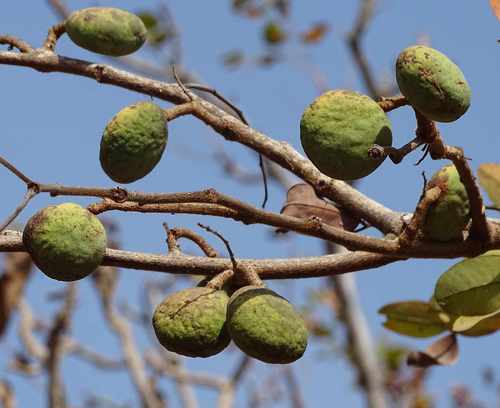
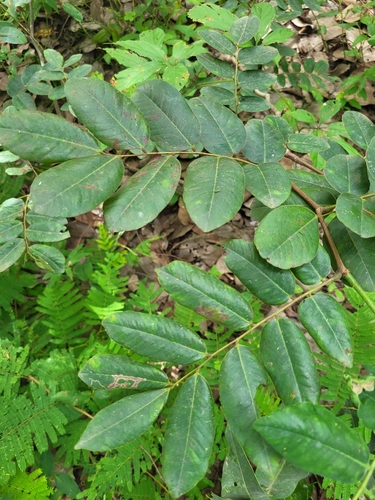
A shrub or small tree. It grows 5 m tall. There are prickles along the stem. The leaves are twice divided and there are 8-18 pairs of pinnae. There are up to 50 pairs of pinnules on each pinnae. The flowers are yellow. They are in large clusters at the ends of branches. The pods are flattened.
Edible Uses
Edible gum from the bark is used for sweets. Roasted pods are used as a flavouring. The soft inner bark is used to curdle milk.
Traditional Uses
The gum from the bark is edible. It is used for sweets. The soft inner bark is used to curdle milk. The roasted pods are used for flavouring.
This uses section is brief — help expand it
Medicinal Uses
Two new antiprotozoal diterpenes have been isolated from the root bark of Acacia nilotica.
Distribution
It is a tropical plant. It is resistant to drought and frost. It grows in areas with an annual rainfall above 100 mm. It grows between 5-1,830 m above sea level.
Where It Grows
Africa, Angola, Botswana, Central Africa, East Africa, Eswatini, Ethiopia, Iraq, Malawi, Middle East, Mozambique, Namibia, Oman, South Africa, Southern Africa, Swaziland, Tanzania, Yemen, Zambia, Zimbabwe,
Cultivation
Seeds are removed from dry pods. These are placed in hot water then left overnight to soak then planted. They germinate in 7-15 days. The plant can be cut back and will re-grow.
Production
It grows at a moderately fast rate. It can grow 70 cm a year.
Notes
There are about 1,350 Acacia species. Over 1,000 occur in Australia. Also as Mimosaceae.
Synonyms
Also Known As
Changuta, Inshagu, Inshakwe, Isanqawe, Lekkerruikpeul, Lugagane, M'sio, Miwa, Mokga, Motsha, Mubuyamhondoro, Muhunga, Muzunga, Nkoka, Scented pod thorn, Sitfetfe, Thalaa, Umlaladwayi, Umncawe
References (10)
- Fowler, D. G., 2007, Zambian Plants: Their Vernacular Names and Uses. Kew. p 33
- ILDIS Legumes of the World http:www;ildis.org/Legume/Web
- Kew Bull. 12:84. 1957
- Long, C., 2005, Swaziland's Flora - siSwati names and Uses http://www.sntc.org.sz/flora/
- Magwede, K., van Wyk, B.-E., & van Wyk, A. E., 2019, An inventory of Vhavenḓa useful plants. South African Journal of Botany 122 (2019) 57–89 (As Vachellia nilotica subsp. kraussiana)
Show all 10 references Hide references
- Schmidt, E., Lotter, M., & McCleland, W., 2007, Trees and shrubs of Mpumalanga and Kruger National Park. Jacana Media p 158
- van Wyk, B, van Wyk, P, and van Wyk B., 2000, Photographic guide to Trees of Southern Africa. Briza. p 38
- Van Wyk, Br. and van Wyk P., 2009, Field Guide to Trees of Southern Africa. Struik Nature. p 496
- Venter, F & J., 2009, Making the most of Indigenous Trees. Briza. p 28
- www.zimbabweflora.co.zw 2011