Attalea luetzelburgii
(Burret) Wess. Boer.
Curuaraua, Curua, Grua
gbif· cc-by-sa
GBIF
gbif· cc-by-sa
GBIF
gbif· cc-by-sa
GBIF
Description
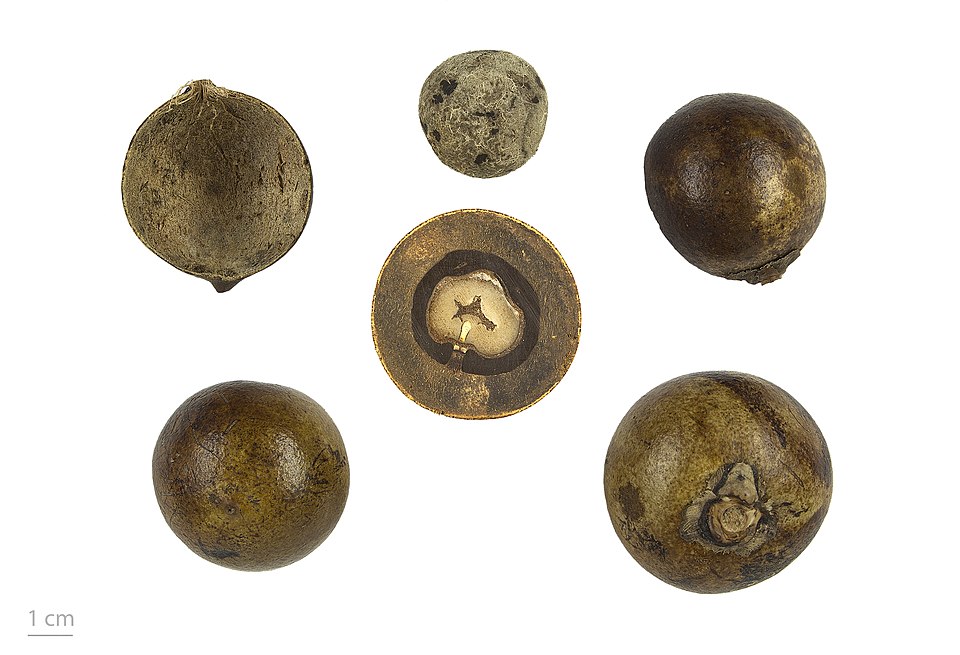
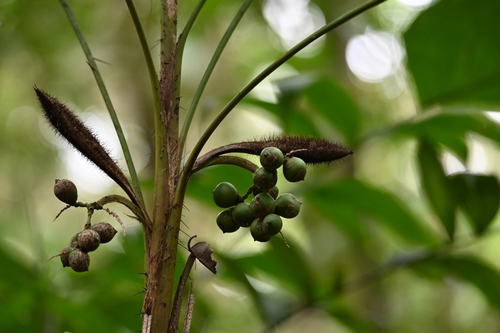
A palm. The stems are short and underground. There are about 6 leaves. The leaflets are arranged regularly and spread in the same plane. The flowering stalk is amongst the leaves. The main stalk is short. The male flowers have narrow petals and 6 loosely coiled stamens. The fruit have one seed. The fruit are oval and 5-5.5 cm long by 2-2.5 cm wide.
Edible Uses
The nuts, kernels, and seeds are edible.
Distribution
A tropical plant. It grows in open white sand areas in the Amazon. It is in the transition zone between forest and savanna.
Where It Grows
Amazon, Brazil, Colombia, South America, Venezuela,
Notes
There are between (22) 30-71 Attalea species. Some authorities divide them among Attalea, Orbignya, Scheela and Maximiliana.
Synonyms
References (5)
- Balick, M.J. and Beck, H.T., (Ed.), 1990, Useful palms of the World. A Synoptic Bibliography. Colombia p 223 (As Parascheelea ancistropetala),
- Henderson, A., Galeano, G and Bernal, R., 1995, Field Guide to the Palms of the Americas. Princeton. p 162
- Marcia, M. J., et al, 2011, Palm Uses in Northwestern South America: A Quantitative Review. Bot. Rev. (2011) 77:462-570
- Roa, J. A. G. & Boada, D. S. G., 2018, Fundación para el Fortalecimiento de la Fruticultura y Plantas Alimenticias no Convencionales en Colombia.
- World Checklist of Useful Plant Species 2020. Royal Botanic Gardens, Kew