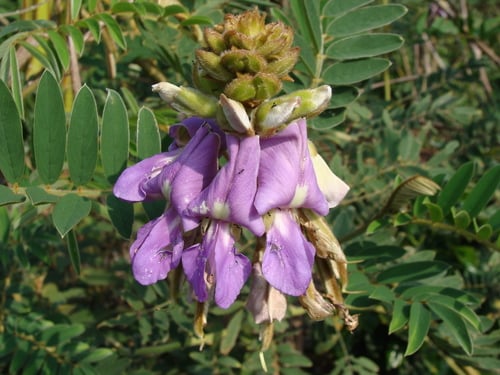
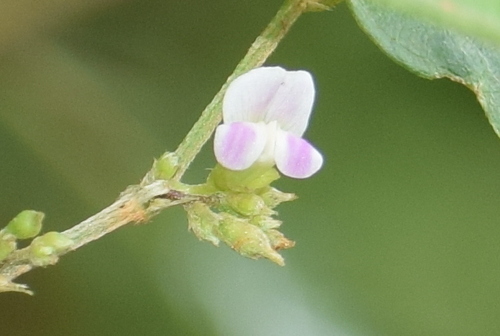
Daniellia oliveri
(Rolfe) Hutch. et J. M. Dalziel
African Copaiba
iNaturalist· cc-by-nc
(c) AMADOU BAHLEMAN FARID, some rights reserved (CC BY-NC), uploaded by AMADOU BAHLEMAN FARID
iNaturalist· cc-by-nc
(c) ASSEDE Eméline S.P., some rights reserved (CC BY-NC), uploaded by ASSEDE Eméline S.P.
iNaturalist· cc-by-nc
(c) didolanvijustin, some rights reserved (CC BY-NC), uploaded by didolanvijustin
Summary
Source: WikipediaDaniellia oliveri is a species of tree in the family Fabaceae. It is native to tropical West and Central Africa and is commonly known as the African copaiba balsam tree, or the West African copal tree.
Description
A tree. It grows 30-45 m high. The trunk is straight or slightly tapered. It does not have buttresses but the roots are fluted at the base. The crown is flat. The leaves have 4-11 pairs of leaflets along the stalk and one at the end. The fruit are flat one-sealed pods.
Edible Uses
Tender young leaves are cooked and eaten as a vegetable, though they are generally only consumed in times of scarcity. The leaves are increasingly being used as a substitute for Vitex doniana leaves, which have become harder to obtain due to over-exploitation.
Traditional Uses
The young leaves are used as a famine food. They are flavoured with salt or pepper or put in soups. The bark is used as a fermenting agent in beer. The bark is also used to make a tea drink. The fruit can be eaten. The seeds are eaten. The resin has a strong smell and is sweet and eaten like honey.
Medicinal Uses
A decoction of the root is used to treat gonorrhoea and skin diseases. The gum-resin obtained from the wood is used medicinally. The leaves are used in the treatment of dysmenorrhoea. The roots, leaves, and bark are all used medicinally.
Distribution
A tropical plant. It grows in clay soils. It is in woodland and wooded grassland. It is resistant to fire. It can grow in arid places. In Nigeria it has been recorded at 200 and 900 m above sea level.
Where It Grows
Africa, Angola, Benin, Burkina Faso, Cameroon, Central Africa, Central African Republic, CAR, Chad, Congo, Congo DR, Côte d'Ivoire, East Africa, Gambia, Ghana, Guinea, Guinée, Guinea-Bissau, Ivory Coast, Mali, Niger, Nigeria, Sahel, Senegal, Sierra Leone, Sudan, Togo, Uganda, West Africa,
Cultivation
It can be cut back and will re-grow.
Propagation
Daniellia oliveri is light-demanding and often regenerates well naturally. There are approximately 600 seeds per kg. Seed is prone to insect attack and should be stored with ash added to prevent damage. Soak seed in water for 72 hours before sowing. Germination rate is 75–95% in 2–3 weeks. Growth in the nursery is slow and irregular. Transplanting is not very successful because tap roots form rapidly — frequent root pruning is essential for successful establishment. In Côte d'Ivoire and Burkina Faso, the best survival rate three years after planting was 60%, but in most cases it was under 20%. Seed may also be sown directly in the field. The species can also be propagated by root suckers, which it produces abundantly, often resulting in clusters of small trees. It can be coppiced and pruned regularly for fodder, and is being planted experimentally in Ghana to provide cattle fodder. Weeding after transplanting is necessary due to the slow growth of seedlings.
Other Uses
An ogea-gum-resin obtained from the wood is used in the manufacture of perfume, varnishes, and furniture polish, and is also used locally as a gum. The heartwood is brown, sometimes with greenish-brown veins, not clearly demarcated from the 4–12cm wide sapwood band. The texture is coarse with straight or interlocked grain. The wood is light, soft, and not very durable — it has slight resistance to fungi and is susceptible to dry wood borers and termites. It seasons rapidly with only slight risk of checking or distortion, and once dry is moderately stable in service. It can be worked with ordinary tools kept very sharp to avoid fuzzy surfaces; nailing, screwing, and gluing are all satisfactory, though warping of dried veneers can complicate assembly. The wood is used for boxes and crates, cheaper furniture, interior joinery, blockboard, and veneer. This species is noted for carbon farming.
Production
It grows quickly.
Notes
Also as Caesalpinaceae.
Synonyms
Also Known As
Accra copal, Becuncaro, Biecar, Bobe, Boto, Chiha, Ilorin balsam, Kameuri, Kede, M'beta, Ogea, Pau-incenso, Po-de-incenso, Rungulo, Sambam Ulungu, Samein, Santam-o, Santam-um, Santamo, Santan, Santango, Santani, Sanya, Si-bink, Tchebe, Tchene, Tchesi, Ucumbo, Untande
References (20)
- Abbiw, D.K., 1990, Useful Plants of Ghana. West African uses of wild and cultivated plants. Intermediate Technology Publications and the Royal Botanic Gardens, Kew. p 42
- Achigan-Dako, E, et al (Eds), 2009, Catalogue of Traditional Vegetables in Benin. International Foundation for Science.
- Alyegba, S. S. et al, 2013, Ethnobotanical Survey of Edible Wild Plants in Tiv Communities of Benue State, Nigeria. Journal of Natural Sciences Research. Vol.3, No.7
- Batawila, K., et al, 2007, Diversite et gestion des legumes de cueillete au Togo. African Journal of Food, Agriculture, Nutrition and Development 7( 3& 4): 65
- Burkill, H. M., 1985, The useful plants of west tropical Africa, Vol. 3. Kew.
Show all 20 references Hide references
- Chapman, J. D. & Chapman, H. M., 2001, The Forest Flora of Taraba and Andamawa States, Nigeria. WWF & University of Canterbury. p 182
- Choudhary, S., 1999, Ethnobotany of Janjangbureh Island, The Gambia, West Africa. Honors thesis Dept. Biology City University of New York.
- Dansi, A., et al, 2008, Traditional leafy vegetables and their use in the Benin Republic. Genet Resour Crop Evol (2008) 55:1239–1256
- East African Herbarium records, 1981,
- FAO Corporate Document Repository. The Major Significance of 'Minor' Forest Products. Appendix 3
- Fl. W. trop. Afr. 1:341. 1928
- Gallagher, D. E., 2010, Farming beyond the escarpment: Society, Environment, and Mobility in Precolonial Southeastern Burkina Faso. PhD University of Michigan.
- Grubben, G. J. H. and Denton, O. A. (eds), 2004, Plant Resources of Tropical Africa 2. Vegetables. PROTA, Wageningen, Netherlands. p 561
- Jardin, C., 1970, List of Foods Used In Africa, FAO Nutrition Information Document Series No 2.p 22, 74
- Le Houerou, H. N., (Ed.), 1980, Browse in Africa. The current state of knowledge. International Livestock Centre for Africa, Ethiopia. p 162
- Martin, F.W. & Ruberte, R.M., 1979, Edible Leaves of the Tropics. Antillian College Press, Mayaguez, Puerto Rico. p 199
- N'Danikou, S. et al, 2010, Eliciting Local Values of Wild Edible Plants in Southern Bénin to Identify Priority Species for Conservation. Economic Botany, 20(10), 2011, pp. 1–15.
- Peters, C. R., O'Brien, E. M., and Drummond, R.B., 1992, Edible Wild plants of Sub-saharan Africa. Kew. p 122
- Royal Botanic Gardens, Kew (1999). Survey of Economic Plants for Arid and Semi-Arid Lands (SEPASAL) database. Published on the Internet; http://www.rbgkew.org.uk/ceb/sepasal/internet [Accessed 21st April 2011]
- World Checklist of Useful Plant Species 2020. Royal Botanic Gardens, Kew