Dacryodes buettneri
(Engl.) H. J. Lam
gbif· cc-by-nc-nd
Christ Kombil, West & Central Africa programme
gbif· cc-by-nc-nd
Christ Kombil, West & Central Africa programme
gbif· cc-by-nc-nd
Christ Kombil, West & Central Africa programme
Description
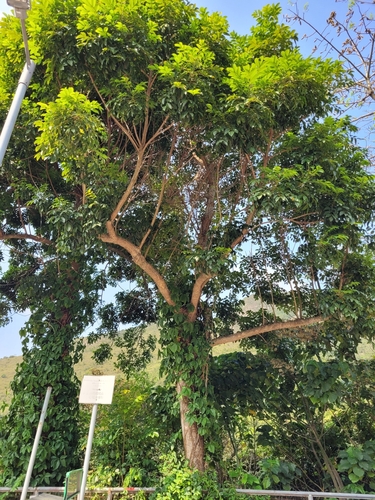
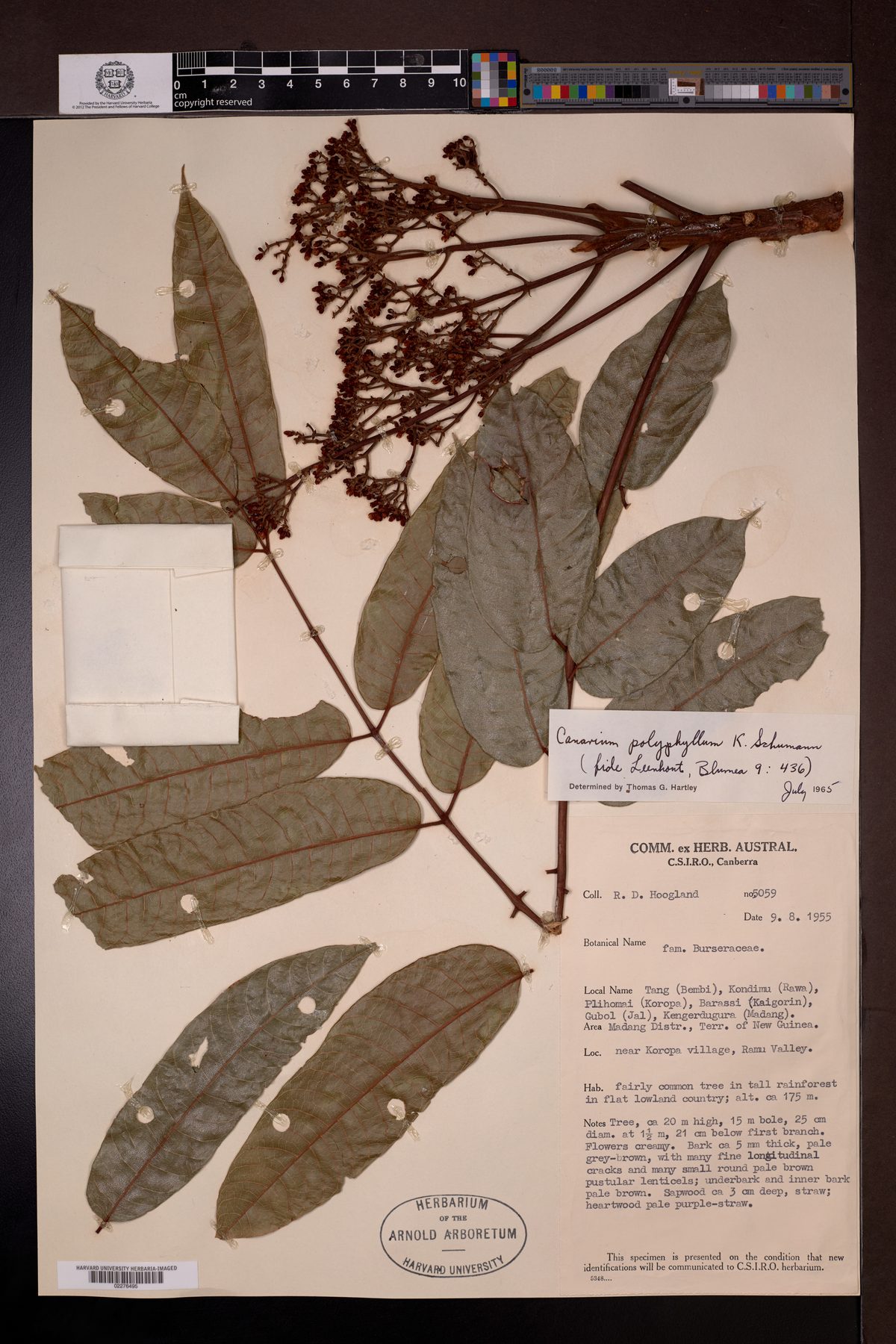
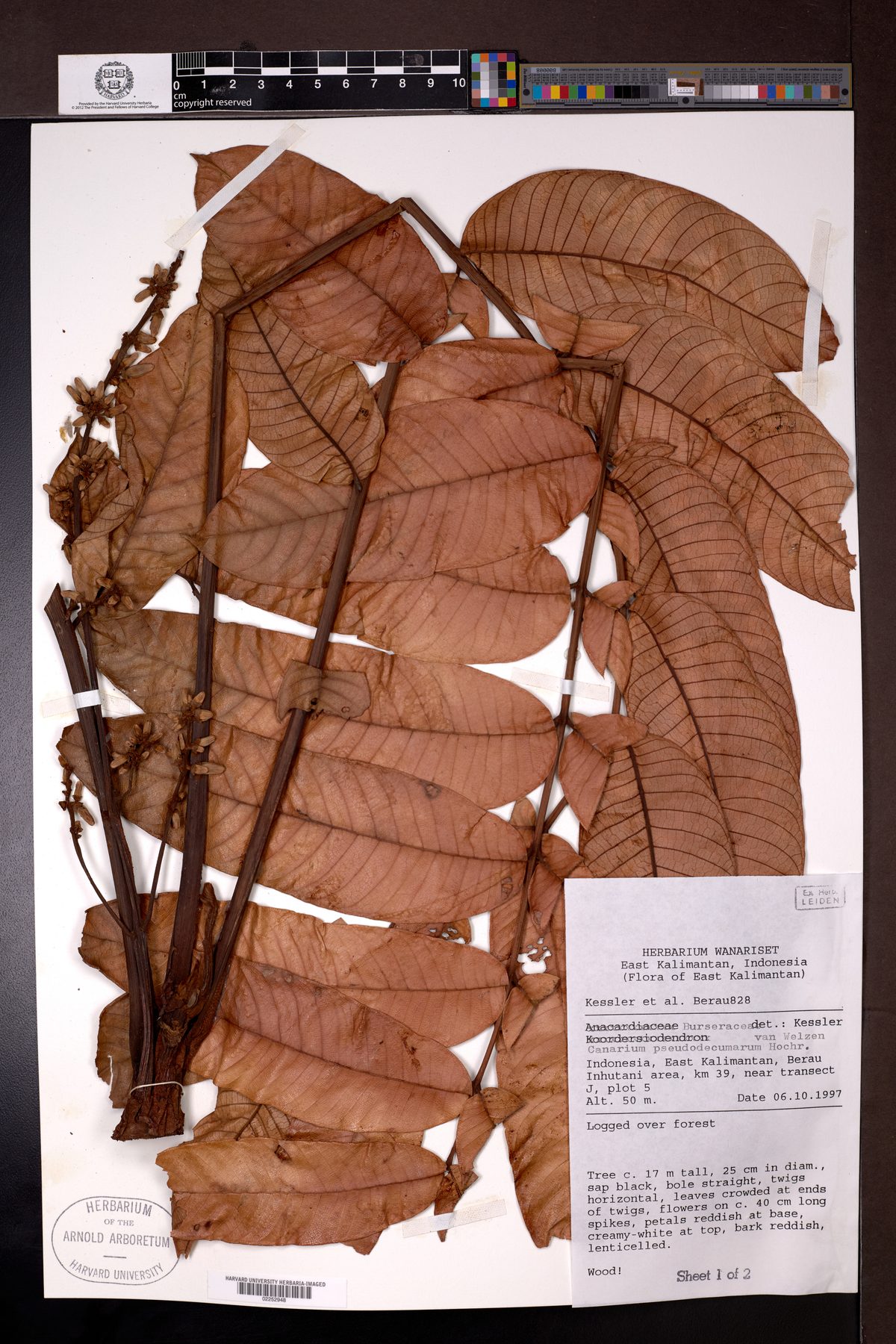
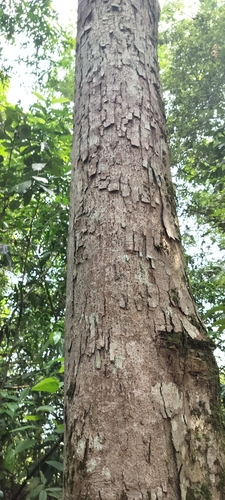
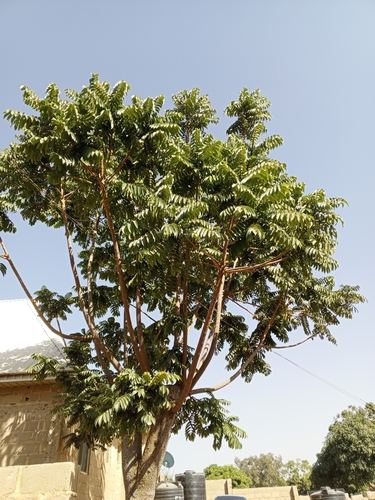
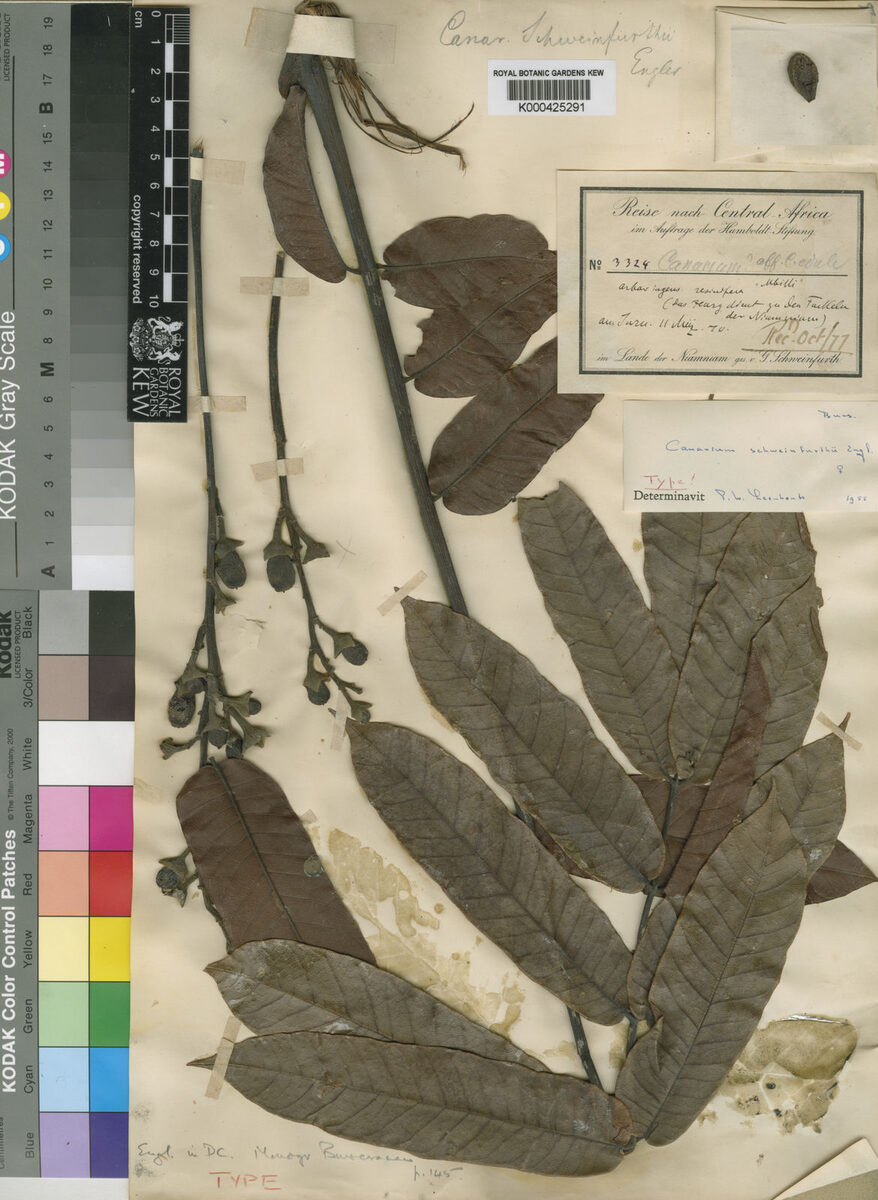
A large tree. It grows to 35 m high. The trunk can be 1.5 m across. The leaves are compound and alternate. There are 6-8 pairs of opposite leaflets. These are 12-20 cm long by 3-4 cm wide. There is a leaflet at the end. The fruit are fleshy and 2-3.5 cm long by 1-1.5 cm wide. They are blue when ripe. They have one seed.
Edible Uses
Fruit - cooked. The oil-rich pulp is consumed after soaking the fruit in boiling water for about one minute. The fruits resemble those of the butter fruit tree (Dacryodes edulis), but they are smaller.
Traditional Uses
The fruit are boiled and eaten.
This uses section is brief — help expand it
Medicinal Uses
The powdered bark is used for the treatment of burns. The resin is applied to abscesses, and it is used as a disinfectant and astringent. Distillation of the resin yielded 6.7% essential oil, with the main components being terpinen-4-ol (27%), p-cymene (19%) and alpha-pinene (13%). The essential oil showed in-vitro antioxidant activity and antibacterial activity against a range of bacteria. The main components in the essential oil of the fruit are alpha-pinene (29%) and limonene (23%).
Distribution
A tropical plant. It grows in dense forest.
Where It Grows
Africa, Cameroon, Central Africa, CAR, Central African Republic, CAR, Congo DR, Equatorial-Guinea, Gabon,
Cultivation
Plants can be grown from seed. Seed take one month to germinate.
Propagation
Seed - best sown as soon as it is ripe. Germination takes 30 - 37 days. The seeds can germinate in forest undergrowth and tolerate quite low light intensities. The seeds may form dense mats below mother trees, but many of them disappear rapidly. Some seedlings may persist in forest undergrowth for several years, but more light seems necessary for subsequent growth.
Other Uses
When cut, the inner bark slowly exudes a translucent resin with a terebinth-like odour. It is used medicinally. The heartwood is pinkish white to grey-cream; it is not distinctly demarcated from the 5 - 9cm wide band of sapwood. The grain may be interlocked, crossed or straight; the texture is rather coarse; the wood contains 0.1 - 0.5% silica. The wood is medium-weight; it is not durable and is liable to attack by fungi, termites and other insects, but is resistant to marine borers. The high silica content, and the presence of interlocked grain, may cause problems during processing and make special equipment necessary. The wood saws easily, but with serious blunting effect, necessitating the use of stellite teeth and tungsten carbide tools - the working angle should be reduced as much as possible. Quarter sawn pieces have a ribbon-like aspect and are sometimes marbled; flat-sawn pieces have better surfaces after processing. The peeling properties are good. Although the wood can be peeled without prior steaming, steaming is recommended to improve the quality of the sheets obtained; it is not recommended or useful for slicing. Gluing properties are good, but problems may arise with glues based on phenol-formol. Nailing, screwing and finishing properties are good. The wood is not recommended for temporarily or permanently humid conditions. The wood is especially used for plywood (for boxes, packaging or furniture) and no longer used much in massive form, although it can be sawn into planks for interior joinery, furniture, carpentry, moulding, parquetry, interior stairs, panelling, vehicle bodies, boat hulls, boxes and poles. Locally, the wood is used for making canoes. It is suitable for papermaking.
Notes
Most Dacryodes have edible fruit.
Synonyms
Also Known As
Ashia, Assa, Assas, Assia, Ozigo
References (7)
- Iponga, D. M., et al, 2016, The contribution of NTFP-gathering to rural people’s livelihoods around two timber concessions in Gabon. Agroforest Syst. Springer
- Jardin, C., 1970, List of Foods Used In Africa, FAO Nutrition Information Document Series No 2.p 131
- Koni, J. M. & Bostein, K., 2008, Noms et usages des plantes utiles chez les Nsong, DR Congo. University of Gothenburg. Department of Oriental and African Languages. p 40
- Onana, J. M., 2008, A synoptic revision of Dacryodes (Burseraceae) in Africa, with a new species from Central Africa. KEW BULLETIN VOL. 63: 385–400
- Raponda-Walker, A & Sillans, R., 1961, Les Plantes Utiles du Gabon. Editions Paul Lechevalier, Paris. p 111 (As Pachylobus buttneri) (Drawing)
Show all 7 references Hide references
- Vivien, J. & Faure, J.J., 1985, Abres des forets dense d'Afrique Centrale. Agence de Cooperation Culturelle et Technique. Paris. p 54
- Vivien, J., & Faure, J.J., 1996, Fruitiers Sauvages d'Afrique. Especes du Cameroun. CTA p 88