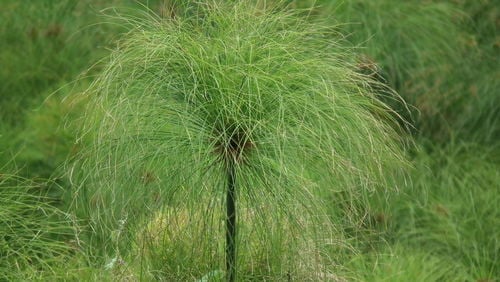
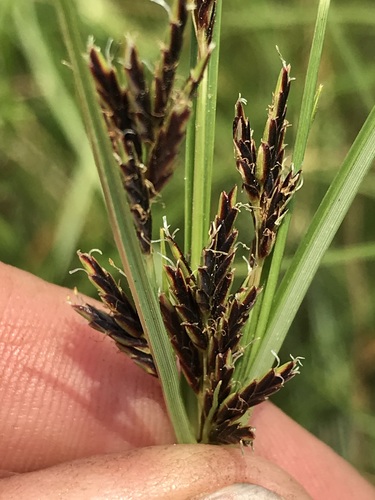
Cyperus jeminicus
Benth. ex Kunth.
iNaturalist· cc-by
(c) Nina Kerr, some rights reserved (CC BY)
iNaturalist· cc-by
(c) Nina Kerr, some rights reserved (CC BY)
iNaturalist· cc-by
(c) Nina Kerr, some rights reserved (CC BY)
Summary
Source: WikipediaCyperus jeminicus is a species of sedge that is native to parts of Africa, the Middle East and India. The species was first formally described by the botanist Christen Friis Rottbøll in 1773.
Description
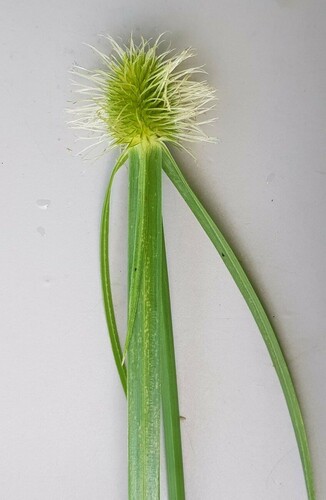
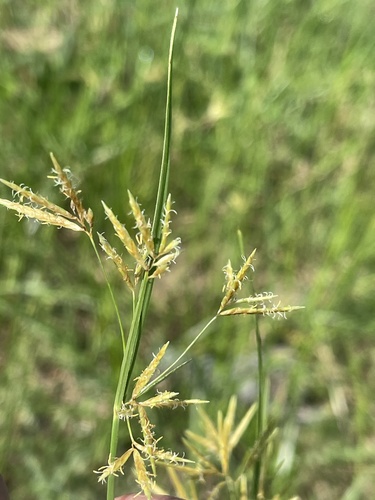
A tropical sedge that grows in clumps with grass-like leaves and solid stalks. The leaves, tubers, and roots are all edible.
This description is brief — help expand it
Edible Uses
The leaves are eaten fresh. The tubers are ground into flour.
Traditional Uses
The leaves are eaten. The tubers are ground into flour.
This uses section is brief — help expand it
Distribution
It is a tropical plant.
Where It Grows
Africa, Asia, Burkina Faso, India,
Notes
There are 550 Cyperus species. Naming uncertain - authority.
References (3)
- Lim, T. K., 2015, Edible Medicinal and Non Medicinal Plants. Volume 9, Modified Stems, Roots, Bulbs. Springer p 32
- Simpson, D. A. & Inglis, C. A., 2001, Cyperaceae of Economic, Ethnobotanical and Horticultural Importance: A checklist. Kew Bulletin Vol. 56, No. 2 (2001), pp. 257-360
- WATT,