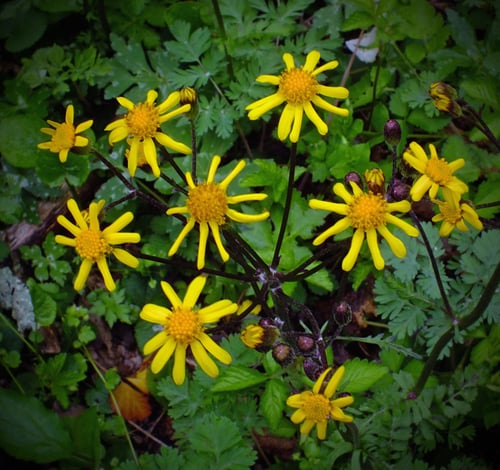
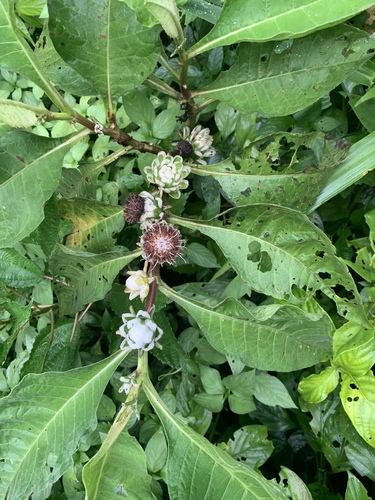
Cynara humilis
L.
Dwarf artichoke
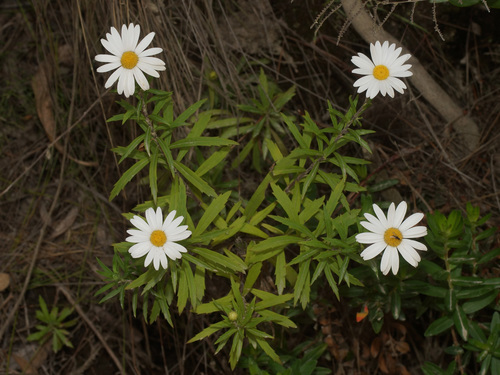
iNaturalist· cc-by-nc
(c) Sonja Bouwman-Gringhuis, some rights reserved (CC BY-NC), uploaded by Sonja Bouwman-Gringhuis
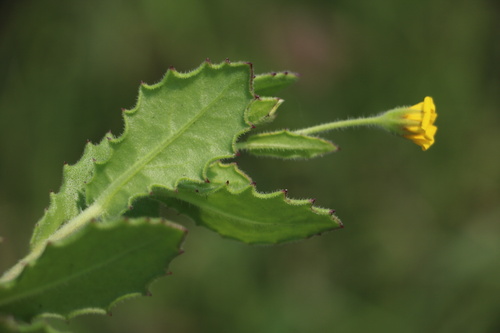
iNaturalist· cc-by-nc
(c) Sonja Bouwman-Gringhuis, some rights reserved (CC BY-NC), uploaded by Sonja Bouwman-Gringhuis
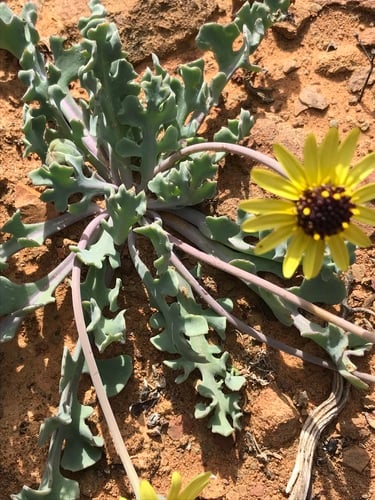
iNaturalist· cc0
no rights reserved, uploaded by dbmhartley
Summary
Source: WikipediaCynara humilis, called wild thistle, is a species of flowering plant in the artichoke and cardoon genus Cynara native to Portugal, Spain, Morocco, Algeria and Gran Canaria, in the Canary Islands. It is used locally as a coagulant in artisanal sheep and goat cheesemaking.
Description
A compact evergreen perennial reaching 0.3 m tall and 0.1 m wide, growing at a fast rate. Hardy to UK zone 7. Flowers are pollinated by insects and attract wildlife. Tolerates light sandy, medium loamy, and heavy clay soils with a preference for well-drained conditions and poor fertility. Grows across mildly acidic, neutral, and basic soil pH ranges. Requires full sun and adapts to both dry and moist conditions with good drought tolerance.
Edible Uses
The flowers of Cynara humilis are used to curdle milk for making local varieties of cheese, as are those of Cynara cardunculus. Still-closed flower heads can also be used as a vegetable in the same way as those of the globe artichoke.
Traditional Uses
The dried flowers are used as rennet for coagulating junket or yogurt. The flower receptacles are used for stew. The leaves at the base are peeled and used in stews. The roots are dried and used as a spice.
Medicinal Uses
Traditionally used to treat skin burns and microbial infections.
Distribution
It is a Mediterranean climate plant.
Where It Grows
Africa, Europe, France, Italy, Mediterranean, Morocco, North Africa, Spain,
Cultivation
Wild. A flowering plant in the artichoke and cardoon genus Cynara. Rich, well-drained, preferably slightly rocky soil in a protected spot in full sun
Propagation
Seed.
Other Uses
None known.
Notes
There are about 10 Cynara species.
Synonyms
Also Known As
Alcachofa de campo, Coque, Timet, Timta, Wild artichoke
References (9)
- Blanco-Salas, J., et al, 2019, Wild Plants Potentially Used in Human Food in the Protected Area “Sierra Grande de Hornachos” of Extremadura (Spain). Sustainability 2019, 11, 456
- Facciola, S., 1998, Cornucopia 2: a Source Book of Edible Plants. Kampong Publications, p 37
- Martin, F.W. & Ruberte, R.M., 1979, Edible Leaves of the Tropics. Antillian College Press, Mayaguez, Puerto Rico. p 184
- Nassif, F., & Tanji, A., 2013, Gathered food plants in Morocco: The long forgotten species in Ethnobotanical Research. Life Science Leaflets 3:17-54
- Rivera, D. et al, 2006, Gathered Mediterranean Food Plants - Ethnobotanical Investigations and Historical Development, in Heinrich M, Müller WE, Galli C (eds): Local Mediterranean Food Plants and Nutraceuticals. Forum Nutr. Basel, Karger, 2006, vol 59, pp 18–74
Show all 9 references Hide references
- Sp. pl. 2:828. 1753
- Tanji, A and Nassif, F., 1995, Edible Weeds in Morocco. Weed Technology. Vol. 9, No. 3, pp. 617-620
- Tardio, J., et al, Ethnobotanical review of wild edible plants in Spain. Botanical J. Linnean Soc. 152 (2006), 27-71
- Tbatou, M, et al, 2016, Wild Edible Plants traditionally used in the countryside of El Jadida, Coastal Area in the Center of Morocco. Life Sciences Leaflets 75:28-48