Cymbonotus preissianus
Steetz
Austral bear's ears
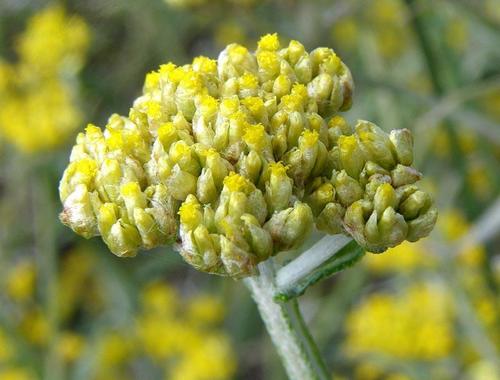
iNaturalist· cc-by-nc
(c) Tracie, some rights reserved (CC BY-NC), uploaded by Tracie
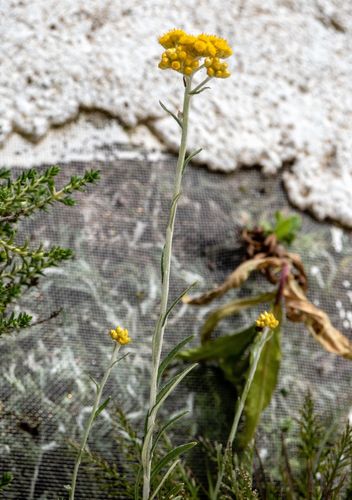
iNaturalist· cc-by-nc
(c) Reiner Richter, some rights reserved (CC BY-NC), uploaded by Reiner Richter
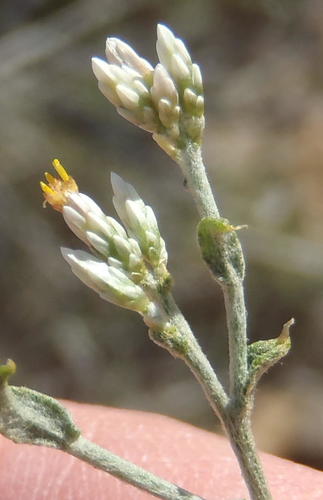
iNaturalist· cc-by-nc
(c) Chris Lindorff, some rights reserved (CC BY-NC), uploaded by Chris Lindorff
Summary
Source: WikipediaCymbonotus preissianus, commonly known as Austral bears ear, is an Australian species of small shrub in the family Asteraceae. A perennial herbaceous plant without stems, to 30 cm in diameter. Yellow flowers form from August to March. The habitat is woodland and sclerophyll forest, usually associated with disturbed areas, leaf litter and drainage lines. The type specimen was collected by Ludwig Preiss and the plant was described in 1845 by the German botanist Joachim Steetz.
Description
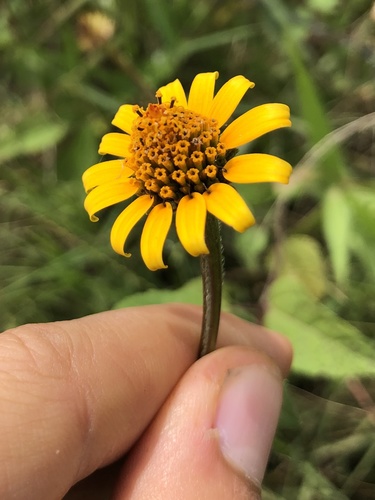
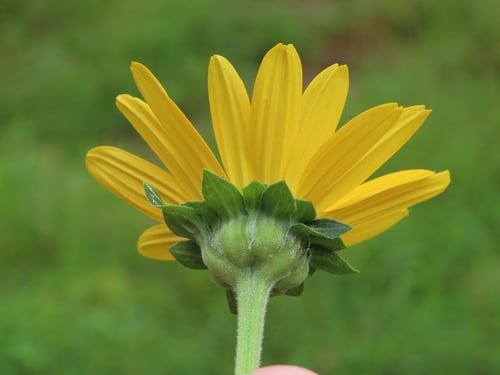
A herb. It is a ground hugging daisy. It is flat. The leaves form a ring near the base. The leaves are thick and large with a long stalk. There are teeth around the edge. The leaves are green and wrinkled above and white and woolly underneath. There are 2 or 3 flower stalks. The flowers are yellow and in rays. The centre is yellow. They are 2 cm across.
Edible Uses
The leaves are edible with a peppery flavor, though caution is advised.
Traditional Uses
The leaves are edible but peppery.
This uses section is brief — help expand it
Distribution
It grows in temperate places. Tasmania Herbarium.
Where It Grows
Australia*, Tasmania,
Notes
There are 2 Cymbonotus species.
Nutrition
| Part | Moisture | kJ | kcal | Protein | Vit A | Vit C | Iron | Zinc |
|---|---|---|---|---|---|---|---|---|
| Leaves | 87.7 | 96 | 23 | 2 | — | — | 1.3 | 2 |
References (3)
- Gilfedder, L et al, 2003, The Nature of the Midlands. Midlands Bushweb. PO Box 156 Longford, Tasmania. p 78 (?preissianus)
- Harris, S., Buchanan, A., Connolly, A., 2001, One Hundred Islands: The Flora of the Outer Furneaux. Tas Govt. p 145 (?preissianus)
- Paczkowska, G. & Chapman, A.R., 2000, The Western Australian Flora. A Descriptive Catalogue. Western Australian Herbarium. p 161