Cycas armstrongii
Miq.
Zamia palm, Cycad
iNaturalist· cc-by-nc
(c) Mark Hura, some rights reserved (CC BY-NC), uploaded by Mark Hura
iNaturalist· cc-by
(c) John Tann, some rights reserved (CC BY)
iNaturalist· cc-by
(c) John Tann, some rights reserved (CC BY)
Summary
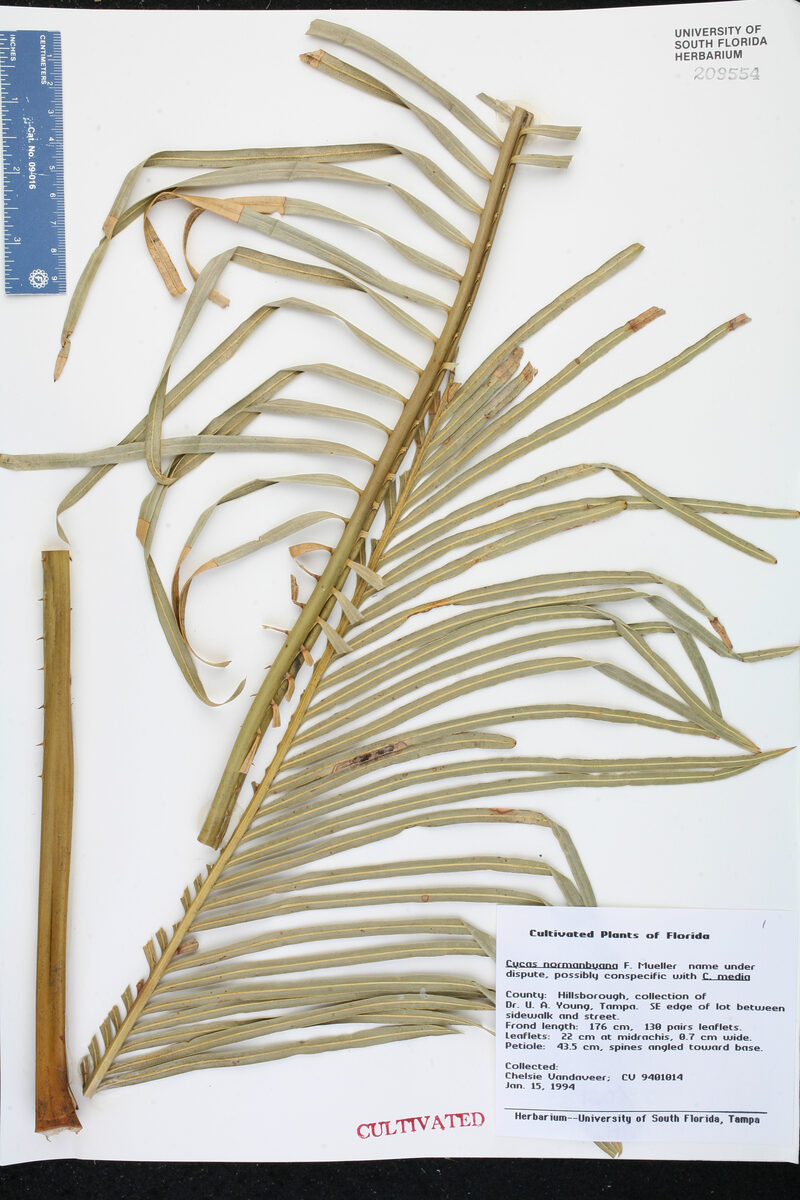
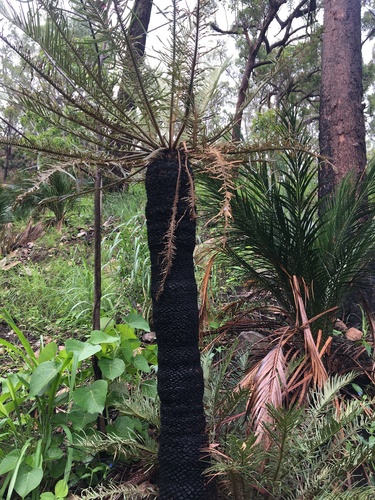
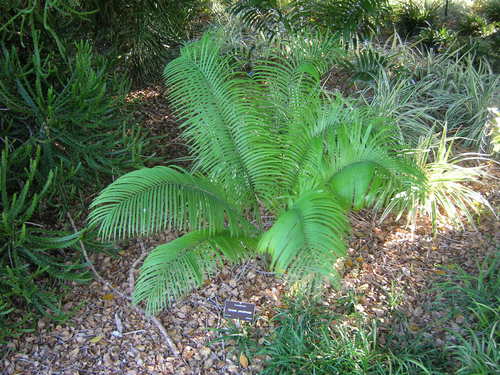
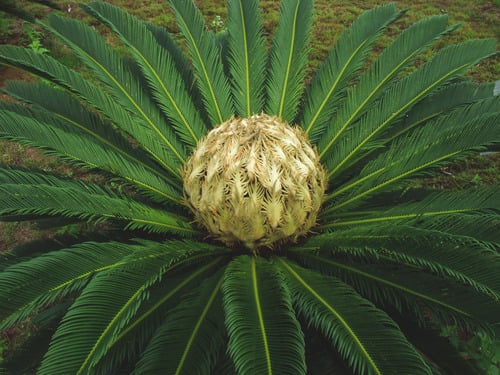
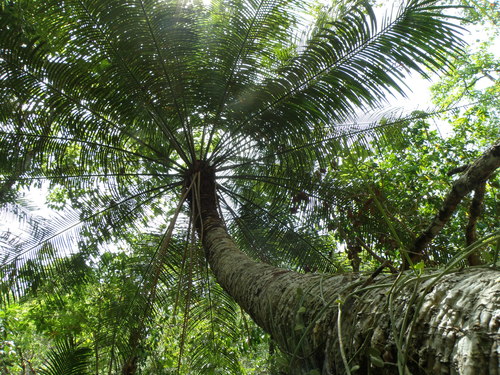
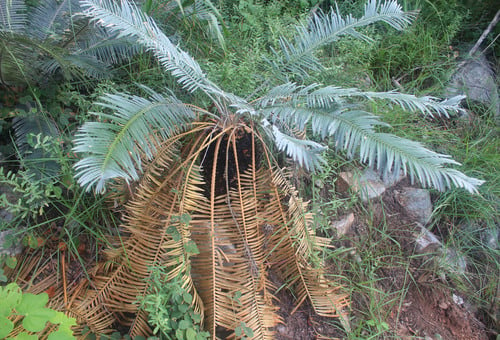
Source: WikipediaCycas armstrongii is a species of cycad in the genus Cycas, endemic to the Northern Territory of Australia. It is found from Darwin to the Mary River, the Finniss River in the west to the Arnhem Highway in the east, and north of Pine Creek. It also occurs on the Tiwi Islands and the Cobourg Peninsula. The stems reach 3 m (rarely 6 m) tall, with a diameter of 5–11 cm. The leaves are (very unusually for a cycad) deciduous in the dry season (though persistent if grown in moister situations), 55–90 cm long, slightly keeled or flat, pinnate with 100-220 leaflets; the leaflets densely orange-pubescent at first, then glossy bright green above, light green below, 5.5–14 cm long and 4.5–8 mm wide, angled forward at 40 degrees. Mature plants have around 50 leaves in the crown. The female cones open, with 13–22 cm long sporophylls with 2-4 ovules per sporophyll on a lanceolate triangular lamina with an apical spine. The sarcotesta has a yellow coating when ripe. The male cones are ovoid, orange, 11–20 cm long and 7.5–10 cm diameter, with upper half of cone drawn to a point. Fruiting: March to September. The species is named after the plant collector John Armstrong (d. 1847), a Kew Gardens plant collector, who was based at Port Essington on the Cobourg Peninsula.
Description
A palm like plant 2-4 m high. The trunk is rough and dark brown. The trunk is 10-15 cm across. Trees lose their leaves during the year. Male and female trees are separate. The leaves are up to 1 m long and made up of 100 or more leaflets. These leaflets are stiff, flat and narrow. They are 7-14 cm long by 0.5-0.7 cm wide. The stalk has thorns below the leaflets. The male cone is oval and brown. It is 12-20 cm long. It is made up of many scales arranged like a spiral. It grows at the top of the trunk. The female spike is flattened and hairy. There are usually 4 fruit. The fruit are hard and round and 2-4 cm across. They are brown when ripe. There is a single seed inside.
Edible Uses
The seeds (nuts) are eaten or made into flour after extensive preparation: roasting, cracking, de-husking, pounding, and soaking the pulp in water for 3 days.
Traditional Uses
The nuts are eaten or made into flour after extensive and thorough preparation and cooking. They are roasted, cracked de-husked and pounded and then the pulp is soaked in water for 3 days.
Distribution
A tropical plant. It grows in open forest. It suits tropical regions with seasonally dry climates. It suits hardiness zones 11-12.
Where It Grows
Australia*,
Cultivation
Plants are grown from seed. Seed may take 6-18 months to germinate. It can be grown from suckers.
Notes
There are about 20-40 Cycas species.
Nutrition
| Part | Moisture | kJ | kcal | Protein | Vit A | Vit C | Iron | Zinc |
|---|---|---|---|---|---|---|---|---|
| Nut processed | 29.3 | 722 | 173 | 5.8 | — | — | 4.6 | 1.2 |
Synonyms
Also Known As
Andirnku, Kwaka, Laluk, Marra, Minta, Ttuntju
References (18)
- Arch. Neerl. Sci. Exact. Nat. 3:235. 1868
- Brock, J., 1993, Native Plants of Northern Australia, Reed. p 132
- Cherikoff V. & Isaacs, J., The Bush Food Handbook. How to gather, grow, process and cook Australian Wild Foods. Ti Tree Press, Australia p 199
- Cronin, L., 1989, The Concise Australian Flora. Reed. p
- Cundall, P., (ed.), 2004, Gardening Australia: flora: the gardener's bible. ABC Books. p 449
Show all 18 references Hide references
- Elliot, W.R., & Jones, D.L., 1984, Encyclopedia of Australian Plants suitable for cultivation. Vol 3. Lothian. p 147
- Garde, M., et al, 2003, A Preliminary List of Kundedjnjenghmi Plant Names. Northern Land Council. (Arnhem Land, Australia)
- Hibbert, M., 2002, The Aussie Plant Finder 2002, Florilegium. p 79
- Isaacs, J., 1987, Bush Food, Aboriginal Food and Herbal Medicine. Weldons. p 81
- Jones, D.L., 2000, Cycads of the world. Reed New Holland. p 130
- Lazarides, M. & Hince, B., 1993, Handbook of Economic Plants of Australia, CSIRO. p 71
- Smith, N and Wightman, G.M., 1990, Ethnobotanical Notes from Belyuen Northern Territory Australia. Northern Territory Botanical Bulletin No 10. Parks and Wildlife Commission of the Northern Territory. p 10, 11.
- Smith, N. M., 1991, Ethnobotanical Field Notes from the Northern Territory, Australia, J. Adelaide Bot. Gard. 14(1): 1-65
- Tiwi Plants and Animals. 2001, Aboriginal flora and fauna knowledge from Bathurst and Melville Islands, northern Australia. Northern Territory Botanical Bulletin; No. 24 p 40
- Townsend, K., 1994, Across the Top. Gardening with Australian Plants in the tropics. Society for Growing Australian Plants, Townsville Branch Inc. p 152
- Wightman, G. & Andrews, M., 1991, Bush Tucker Identikit. Common Native Food Plants of Australia’s top end. Conservation Commission Northern Territory. p 38
- Wightman, G. & Brown, J., 1994, Jawoyn Plant Identikit, Common Useful Plants in the Katherine Area of Northern Australia. Conservation Commission Northern Territory. p 43
- Yunupinu Banjgul, Laklak Yunupinu-Marika, et al. 1995, Rirratjinu Ethnobotany: Aboriginal Plant Use from Yirrkala, Arnhem Land, Australia. Northern Territory Botanical Bulletin No 21. Parks and Wildlife Commission of the Northern Territory. p 31