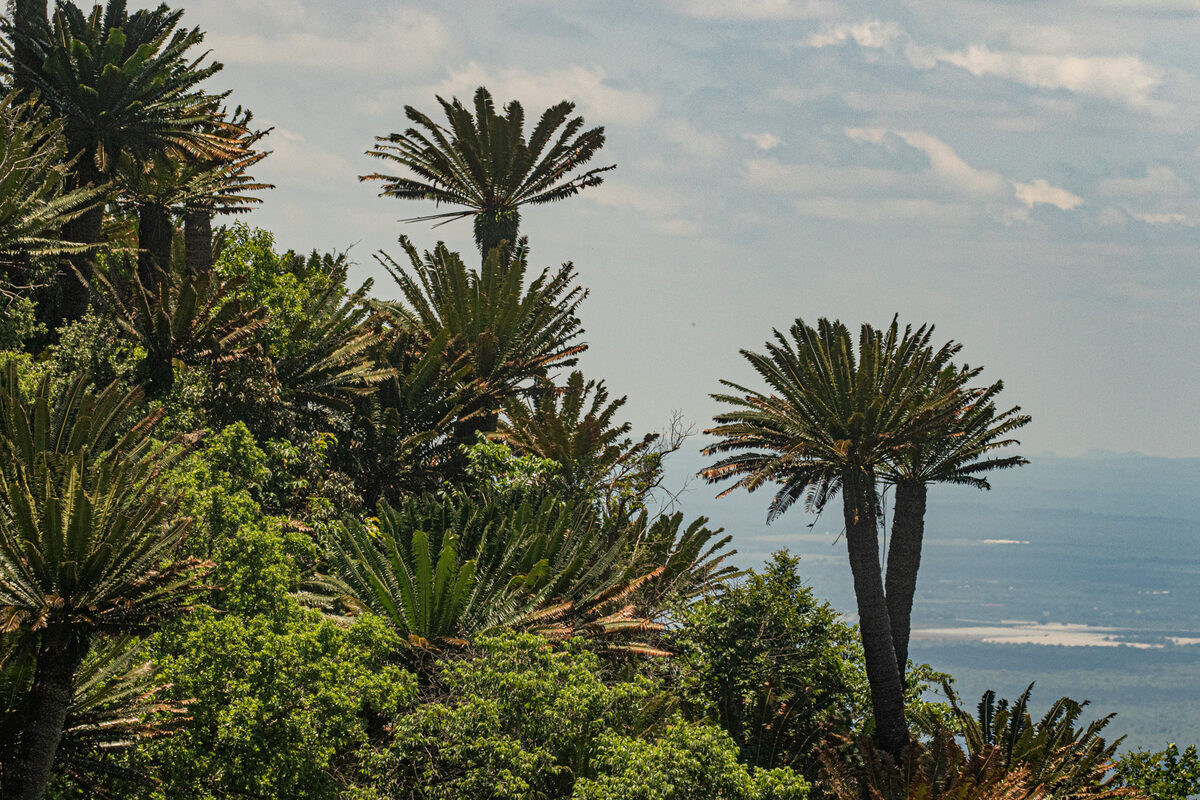
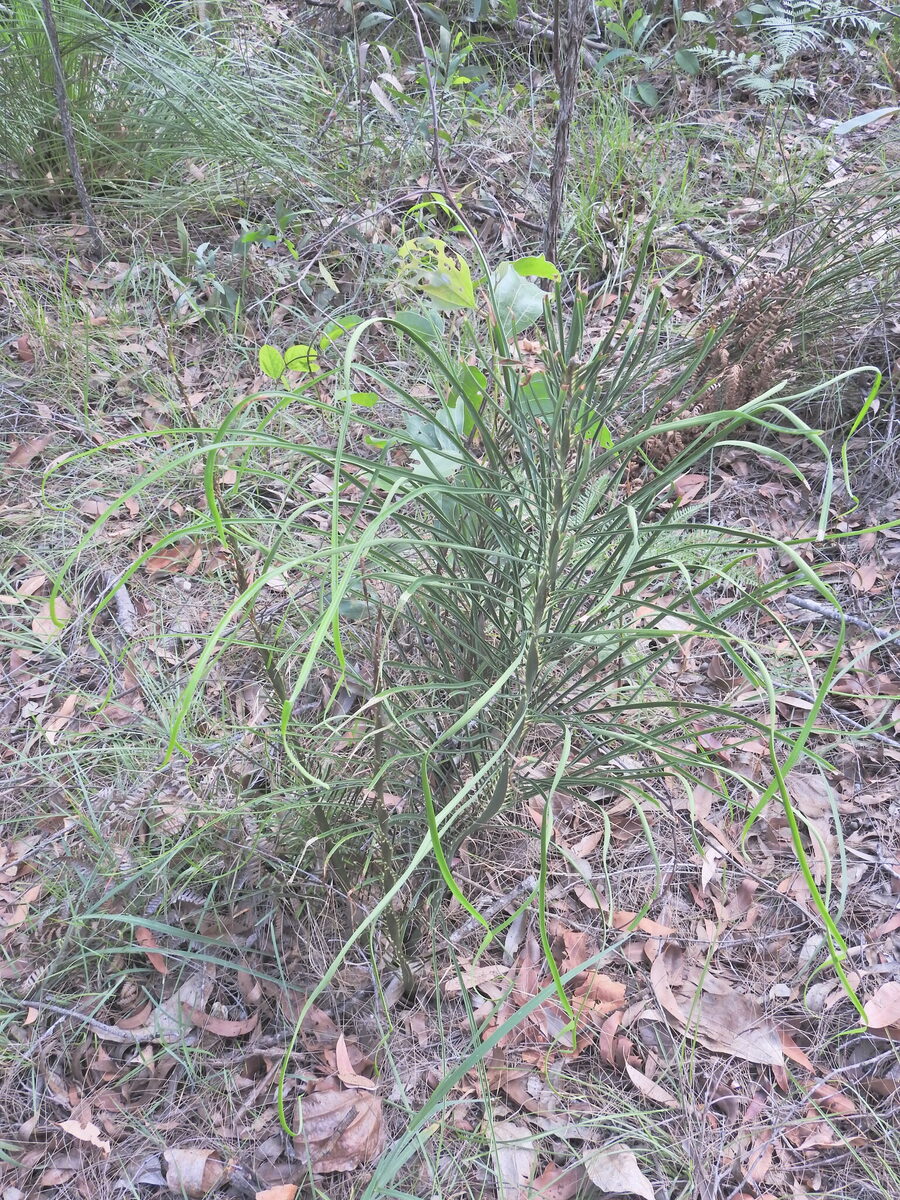
Cycas angulata
R. Br.
Zamia Palm, Muninga
iNaturalist· cc-by-nc
(c) GREGORIUZ, some rights reserved (CC BY-NC)
iNaturalist· cc-by-nc-nd
(c) Zig Madycki, some rights reserved (CC BY-NC-ND), uploaded by Zig Madycki
iNaturalist· cc-by-nc-nd
(c) Zig Madycki, some rights reserved (CC BY-NC-ND), uploaded by Zig Madycki
Summary
Source: WikipediaCycas angulata is a species of cycad in the genus Cycas, native to Australia in northeast Northern Territory (lower reaches of the Foelsche, Robinson and Wearyan Rivers near Borroloola) and northwest Queensland (Bountiful Islands).
Description
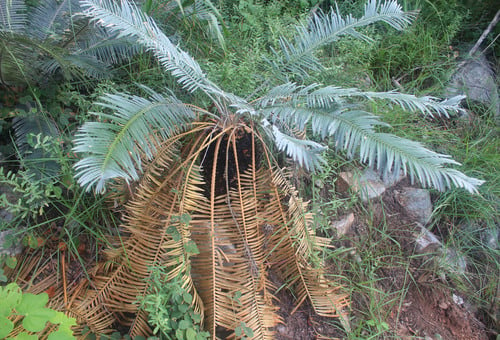
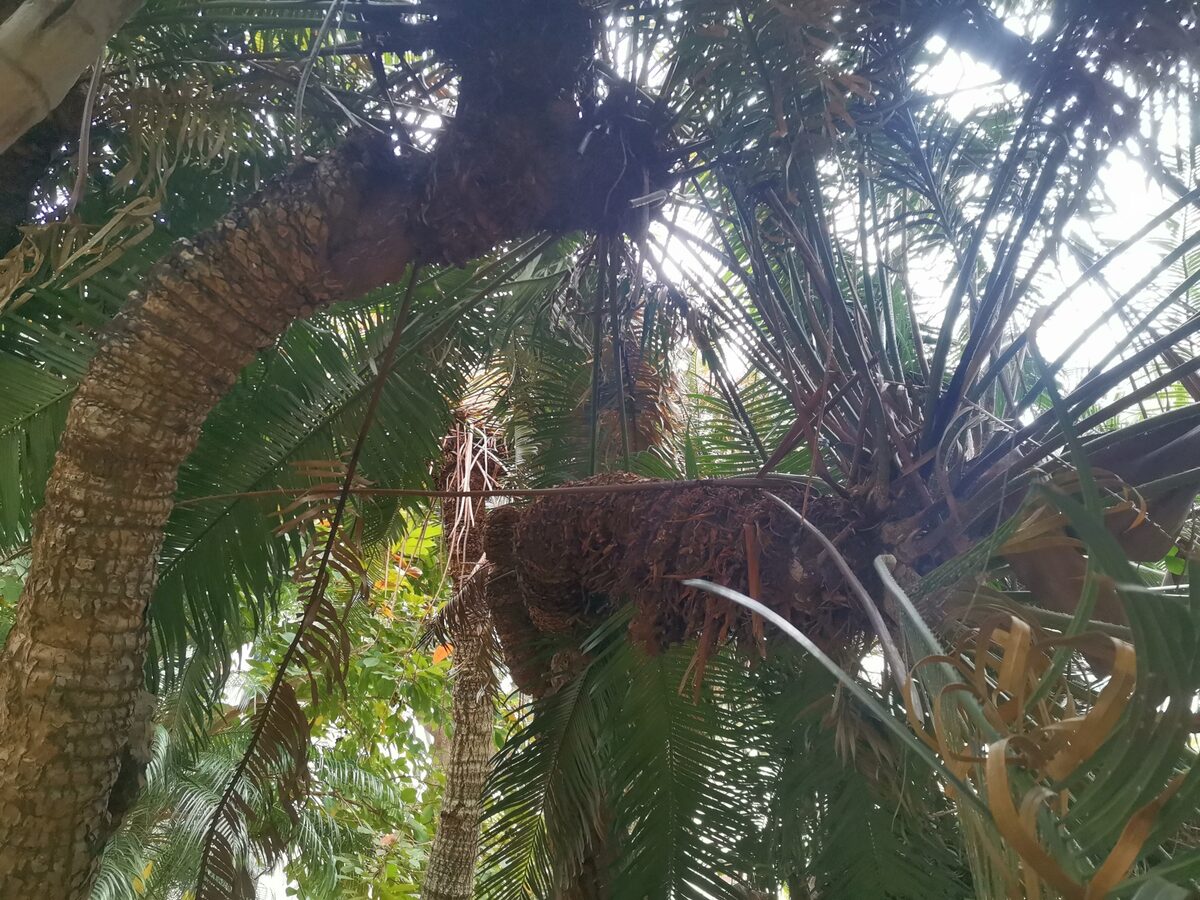
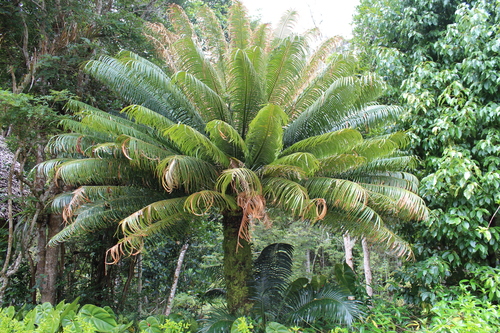
A large palm like plant. It grows 3-10 m high. The trunk is 40-85 cm across. The trunk can be branched. Separate male and female plants occur. The leaves are compound with dark green fronds. These may be 1 m long. They have 100 or more pairs of leaflets. The leaflets are 7-17 cm long by 0.4-0.6 cm wide. The edges curl upwards and the tip is pointed. The male cone is yellowish-brown and 20 cm long. It is at the end of the trunk. The female spikes are large and hairy and hang down. They have 3-6 fruit. The fruit are hard and round. They are 3.5-4.5 cm long by 3-3.5 cm wide. They turn orange when ripe. There is a single seed inside.
Edible Uses
The seed-like kernels of the cycad palm were eaten by aboriginal Australians because of the seed's high starch content. The seeds ripened during the dry season, when other foods consumed by native hunter-gatherers were scarce. A large grove represented a huge natural food source, and would be exploited by several native band groups. In its natural state the seed is highly toxic to mammals. The Australians recognised this danger, and responded by two methods. They removed the toxins by leaching with water for three to five days and then baking the starch; or they allowed the kernels to ferment before cooking and eating them. Note that the kernels contain carcinogens, and are not recommended for human consumption, even prepared through traditional methods.
Traditional Uses
The seeds are eaten after thorough preparation and cooking. They are poisonous unprocessed. Caution: Because they can cause cancer they are best not eaten.
Distribution
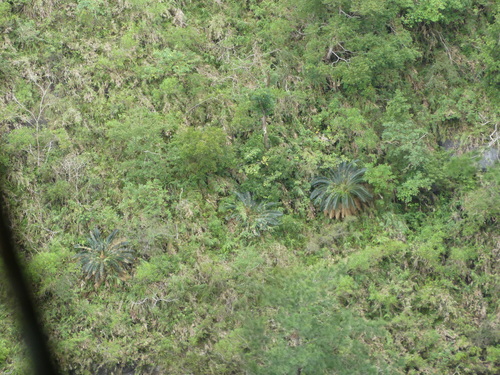
It is a tropical plant. It grows in open woodland often near streams. It grows in regions with hot humid summers and dry mild winters. Rainfalls of 1200-1500 mm occur.
Where It Grows
Australia*, Torres Strait,
Cultivation
Plants are grown from seed. They can be grown from suckers.
Notes
There are about 15-50-60 (89) Cycas species.
Nutrition
| Part | Moisture | kJ | kcal | Protein | Vit A | Vit C | Iron | Zinc |
|---|---|---|---|---|---|---|---|---|
| food | 7.6 | 1186 | 284 | 7.5 | — | — | 15.4 | 1.1 |
Synonyms
Also Known As
Bussamargh
References (11)
- Beck, W., 1992, Aboriginal Preparation of Cycas Seeds in Australia. Economic Botany, Vol. 46, No. 2, pp. 133-147
- Brock, J., 1993, Native Plants of Northern Australia, Reed. p 131
- Elliot, W.R., & Jones, D.L., 1984, Encyclopedia of Australian Plants suitable for cultivation. Vol 3. Lothian. p 147
- Fell, D.G. & Stanton, D.J., 2015: The vegetation and flora of Mabuyag, Torres Strait, Queensland. Memoirs of the Queensland Museum – Culture 8(1):1-33. Brisbane. ISSN 1440-4788. (As Cycas badensis)
- Hibbert, M., 2002, The Aussie Plant Finder 2002, Florilegium. p 79
Show all 11 references Hide references
- Jones, D.L., 2000, Cycads of the world. Reed New Holland. p 128
- Lazarides, M. & Hince, B., 1993, Handbook of Economic Plants of Australia, CSIRO. p 71
- Levitt, D., 1981, Plants and people. Aboriginal uses of plants on Groote Eylandt, Australian Institute of Aboriginal Studies, Canberra. p 79
- Mua Bioversity Profile, 2013, Profile for Management of the Habitats and Related Ecological and Cultural Resources of Mua Island. Torres Strait Regional Authority Land & Sea Management Unit. p 32 (As Cycas badensis)
- Prodr. 348. 1810
- Townsend, K., 1994, Across the Top. Gardening with Australian Plants in the tropics. Society for Growing Australian Plants, Townsville Branch Inc. p 152