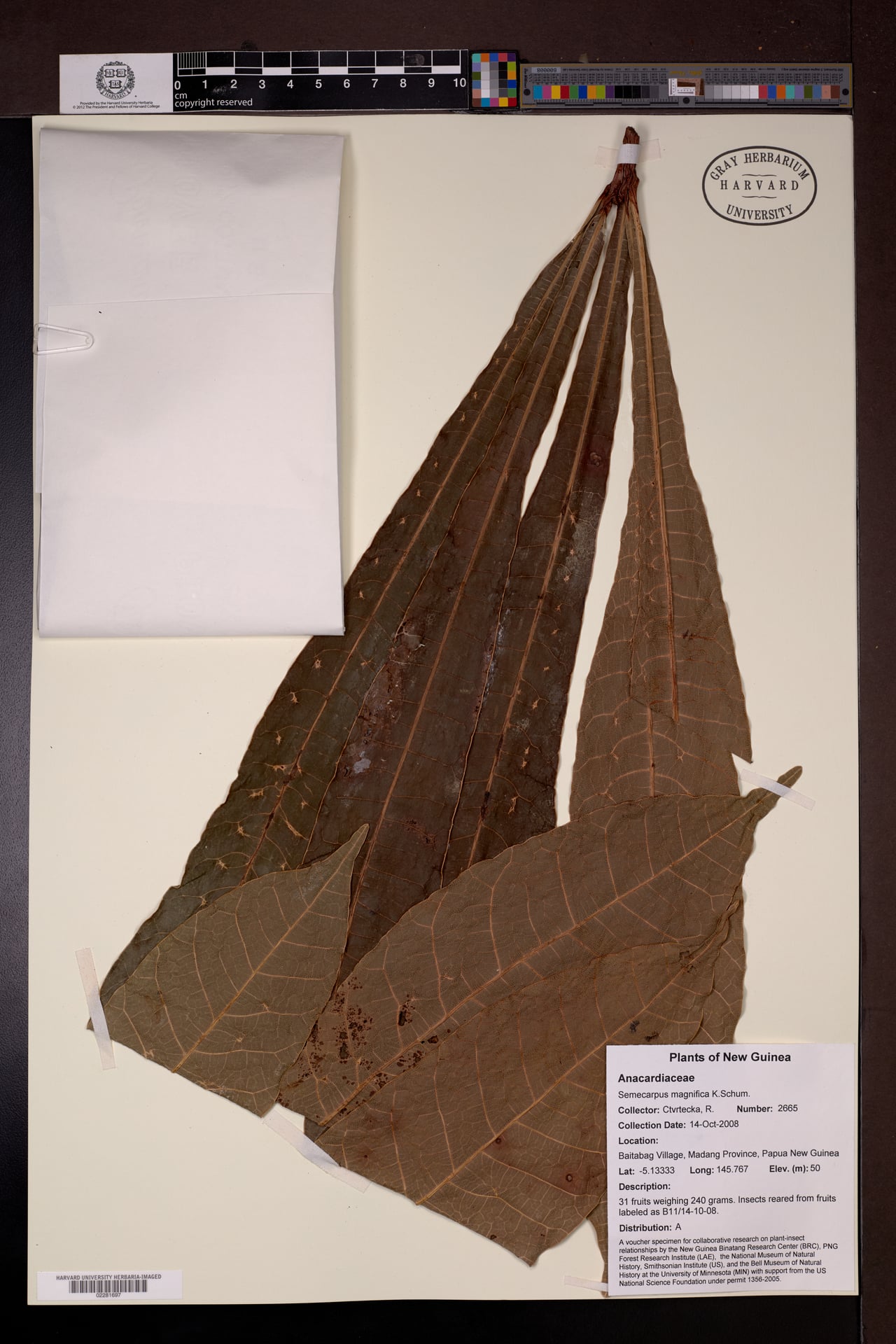
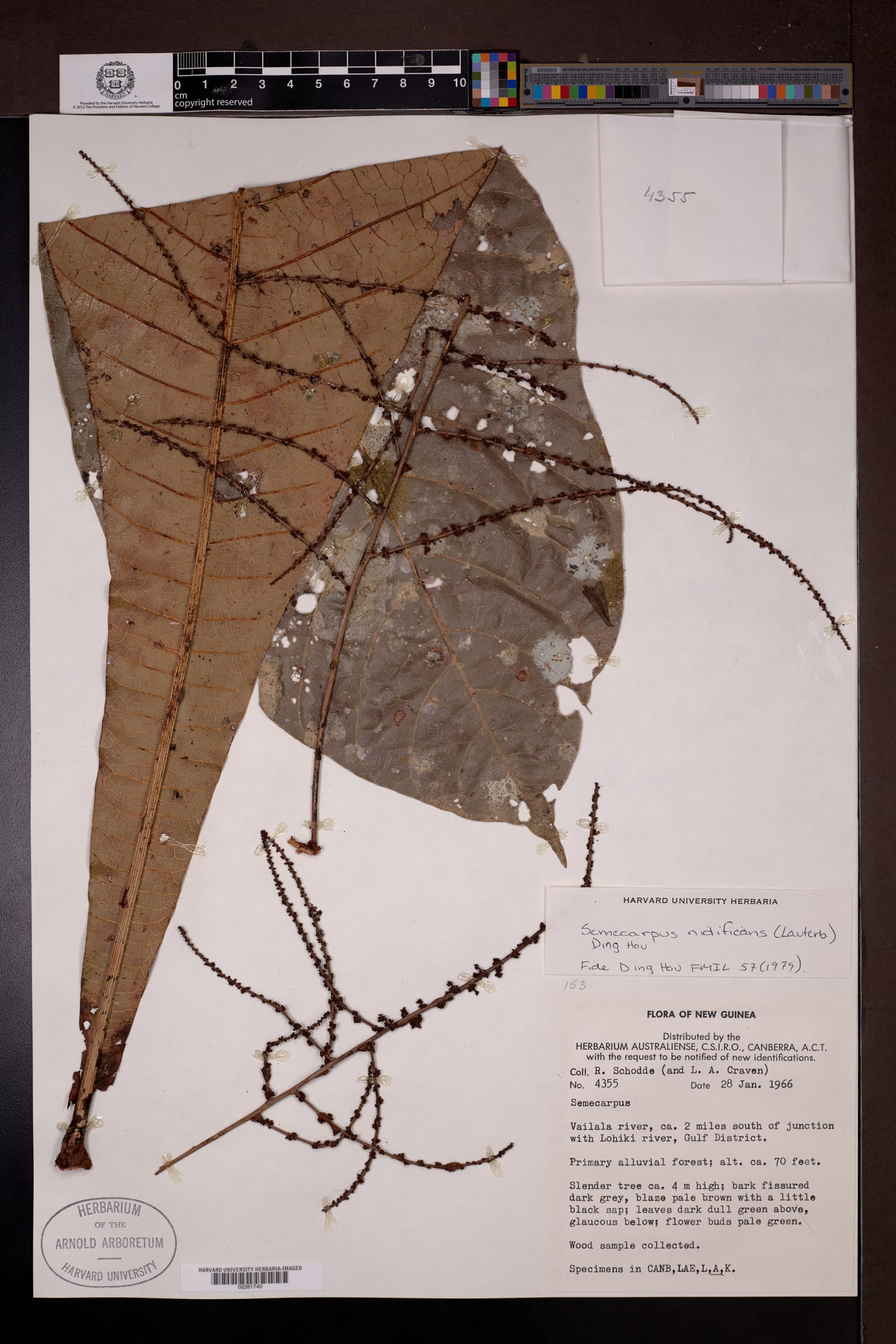
Campnosperma brevipetiolatum
Volkens
iNaturalist· cc-by-nc
(c) Kenneth R. Wood (NTBG), some rights reserved (CC BY-NC), uploaded by Kenneth R. Wood (NTBG)
iNaturalist· cc-by-nc
(c) Ben Ackerley, some rights reserved (CC BY-NC)
Summary
Source: WikipediaCampnosperma brevipetiolatum is a species of tree in the Anacardiaceae family. It is native to an area in the west Pacific and Malesia from the Santa Cruz Islands to the Caroline Islands and Sulawesi. It is commonly used for its timber, including for canoe making, but also for oil-production and medicine. It has been used as an indicator species to identify 19th century sites of indigenous occupation in the Solomon Islands.
Description
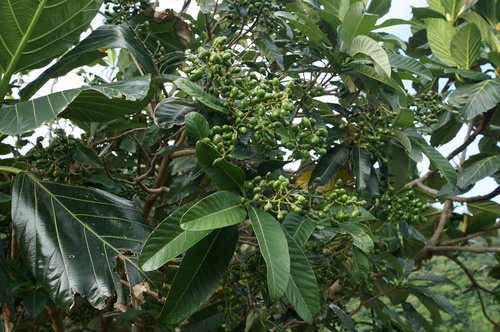
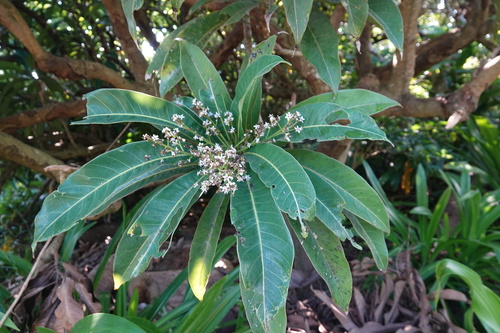
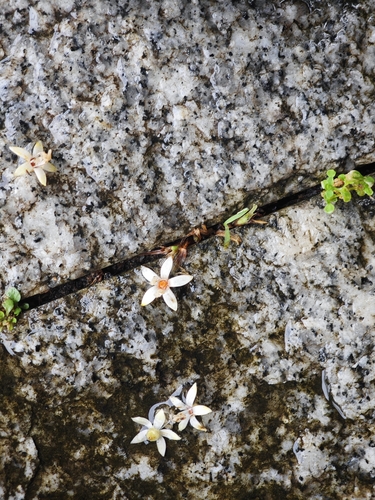
A tree. It grows 50 m tall. The trunk can be 120 cm across. The leaves are clustered near the tip of the twigs. The leaves are broadly sword shaped with ear like lobes. The leaves are 17.5 cm long. The flowers occur in large groups. They are yellow. The fruit is red to black when ripe.
Edible Uses
The nut is processed for oil.
Medicinal Uses
The taxa is predominantly used for timber, with logging occurring for local and national purposes. The timber is used in construction, and furniture and musical instrument making. Plywood, veneers and novelties have also been produced. Locally, canoe making and oil extraction occurs from the tree. Diumi-oil and tigaso-oil are used for veterinary and medicinal uses. The tree is used for reforestation in the Solomon Islands, readily growing. The Yachai people of the Mappi Regency, West Papua, use the tree for canoe-making, but the supply has been much reduced by logging. The tree has been used as an indicator of century-old disturbance on New Georgia, Solomons. 19th Century areas of settlement, swiddens and taro field terraces are marked by forest stands with the species, recognisable in aerial photography. People living in Bangus and Mariawai villages, East Sepik Province, PNG use the raw sap of the plant administered topically to treat ulcers.
Known Hazards
Caution advised when using this species.
Distribution
It is a tropical plant. It grows up to 500 m above sea level. It grows in swamp forests and forests that are occasionally flooded. It grows in Bougainville.
Where It Grows
Asia, Caroline islands, Indonesia, Pacific, Papua New Guinea, SE Asia, Solomon Islands,
Cultivation
Species in this genus are generally strongly light demanding even when young, and regenerate more abundantly in more open or disturbed habitats. A dioecious species, both male and female forms need to be grown if fruit and seed are required.
Other Uses
The wood yields an oil known as 'diumu-oil' or 'tigaso-oil'. It is mainly used externally to treat parasites. A commercial light hardwood. It is used locally to mke canoes. We do not have any more specific information on the wood of this species, but it is very likely to be very similar to the wood of other species in this genus. The general description is s follows:- The heartwood is grey-pink or mauve-grey, without any figure on surface; it is not distinct from the sapwood. The texture is fine and even; the grain shallowly to deeply interlocking. The wood is soft; light in weight; not very durable, being susceptible to sap stain and fungal infection. It is easy to resaw and cross-cut; planing is easy but the planed surface is rough and woolly with considerable picking up of the grain; nailing properly is rated as excellent. The wood is suitable for match-boxes, match splints, packing cases, disposable chopsticks, shoe soles, sandals and veneer. The wood is used locally in house construction.
Synonyms
Also Known As
Dalipo, Gwart, Terentang
References (2)
- Foreman, D. B., 1971, A checklist of the Vascular Plants of Bougainville with Descriptions of some Common Forest Trees. Botany Bulletin No. 5. Department of Botany. p 88
- World Checklist of Useful Plant Species 2020. Royal Botanic Gardens, Kew