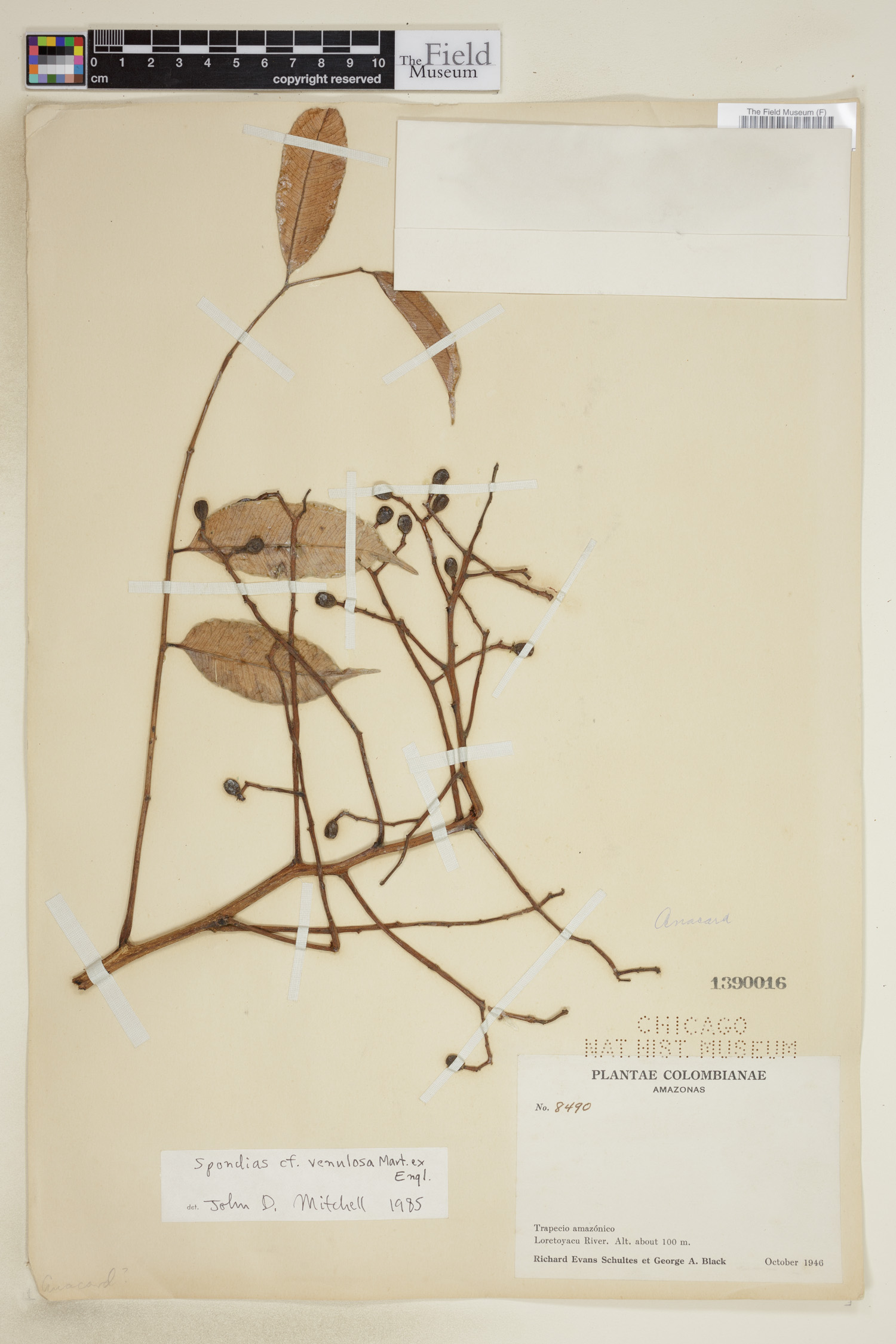
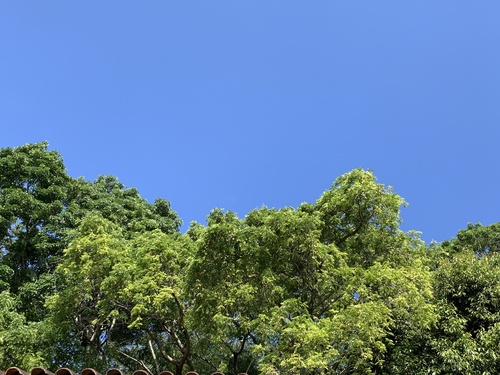
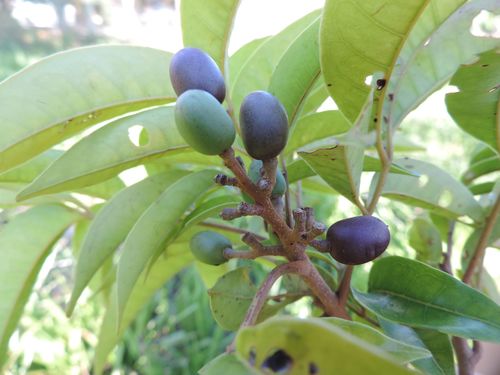
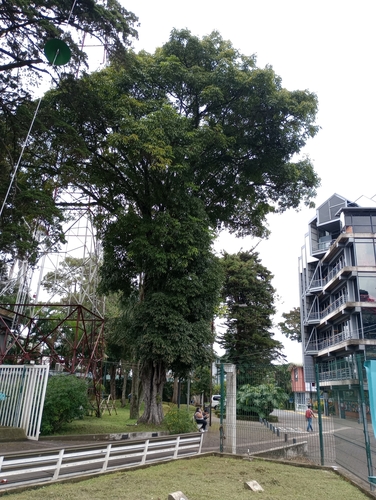
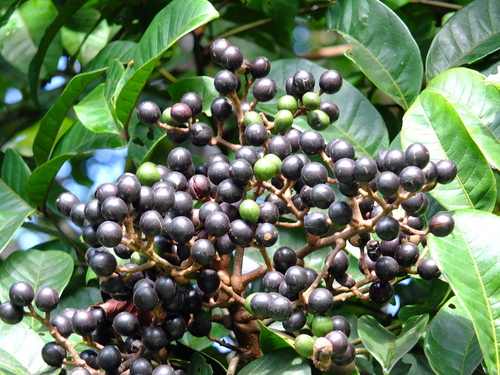
Campnosperma auriculatum
(Blume) Hook.f.
iNaturalist· cc-by-nc
(c) Andre Ronaldo, some rights reserved (CC BY-NC)
iNaturalist· cc-by-nc
(c) Andre Ronaldo, some rights reserved (CC BY-NC)
iNaturalist· cc-by-nc
(c) Andre Ronaldo, some rights reserved (CC BY-NC)
Summary
Source: WikipediaCampnosperma auriculatum is a rainforest tree in the family Anacardiaceae native to the East Indies and Southeast Asia. The sapling tree has very large leaves up to 1.8 metres (6 feet) long by up to 37 centimetres (15 inches) wide with wavey margins. The leaves of mature trees are oblanceolate and about 75 centimetres (30 inches) long, forming a tight circle at the ends of the branches. The flowers are yellowish, in small panicles, forming reddish berries upon pollination.
Description
A tree. It grows 38 m tall. The trunk can be 100 cm across. It has spreading buttresses 3 m high. The crown is flat topped. The leaves are oval and 12-63 cm long by 5-20 cm wide. They can be larger on young saplings. The flowers are yellow.
Edible Uses
The young shoots have a high water content and an astringent taste. They are chewed when working in the fields as a refreshing snack, known as 'periku'.
Traditional Uses
The young shoots are chewed as a refreshing snack.
This uses section is brief — help expand it
Known Hazards
The sap from the wood, which is known as 'terentang oil', can be harmful to people. It can cause quite severe skin irritation.
Distribution
It is a tropical plant. It grows from sea level to 1,000 m above sea level.
Where It Grows
Asia, Indonesia, Malaysia, SE Asia, Thailand,
Cultivation
Species in this genus are generally strongly light demanding even when young, and regenerate more abundantly in more open or disturbed habitats. A dioecious species, both male and female forms need to be grown if fruit and seed are required.
Other Uses
An oil, known as 'terentang oil', is obtained from the sap. No uses are mentioned for the oil in Malaysia, but it is reported to cause skin iritation. The heartwood is grey-pink or mauve-grey, without any figure on surface; it is not distinct from the sapwood. The texture is fine and even; the grain shallowly to deeply interlocking. The wood is soft; light in weight; not very durable, being susceptible to sap stain and fungal infection. It is easy to resaw and cross-cut; planing is easy but the planed surface is rough and woolly with considerable picking up of the grain; nailing properly is rated as excellent. The wood is suitable for match-boxes, match splints, packing cases, disposable chopsticks, shoe soles, sandals and veneer. It is used traditionally for making canoes.
Synonyms
References (2)
- Ferns, K., Useful Tropical Plants
- World Checklist of Useful Plant Species 2020. Royal Botanic Gardens, Kew