Adiantum aethiopicum
L.
Common Maidenhair fern
iNaturalist· cc-by-nc
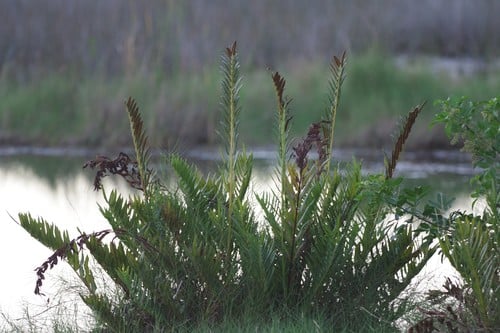
(c) tomjh, some rights reserved (CC BY-NC)
iNaturalist· cc-by-nc-sa
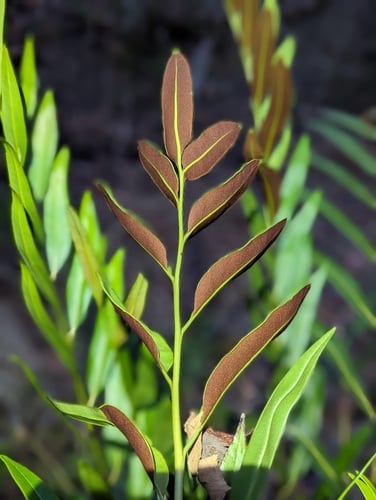
(c) Marine Explorer (Dr John Turnbull), some rights reserved (CC BY-NC-SA)
iNaturalist· cc-by-nc
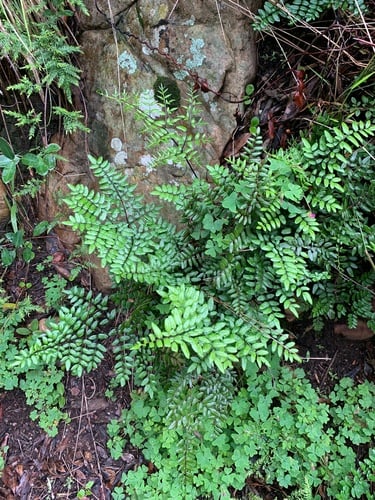
(c) Pete Woodall, some rights reserved (CC BY-NC), uploaded by Pete Woodall
Summary
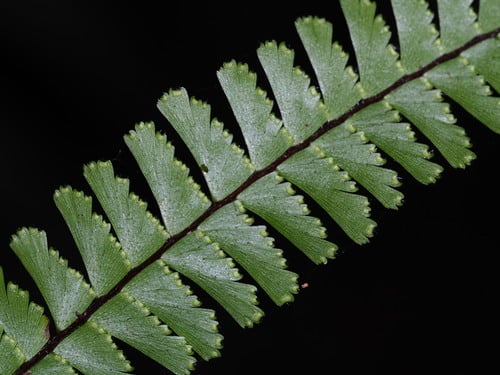
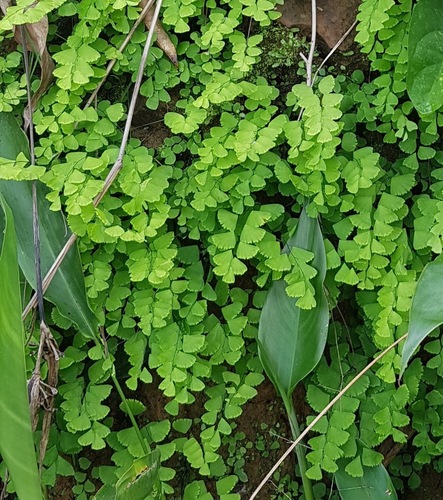
Source: WikipediaAdiantum aethiopicum, also known as the common maidenhair fern, is a small fern of widespread distribution, occurring in Africa, Australia, Norfolk Island and New Zealand. Adiantum aethiopicum was one of the many species first described by Linnaeus, in this case in his Systema naturae in 1759. The specific epithet aethiopicum in this sense was the Latin term for Africa south of the then known world, that is to say, more or less Africa south of Egypt. In South Africa the species occurs widely, though not generally profusely, mainly on moist sandstone cliffs in full shade. In the Cape Peninsula it is uncommon and grows mainly at the highest locally available altitudes, generally about 600–1,085 m (2,000–3,600 ft). Adiantum aethiopicum grows in spreading clumps of fronds from 10 to 45 cm (4 to 18 in) in height. The rhizomes are wiry and branched. The fronds are horizontal and layered, or upright. They are divided into two or three and have many small wedge-shaped segments, each of which has sori along its margins underneath. A common plant, often seen growing in moist areas. In Australia it is found near by creeks or in open forest, where it may form a large colony. The 1889 book 'The Useful Native Plants of Australia’ records that "This plant is said to possess medicinal properties, being slightly astringent and emetic. It has been used in Europe in making "Sirop de Capt'llaire," a demulcent drink, employed in diseases of the chest."
Description
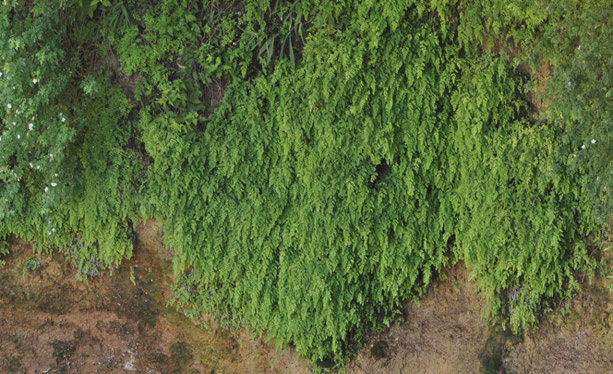
A small fern. It grows 10-45 cm high. It forms large clumps. It has wiry branched underground stems. It also has slender upright stems. It can be upright or lie over. The stems can be 60 cm long. The fronds divide 2-3 times. The segments are wedge shaped. The edges of the leaves are shallowly lobed. They are lace-like and pale green on glossy black stems. The spore bodies are kidney shaped. There are 1-4 on the under side of the fronds.
Edible Uses
The leaves and fronds are used to make tea.
Traditional Uses
CAUTION: This fern is used to produce abortions in some places.
This uses section is brief — help expand it
Medicinal Uses
The fronds are astringent and emetic. A decoction is used in the treatment of coughs. An infusion of the leaves is used as an emollient in the treatment of coughs and diseases of the chest. A decoction of the rhizomes is said to be abortifacient.
Known Hazards
Although we have found no reports of toxicity for this species, a number of ferns contain carcinogens so some caution is advisable. Many ferns also contain thiaminase, an enzyme that robs the body of its vitamin B complex. In small quantities this enzyme will do no harm to people eating an adequate diet that is rich in vitamin B, though large quantities can cause severe health problems. The enzyme is destroyed by heat or thorough drying, so cooking the plant will remove the thiaminase.
Distribution
It is a warm temperate plant. It grows along stream banks and in moist rocky places. It needs a well-drained soil and abundant moisture. It is hardy. It prefers bright sunlight and cool temperatures. It is often grown as a house plant. It suits hardiness zones 7-9. Tasmania Herbarium. Mt Cootha Botanical Gardens.
Where It Grows
Africa, Australia, East Africa, Ethiopia, India, New Zealand, South Africa, Tasmania,
Cultivation
It can be grown from spores or by dividing the rhizome. It spreads by the underground stolons or runners.
Propagation
Spores. Plants can be produced quickly by this method and make specimens of better shape and greater vigour than division of existing plants. Plants, and even most cultivars, will breed true. Division of the rootstock.
Production
It grows rapidly.
Notes
There are over 200 Adiantum species. Also put in the family Adiantaceae.
Synonyms
Also Known As
Maidenhair Fern
References (19)
- Ambasta S.P. (Ed.), 2000, The Useful Plants of India. CSIR India. p 15
- Andrews, S.B., 1990, Ferns of Queensland. A handbook to the ferns and fern allies. Queensland DPI p 9
- Bodkin, F., 1991, Encyclopedia Botanica. Cornstalk publishing, p 49
- Chaffey, C.H., 1999, Australian Ferns. Growing them successfully. Kangaroo Press. p 74
- Checklist of NT Vascular Plant Species. January 2003.
Show all 19 references Hide references
- Cundall, P., (ed.), 2004, Gardening Australia: flora: the gardener's bible. ABC Books. p 99
- Dashorst, G.R.M., and Jessop, J.P., 1998, Plants of the Adelaide Plains & Hills. Botanic Gardens of Adelaide and State Herbarium. p 44
- Elliot, W.R., & Jones, D.L., 1982, Encyclopedia of Australian Plants suitable for cultivation. Vol 2. Lothian. p 158
- Flora of Australia Volume 49, Oceanic Islands 1, Australian Government Publishing Service, Canberra. (1994) p 563
- Goudey, C.J., 1988, A Handbook of Ferns for Australia and New Zealand. Lothian. p 42
- Greig, D., 1996, Flowering Natives for Home Gardens. Angus & Robertson. p 44
- Low, T., 1992, Bush Tucker. Australia’s Wild Food Harvest. Angus & Robertson. p 35
- Molla, A., Ethiopian Plant Names. http://www.ethiopic.com/aplants.htm
- Paczkowska, G . & Chapman, A.R., 2000, The Western Australian Flora. A Descriptive Catalogue. Western Australian Herbarium. p 21
- Steenbeeke, Greg as part of the Plants Directory project. List of plant species from northern NSW that may be used as food plants p 3
- Staples, G.W. and Herbst, D.R., 2005, A tropical Garden Flora. Bishop Museum Press, Honolulu, Hawaii. p 49
- Tasmanian Herbarium Vascular Plants list p 95
- Townsend, K., 1994, Across the Top. Gardening with Australian Plants in the tropics. Society for Growing Australian Plants, Townsville Branch Inc. p 71
- Woolmore, E et al, 2002, King Island Flora: A Field Guide. p 111