Pteris ensiformis
Burm. f.
Slender brake fern
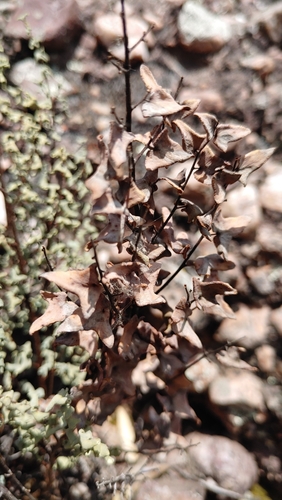
iNaturalist· cc-by-nc
(c) 鐦鍆錒(锎钔锕), some rights reserved (CC BY-NC), uploaded by 鐦鍆錒(锎钔锕)
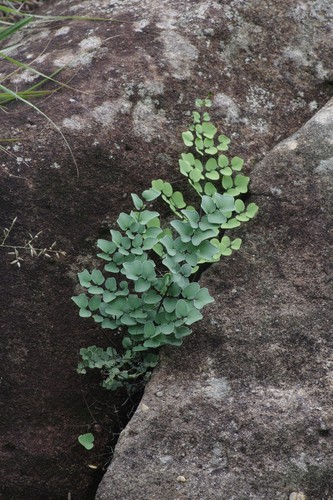
iNaturalist· cc-by-nc
(c) beulah89, some rights reserved (CC BY-NC), uploaded by beulah89
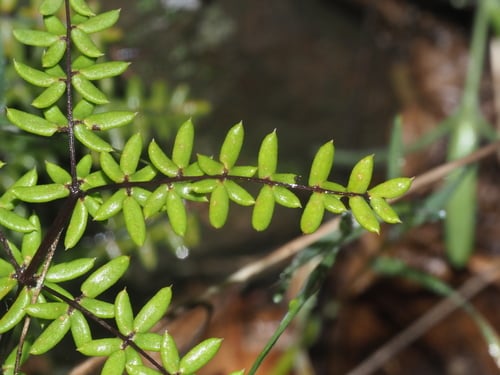
iNaturalist· cc-by-nc
(c) 李貓樹, some rights reserved (CC BY-NC), uploaded by 李貓樹
Summary
Source: WikipediaPteris ensiformis, the slender brake, silver lace fern, sword brake fern, or slender brake fern, is a plant species of the genus Pteris in the family Pteridaceae. It is found in Asia and the Pacific.
Description
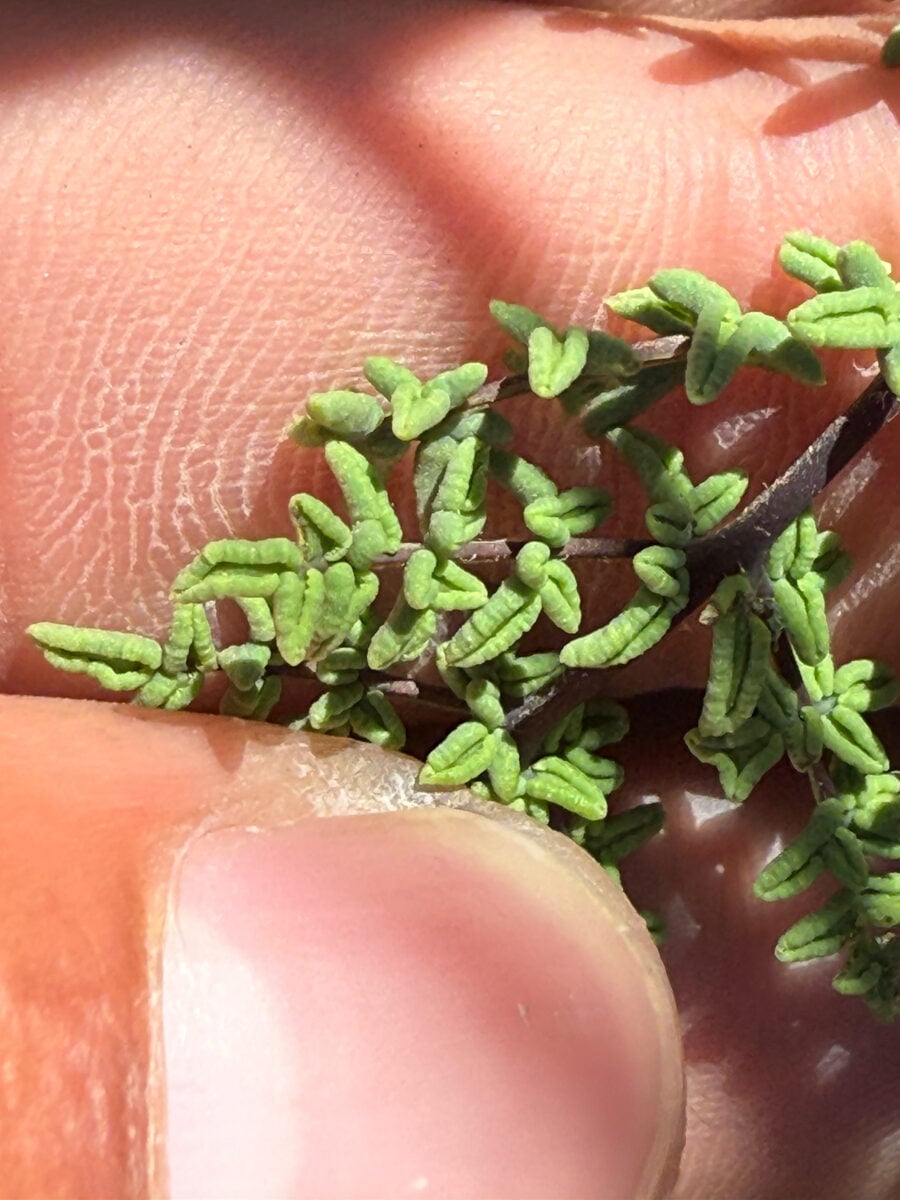
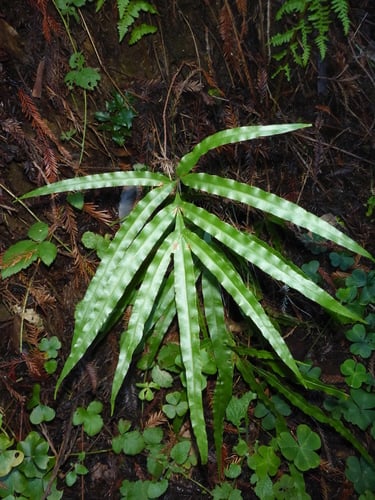
A compact fern. It grows 20-30 cm high and spreads 20-30 cm wide. It has a short creeping rhizome. The fronds are triangle shaped. They are of different lengths. They can be 15-30 cm long. The leaflets at the end are compound with 4-5 pairs of side leaflets cut into 2-6 oval lobes with teeth. Fertile fronds are one and a half times as long as sterile fronds. Some varieties have white or silver markings.
Edible Uses
Young fronds are steamed and used as flavoring, mixed with other vegetables or added to stews. Harvested fronds can be stored for 6-7 days.
Traditional Uses
The young fronds are steamed and used as flavouring. They are mixed with other vegetables or put in stews. The harvested fronds can be stored for 6-7 days.
Medicinal Uses
The juice of the young plant is stated to possess astringent properties. A decoction of fresh fronds is given in dysentery. The juice of the rhizome is applied in the glandular swelling of the neck.
Known Hazards
Although we have found no reports of toxicity for this species, a number of ferns contain carcinogens so some caution is advisable. Many ferns also contain thiaminase, an enzyme that robs the body of its vitamin B complex. In small quantities this enzyme will do no harm to people eating an adequate diet that is rich in vitamin B, though large quantities can cause severe health problems. The enzyme is destroyed by heat or thorough drying, so cooking the plant will remove the thiaminase.
Distribution
A tropical and subtropical plant. It grows in open moist places at low altitudes in the tropics. In Indonesia it grows up to 750 m above sea level. It grows in damp places including rock crevices and in old stone walls. It suits hardiness zones 10-12.
Where It Grows
American Samoa, Asia, Australia, Bhutan, Cambodia, Central America, China, East Timor, Fiji, Guam, Hawaii, Himalayas, India, Indochina, Indonesia, Japan, Laos, Malaysia, Marquesas, Myanmar, Nauru, Nepal, Northeastern India, Pacific, Philippines, Polynesia, Rotuma, Samoa, SE Asia, Singapore, Sri Lanka, Thailand, Timor-Leste, USA, Vietnam, Wallis and Futuna, West Indies,
Cultivation
Plants can be grown from spores or division.
Propagation
Spores are a simple method of propagation, with plants reaching maturity within one year. Division. The plants can be slow to settle down afterwards.
Other Uses
The plants are indicators of acidic soils, with a pH of 4.5 - 5.0.
Other Information
It is sold in local markets in China.
Notes
There are about 300 Pteris species. They grow in the tropics and subtropics.
Synonyms
Also Known As
Dhekia sak, Dhingkha mwigong, Dingkia, Feng wei mao, Hoko-shida, Paku padang, Paku pelandok, Sere, Sir'ia, Slender brake, Sword brake
References (23)
- Ambasta S.P. (Ed.), 2000, The Useful Plants of India. CSIR India. p 501
- Amoroso, V. B., et al., 2017, Bringing back the Lost Value of Philippine EdibleFerns: Their Antioxidant, Proteins and Utilization. International Journal of Advanced research. 5(4), 757-770
- Andrews, S.B., 1990, Ferns of Queensland. A handbook to the ferns and fern allies. Queensland DPI p 300
- Baro, D., Baruah, S. and Borthukar, S. K. 2015, Documentation on wild vegetables of Baksa district, BTAD (Assam). Scholars Research Library. Archives of Applied Science Research, 2015, 7 (9):19-2
- Burkill, I.H., 1966, A Dictionary of the Economic Products of the Malay Peninsula. Ministry of Agriculture and Cooperatives, Kuala Lumpur, Malaysia. Vol 2 (I-Z) p 1856
Show all 23 references Hide references
- Chaffey, C.H., 1999, Australian Ferns. Growing them successfully. Kangaroo Press. p 11, 206,
- Chin, W.Y., 1998, Ferns in the Tropics. Kangaroo. p 159
- Cowie, I, 2006, A Survey of Flora and vegetation of the proposed Jaco-Tutuala-Lore National Park. Timor-Lests (East Timor) www.territorystories.nt/gov.au p 52
- Cronin, L., 1989, The Concise Australian Flora. Reed. p 273
- Cundall, P., (ed.), 2004, Gardening Australia: flora: the gardener's bible. ABC Books. p 1106
- Dutta, U., 2012, Wild Vegetables collected by the local communities from the Churang reserve of BTD, Assam. International Journal of Science and Advanced Technology. Vol. 2(4) p 123
- Facciola, S., 1998, Cornucopia 2: a Source Book of Edible Plants. Kampong Publications, p 189
- Fl. indica 230. 1768
- Goudey, C.J., 1988, A Handbook of Ferns for Australia and New Zealand. Lothian. p 154
- Hibbert, M., 2002, The Aussie Plant Finder 2002, Florilegium. p 242
- Islam, M., 1983, Utilisation of Certain Ferns and Fern Allies in the North-Eastern Region, India. J.Econ. Tax. Bot. Vol.4.No.3 pp 861-
- Li, D. et al, 2017, Ethnobotanical survey of herbal tea plants from the traditional markets in Chaoshan, China. Journal of Ethnopharmacology. 205 (2017) 195-206
- Narzary, H., et al, 2013, Wild Edible Vegetables Consumed by Bodo tribe of Kokrajhar District (Assam), North-East India. Archives of Applied Science Research, 5(5): 182-190
- Ochse, J. J. et al, 1931, Vegetables of the Dutch East Indies. Asher reprint. p 608
- Patiri, B. & Borah, A., 2007, Wild Edible Plants of Assam. Geethaki Publishers. p 164
- Staples, G.W. and Herbst, D.R., 2005, A tropical Garden Flora. Bishop Museum Press, Honolulu, Hawaii. p 52
- World Checklist of Useful Plant Species 2020. Royal Botanic Gardens, Kew
- Yusuf, U. K., 2010, Ferns of Malaysian Rain Forest. A Journey Through the Fern World. Universiti Putra Malaysia Press p 34