Amomum villosum
Lour.
Malabar cardamom, Tavoy cardamom
iNaturalist· cc-by-nc
(c) ashi_xsbn, some rights reserved (CC BY-NC)
iNaturalist· cc-by-nc
(c) ashi_xsbn, some rights reserved (CC BY-NC)
iNaturalist· cc-by-nc
(c) ashi_xsbn, some rights reserved (CC BY-NC)
Description
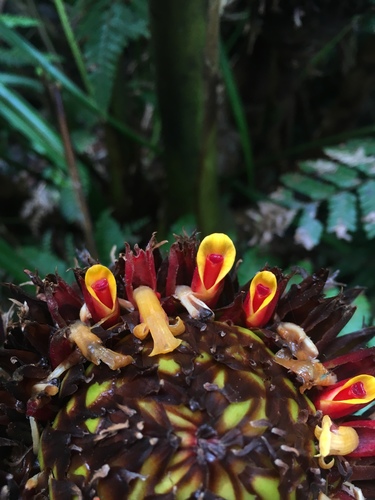
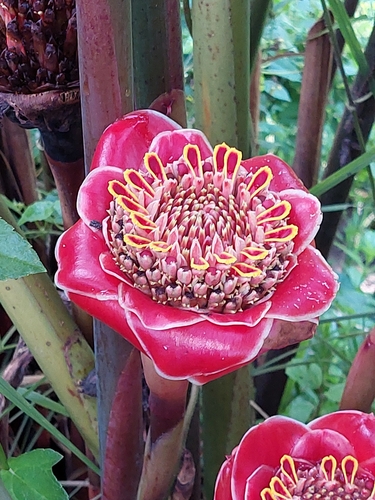
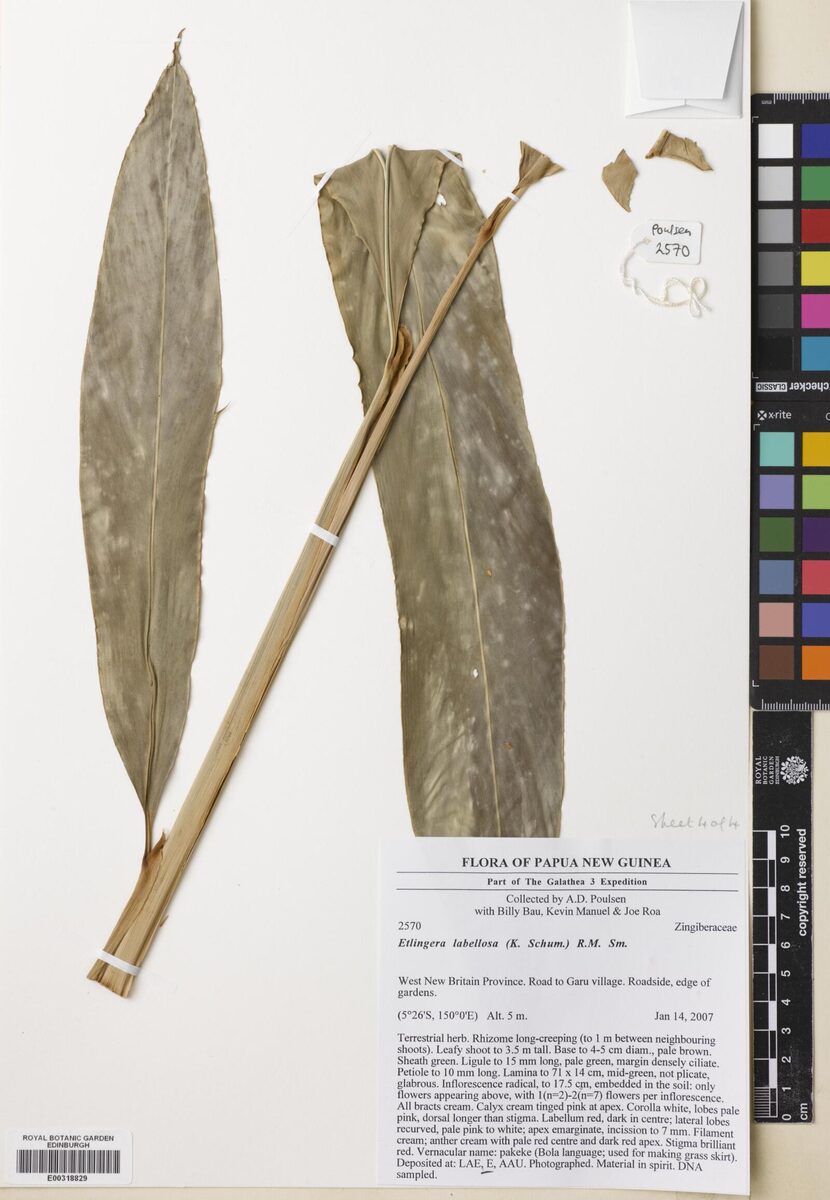
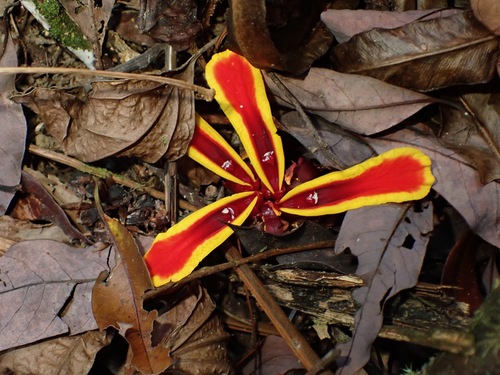
A ginger family herb. It grows 1.5-3 m tall. The rhizomes are above ground and covered with a scale like sheath. The leaves do not have leaf stalks. The leaves are 25-35 cm long by 3-7 cm wide. The capsule is purple, green or brown. They are 1.5-2 cm long and 1.2-2 cm wide. They have soft spines. The seeds are angled and have a strong scent. Possibly now Wurfbainia villosa (Lour.) Skornick. & A. D. Poulsen
Edible Uses
The seed of Wurfbainia villosa is used as a spice in Chinese cuisine, in which it can also form an ingredient in certain recipes for the traditional spice mixture known as five-spice powder. From as early as the time of the Tang dynasty, many ancient books, including, notably, the Compendium of Materia Medica, have been unanimous in describing the taste of W. villosa as "acrid, fresh, and slightly bitter".
Medicinal Uses
In Chinese and Vietnamese traditional medicine the fruits are used to treat indigestion, diarrhoea, flatulence, toothache, and as febrifuge and antiseptic. The seeds are antibacterial and stomachic. They are used in the treatment of dyspepsia, colic, flatulence, diarrhoea, vomiting and oedema. They are an ingredient in a formula used to treat threatened abortions. The powdered seed is applied to carious patches on the teeth to ease toothache. The fruit is collected in summer and autumn and dried before the seeds are removed for use. An essential oil from the seeds consists of delta-camphor, delta-borneol, delta-bornyl acetate, delta-limonene, alpha-pinene, phellandrene, paramethoxyethyl cinnamate, nerolidol and linalol. The seeds also contain liquiritin and glucovanillic acid.
Distribution
It is a subtropical plant. In Southern China it grows between 600-800 m above sea level.
Where It Grows
Asia, Cambodia, China, India, Myanmar, Laos, SE Asia, Vietnam,
Cultivation
Plants are cultivated in wet and shady places in sparse forests.
Other Information
Leaves are sold in local markets.
Notes
It is used as a medicine for inflamed bowels.
Synonyms
Also Known As
Mang nian, Sha ren
References (3)
- Cao, Y., et al, 2020, Ethnobotanical study on wild edible plants used by three trans-boundary ethnic groups in Jiangcheng County, Pu’er, Southwest China. Journal of Ethnobiology and Ethnomedicine (2020) 16:66
- Ferns, Useful tropical Plants.
- Wiersema, J. H. & Leon, B., 2013, World Economic Plants. A Standard Reference CRC Press. 2nd Ed. p 47