Cussonia kraussii
Hochst.
Krauss’s cabbage tree
gbif· cc-by-sa
GBIF
gbif· cc-by-sa
GBIF
gbif· cc-by-sa
GBIF
Description
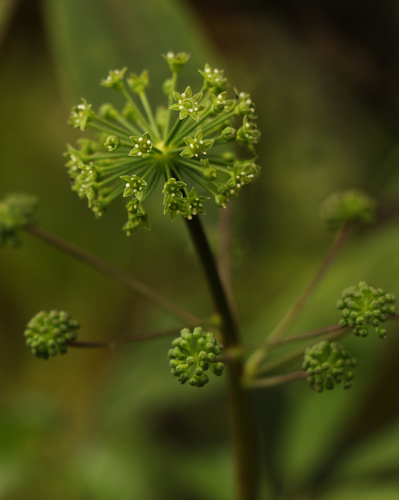
A small slender tree. It grows to 5.5 m tall. It has an underground tuber which is edible. The leaves have 7-9 leaflets coming from a common point. The leaf stalk is long and grooved. The tips of the leaflets are shortly pointed. They are glossy and deep green. The buds are in short spikes at the ends of branches. The flowers are cream and have stalks. The fruit are small and round.
Edible Uses
The swollen roots are eaten during times of famine.
Traditional Uses
The swollen roots are eaten in times of famine.
This uses section is brief — help expand it
Medicinal Uses
Cussonia spicata is harvested locally for its wood, roots, and leaves to be used as food, medicine, and timber. The wood is light and perishable but is used to construct beehives, wooden bicycle wheels, doors, mole traps, tool handles, and utensils. The succulent roots are edible and have been used as a traditional malaria treatment. The leaves are harvested for fodder and are used in traditional medicine for treating indigestion. It is used both locally and internationally as an ornamental plant. In English it is commonly known as the cabbage tree, spiky cabbage tree, common cabbage tree, or elephant's toothbrush. Common names in other languages include:
Distribution
A tropical plant. It grows in coastal dune forests.
Where It Grows
Africa, East Africa, Mozambique, South Africa, Southern Africa,
Notes
There are 20 Cussonia species. They occur in South Africa.
Synonyms
References (1)
- Palmer, E and Pitman, N., 1972, Trees of Southern Africa. Vol. 3. A.A. Balkema, Cape Town p 1699