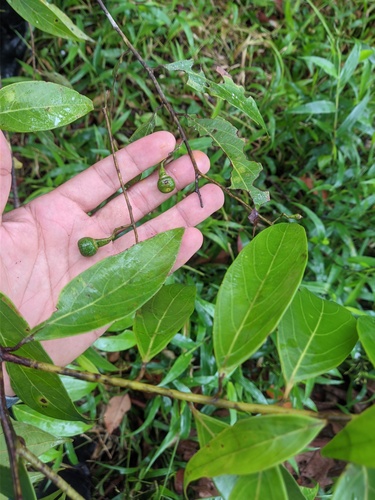
Ocotea cymosa
(Nees) Palacky
Varongy
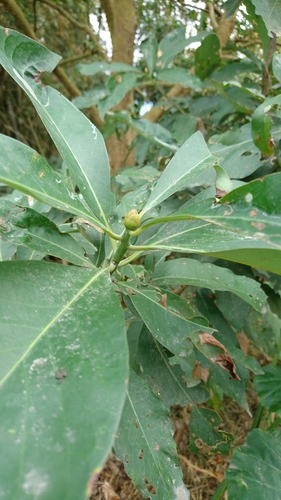
iNaturalist· cc-by-nc
(c) Franck Rakotonasolo, some rights reserved (CC BY-NC), uploaded by Franck Rakotonasolo
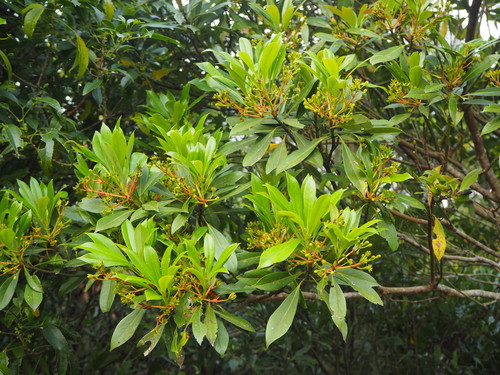
iNaturalist· cc-by-nc
(c) Andrianiaina Angelo, some rights reserved (CC BY-NC)
Summary
A medium-growth tree reaching 20m tall, hardy to UK zone 10. It adapts to light sandy or medium loamy, well-drained soils with neutral to basic pH and can tolerate saline soils. The tree grows in full shade, semi-shade, or full sun and prefers moist soil.
Description
A medium-growth tree reaching 20m tall, hardy to UK zone 10. It adapts to light sandy or medium loamy, well-drained soils with neutral to basic pH and can tolerate saline soils. The tree grows in full shade, semi-shade, or full sun and prefers moist soil.
Edible Uses
The leaves, bark, and fruits are all aromatic. The leaves and fruits are used as a condiment, while the bark is added to locally prepared alcoholic drinks.
Medicinal Uses
None known
Distribution
It is a tropical plant.
Where It Grows
Africa, Madagascar,
Cultivation
Although generally thought of as needing moderate amounts of sun, trials have shown that it is extremely shade tolerant.
Propagation
Seed.
Other Uses
The heartwood is pale brown and usually indistinctly demarcated from the sapwood. The grain is typically interlocked with a medium texture. The wood is moderately lightweight and often attacked by pinhole borers, but is moderately resistant to fungi, dry-wood borers, termites, and marine borers. It saws and works easily with hand and machine tools; sanding is sometimes needed for good results when planing. It glues, paints, and varnishes fairly easily and nails well with good nail-holding capacity. Peeling and slicing properties are good, moulding properties are satisfactory, and the wood is suitable for carving. It is resistant to impregnation by preservatives. Freshly sawn wood has an unpleasant smell. This species and several other Ocotea species from Madagascar are collectively known as 'Varongy'. The wood is in high demand for furniture, cabinet making, boat construction, and mortars, and is also valued for construction, joinery, vehicle bodies, interior trim, and pattern making. It is suitable for mine props, ship building, toys, novelties, boxes, crates, carvings, turnery, veneer, and plywood. It is considered too soft for flooring.
Synonyms
References (2)
- Ferns, Plants For A Future
- World Checklist of Useful Plant Species 2020. Royal Botanic Gardens, Kew