Tetradenia riparia
(Hochst.) Codd
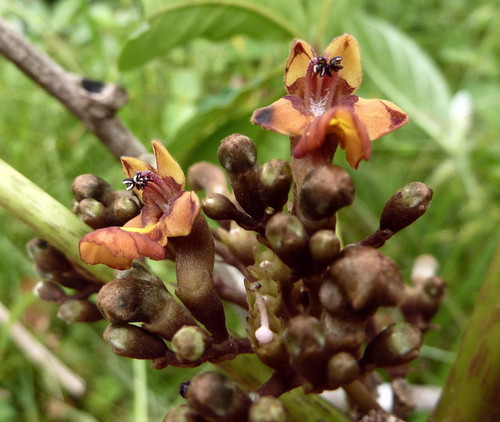
iNaturalist· cc-by-nc
(c) Heinrich Human, some rights reserved (CC BY-NC), uploaded by Heinrich Human
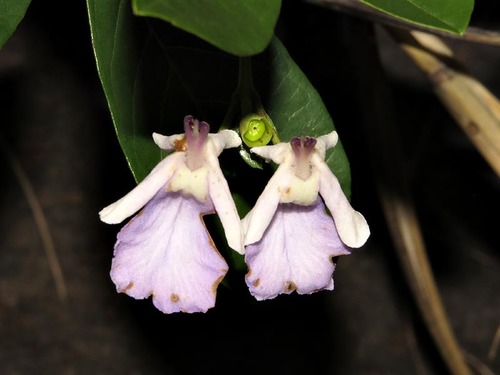
iNaturalist· cc-by-sa
(c) Ton Rulkens, some rights reserved (CC BY-SA)
iNaturalist· cc-by-nc
(c) Sharon Louw, some rights reserved (CC BY-NC), uploaded by Sharon Louw
Summary
Source: WikipediaTetradenia riparia is a species of flowering plant native to southern Africa. It belongs in the mint and sage family Lamiaceae. Common names include ginger bush, incense bush, Ibozane, and musk bush. It is occasionally referred to as misty plume bush and is commonly used as a decorative garden plant due to its flowers when in full bloom. Tetradenia means 'four glands' and riparia translates to 'growing on banks of rivers'.
Description
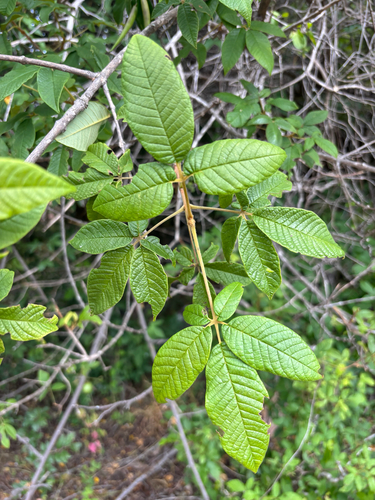
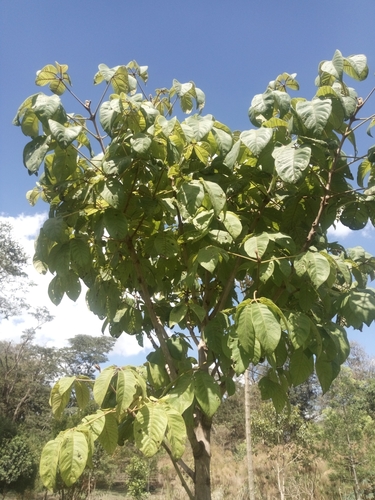
A shrub or small tree. It grows 1-3 m tall. The stems are almost succulent. They are stout and brittle. The leaves are oblong to round and 3.5-8 cm long by 3.5-7 cm wide.
Medicinal Uses
This shrub is considered a medicinal plant. The essential oil of its leaves feature antimalarial contents. It is one of Rwanda's most popular herbal remedies and has been used throughout its range to treat cough, malaria, diarrhea, dengue fever, headaches (inhaling the leaves scent), toothache and some other ailments. The herb used is fresh or dried leaves and young shoots. Herbs are usually collected as needed, as they tend to black out and dry poorly. Laboratory studies have shown that the herb contains ingredients that actually moderate the malaria-causing Plasmodium falciparum parasite. An extract from the leaves has been found to inhibit bacterial growth.
Distribution
It is a tropical plant.
Where It Grows
Africa, Angola, Botswana, East Africa, Ethiopia, Namibia, South Africa, Southern Africa,
Cultivation
Usually prefers a sunny position, but in very hot areas grows better with some shade. It grows easily in light, well drained and well composted soil. A fairly fast-growing plant, able to increase height by 80cm a year and flowering in its first year from seed. Plants respond well to trimming - they are best cut back hard after flowering in order to keep the plant neat and floriferous. A dioecious species, both male and female forms need to be grown if seed is required.
Propagation
Seed - Cuttings are easy to root - even large branches can be used.
Synonyms
References (1)
- World Checklist of Useful Plant Species 2020. Royal Botanic Gardens, Kew