Vitex fischeri
Gurke
iNaturalist· cc-by-nc
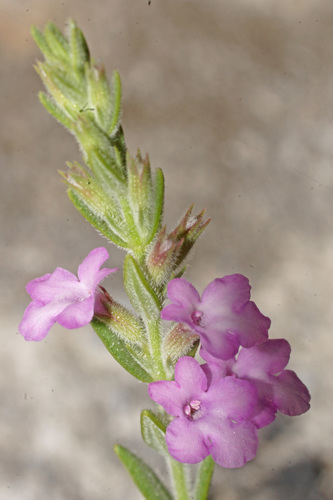
(c) Brotry, some rights reserved (CC BY-NC), uploaded by Brotry
iNaturalist· cc-by-nc
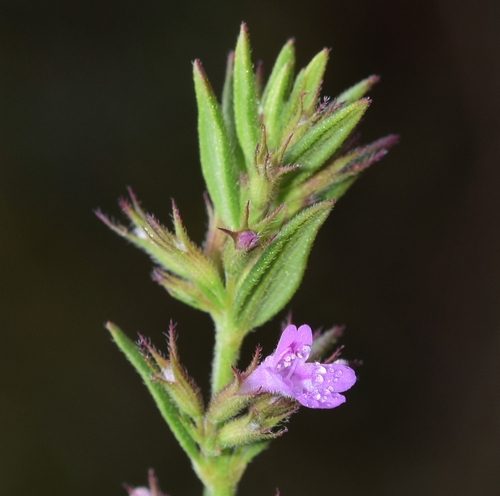
(c) Monari Ochwangi, some rights reserved (CC BY-NC)
Description
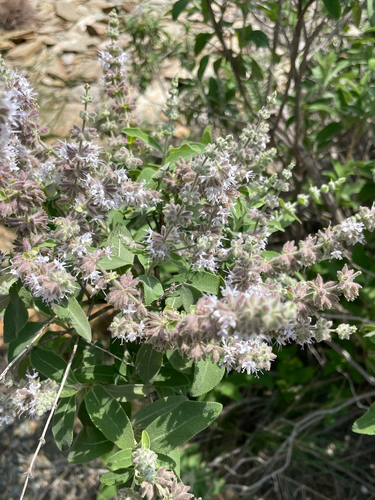
A tree. It grows 35 m tall. The trunk is without branches for 18 m. The trunk is 180 cm across. The bark is thin. The crown is rounded. The young branches have velvety hairs. The leaves are alternate and compound. There are 5 leaflets arranged like fingers on a hand. The leaflets are narrowly oval and 5-19 cm long by 3-10 cm wide. They taper to the tip. The leaflets are leathery and hairy. The flowers are in groups up to 12 cm long in the axils of leaves. The flowers are white with a blue tinge. The fruit is oval and fleshy. It is 1-2.5 cm long. It is black with white or green spots. There is a 4 celled stone with up to 4 seeds.
Edible Uses
The fleshy fruits are eaten raw and are sold in local markets.
Traditional Uses
The fruit are eaten raw.
This uses section is brief — help expand it
Distribution
A tropical plant. It grows in evergreen forests and open woodland. It grows up to 2,100 m altitude. In Kenya the annual average rainfall is 1,200-2,000 mm and the temperature 15-23°C.
Where It Grows
Africa, Angola, Cameroon, Central Africa, Congo, East Africa, Kenya, Sudan, Tanzania, Uganda, Zambia,
Cultivation
Plants are grown from seed. Seed from partly ripe fruit are best.
Propagation
Seed - pre-soaking in cold water for 24 hours improves germination rates. Sow the seed in light shade in a nursery seedbed. Germination rates are usually around 40 - 50%, with the seed sprouting in about 9 weeks. Several seedlings may germinate from each stone that has been sown since it may contain 1 - 4 seeds. When the fruit pulp has been removed and the stones dried in the shade, they can be stored for considerable time (at least one year) if they are kept dry and cool.
Other Uses
The heartwood is pale grey-brown, often becoming dark stained and decorative in older trees; it is not clearly demarcated from the sapwood. The wood resembles teak, and often yellows after some time in service. The grain is straight or wavy; the texture coarse; the logs are often rotten in the core. The wood is medium-weight; assessments of its durability range from non-durable to durable. It is easy to saw and work with hand and machine tools; planes to a smooth surface, but a filler is needed for polishing and varnishing; it nails well; the gluing properties are good. The wood is in high demand in Kenya for making furniture, and is also popular for making tool handles and oxen yokes. It is suitable for light construction, flooring, joinery, interior trim, shipbuilding, vehicle bodies, toys, novelties, boxes, crates, carving, turnery, draining boards, hardboard, particle board and pulpwood. The wood is used as firewood and for charcoal production. Planted as a shade tree for crops such as coffee and yam, it is also sometimes retained in maize and cassava fields. It can provide a windbreak, produces a useful mulch and serves as a soil improver.
Production
Trees grow quickly. In Tanzania fruit are collected from April to June.
Other Information
Fruit are sold in local markets.
Notes
Also put in the family Verbenaceae.
Synonyms
Also Known As
Kalume, Mgobe, Misongang'holo, Mkhulu, Mohutu, Mufutu, Mufutumwe
References (8)
- Acipa, A. et al, 2013, Nutritional Profile of some Selected Food Plants of Otwal and Ngai Counties, Oyam District, Northern Uganda. African Journal or Food, Agriculture, Nutrition and Development. 13(2)
- Dale, I. R. and Greenway, P. J., 1961, Kenya Trees and Shrubs. Nairobi. p 595
- Fowler, D. G., 2007, Zambian Plants: Their Vernacular Names and Uses. Kew. p 43
- Jardin, C., 1970, List of Foods Used In Africa, FAO Nutrition Information Document Series No 2.p 168
- Mutie, F. M., et al, 2023, Important Medicinal and Food Taxa (Orders and Families) in Kenya, Based on Three Quantitative Approaches. Plants 2023, 12, 1145
Show all 8 references Hide references
- Ruffo, C. K., Birnie, A. & Tengnas, B., 2002, Edible Wild Plants of Tanzania. RELMA p 718
- Thijssen, H.J.C., 2008. Vitex fischeri Gürke. [Internet] Record from Protabase. Louppe, D., Oteng-Amoako, A.A. & Brink, M. (Editors). PROTA (Plant Resources of Tropical Africa), Wageningen, Netherlands. < http://database.prota.org/search.htm>. Accessed 23 October 2009
- World Checklist of Useful Plant Species 2020. Royal Botanic Gardens, Kew