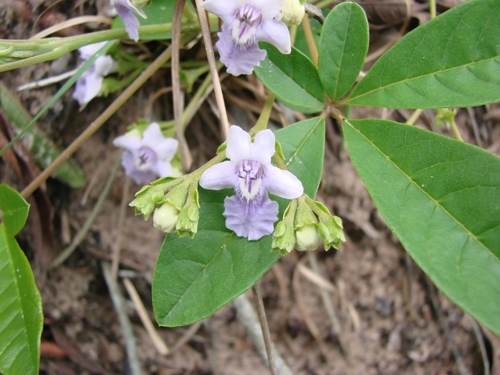
Vitex harveyana
H. H. W. Pearson
Scrambling fingerleaf, Three finger-leaf
iNaturalist· cc-by-nc
(c) Kate Braun, some rights reserved (CC BY-NC), uploaded by Kate Braun
iNaturalist· cc-by-nc
(c) Stacey Gerber, some rights reserved (CC BY-NC)
iNaturalist· cc-by-nc
(c) Stacey Gerber, some rights reserved (CC BY-NC)
Description
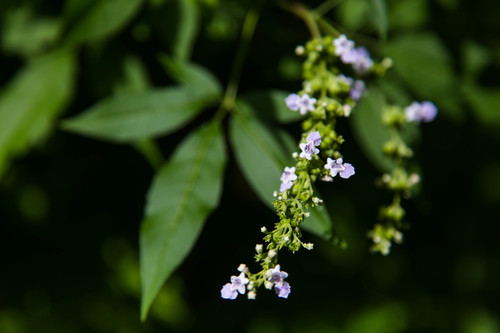
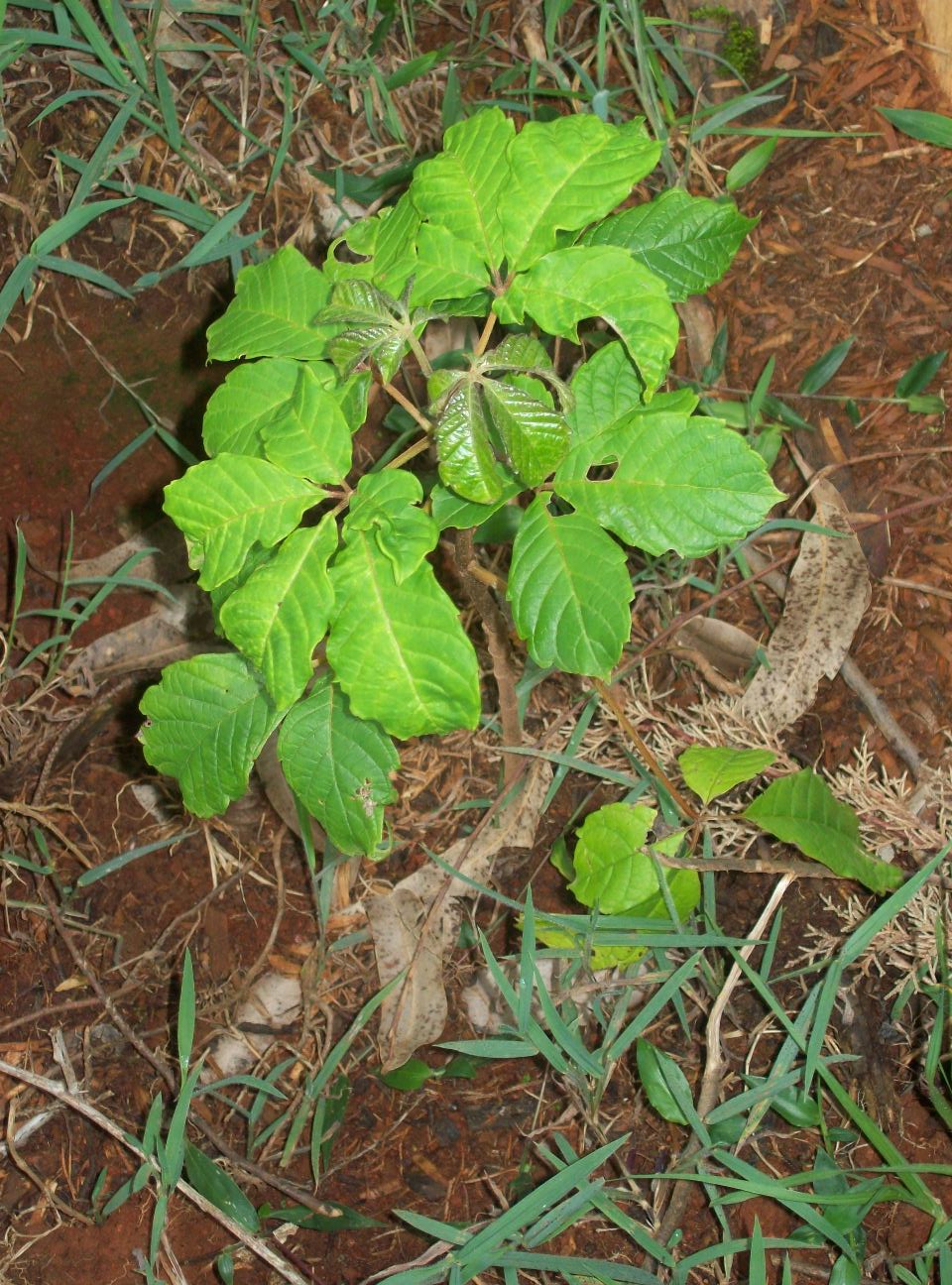
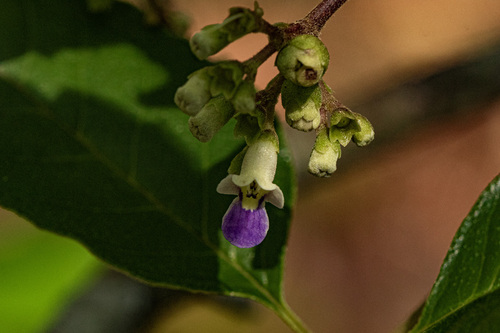
A shrub or small tree. It grows 3-7 m tall. It is slightly hairy. The branches have lines along them or are angled. The leaves are opposite and compound. The leaf stalk is slender and 3 cm long. The leaves have 3 or 5 leaflets. The blades are oval and slightly wavy along the edge. The leaves are 8 cm long by 4 cm wide. The flowering stalks are in the axils of leaves. The flowers are in a loose clusters. They are mauve or white. The fruit is round and black. It is 1.2 cm across.
Edible Uses
The ripe fruit are eaten raw.
Traditional Uses
The ripe fruit are eaten raw.
This uses section is brief — help expand it
Distribution
It is a subtropical plant.
Where It Grows
Africa, East Africa, Eswatini, Mozambique, South Africa, Southern Africa, Swaziland,
Notes
Also put in the family Verbenaceae.
Synonyms
Also Known As
Mbidvongo, Umbendula, Umkhosikati, Whorled finger-leaf
References (9)
- Fox, F. W. & Young, M. E. N., 1982, Food from the Veld. Delta Books. p 363
- Long, C., 2005, Swaziland's Flora - siSwati names and Uses http://www.sntc.org.sz/flora/
- Palmer & Pitman, 1972,
- Peters, C. R., O'Brien, E. M., and Drummond, R.B., 1992, Edible Wild plants of Sub-saharan Africa. Kew. p 199
- Ruiters-Welcome, A. K., 2019, Food plants of southern Africa. Ph.D. thesis. Univ. of Johannesburg p 72
Show all 9 references Hide references
- Schmidt, E., Lotter, M., & McCleland, W., 2007, Trees and shrubs of Mpumalanga and Kruger National Park. Jacana Media p 580
- Swaziland's Flora Database http://www.sntc.org.sz/flora
- Van Wyck, B., & Van Wyck, P, 1997, Field Guide to Trees of Southern Africa. Struik. p 476
- Welcome, A. K. & Van Wyk, B.-E., 2019, An inventory and analysis of the food plants of southern Africa. South African Journal of Botany 122 (2019) 136–179