Iodes scandens
(Becc.) Utteridge & Byng
gbif· cc0
President and Fellows of Harvard College
gbif· cc0
President and Fellows of Harvard College
gbif· cc0
President and Fellows of Harvard College
Description
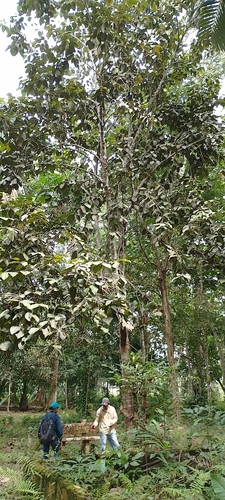
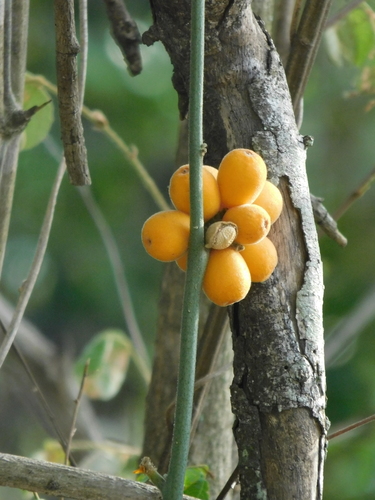
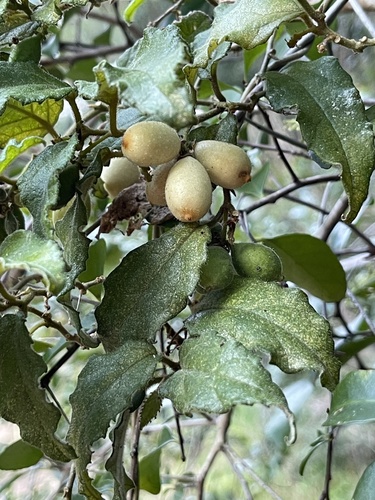
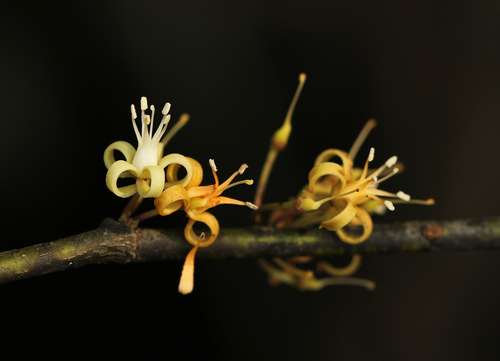
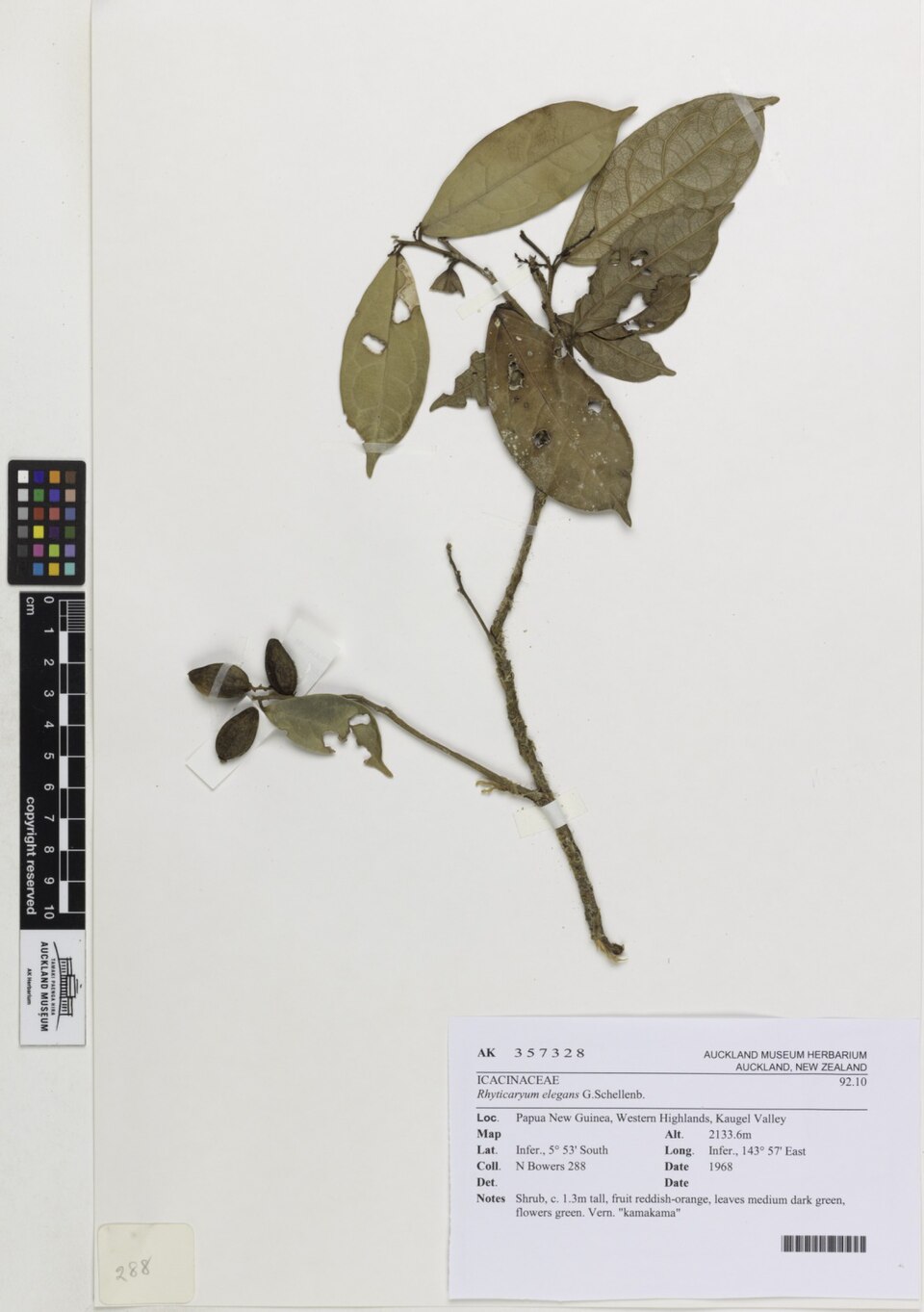
A climbing plant. It can be 35 m long. The stems are 8 cm across. The stems are slender and initially hairy. The leaves are opposite. They are 7-15 cm long by 4-9 cm wide. The edges are slightly curved back. The flowers are in groups 3-9 cm long in the axils of leaves. The fruit is a flattened oval shape and 2 cm long by 1.5 cm wide.
Edible Uses
The young leaves are cooked and eaten with taro to add flavour.
Traditional Uses
The young leaves are cooked and eaten with taro to add flavour.
This uses section is brief — help expand it
Distribution
It is a tropical plant. It is used in Bougainville as a flavouring.
Where It Grows
Asia, Indonesia, Papua New Guinea, PNG, SE Asia, Solomon Islands,
Cultivation
A dioecious species, both male and female forms need to be grown if fruit and seed are required.
Synonyms
References (2)
- Flora Malesia (As Polyporandra scandens)
- World Checklist of Useful Plant Species 2020. Royal Botanic Gardens, Kew