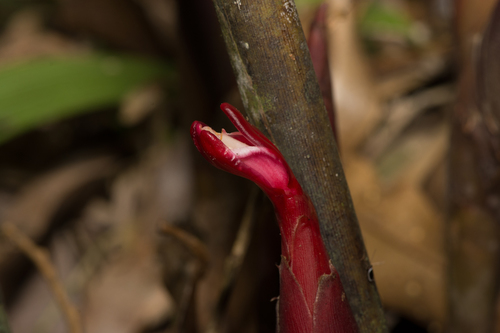
Curcuma purpurascens
Blume
Temu tis
iNaturalist· cc-by-nc
(c) Ilyas Dahrun, some rights reserved (CC BY-NC), uploaded by Ilyas Dahrun
wikimedia· cc-by-sa
Wikimedia Commons - Benoit Blanchard
gbif· cc0
President and Fellows of Harvard College
Description
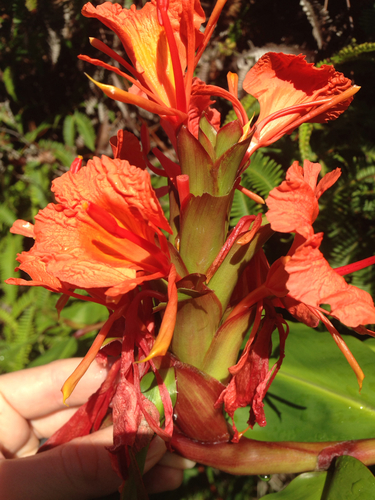
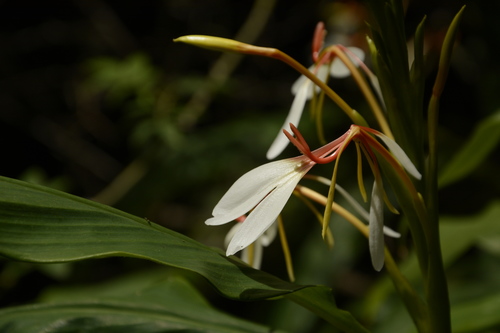
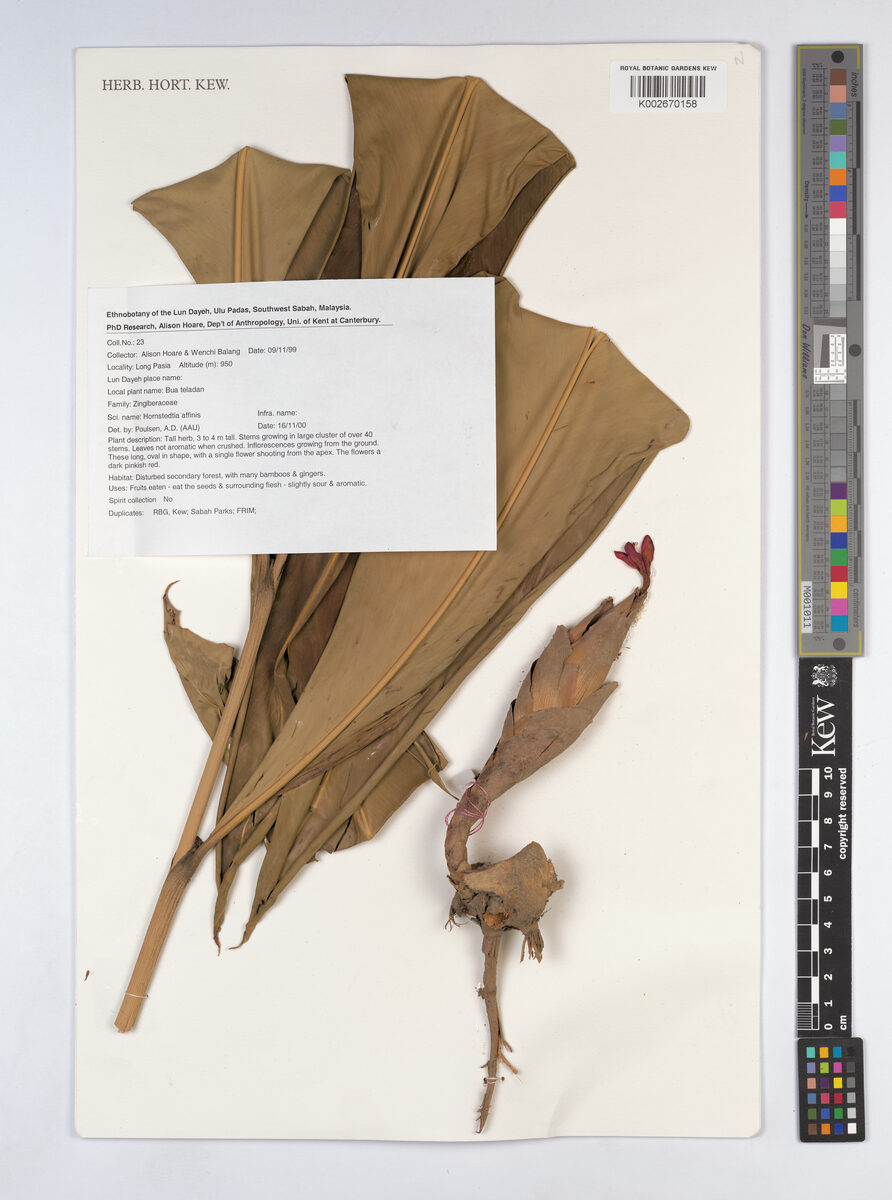
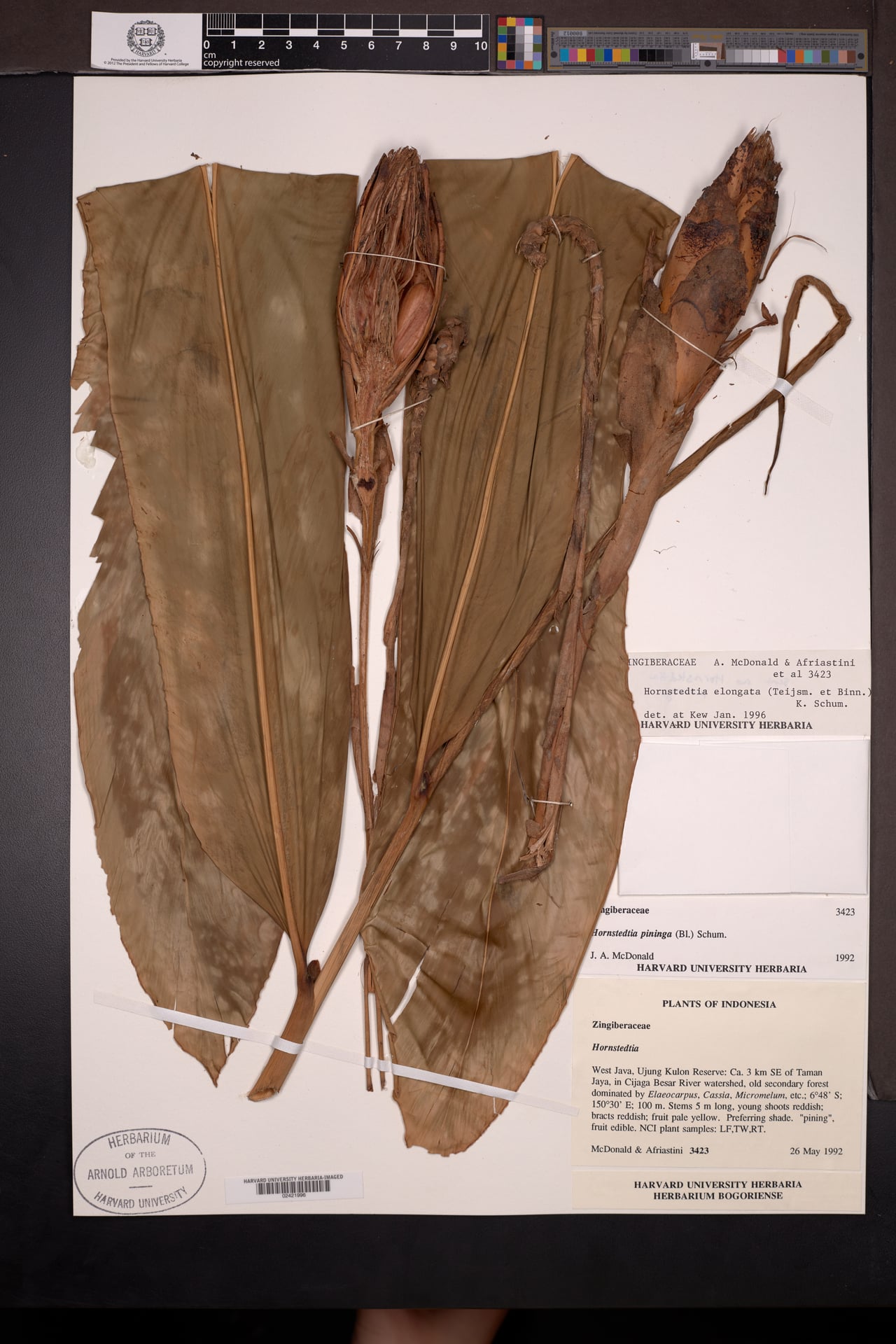
A ginger family herb. It grows 60 cm tall. The rhizomes are pale yellow and have an aroma. The leaves are broadly sword shaped with a purple colour along the mid vein. The flowers are in dense spikes 20 cm long. These are cylinder shaped on a stalk from the base. The flowers are tube shaped and 3 cm long. They are white with a yellow centre.
Edible Uses
The main tubers contain extractable starch. The tender central parts of the shoots and young rhizomes are eaten fresh or cooked as 'lalab'.
Medicinal Uses
The rhizomes are used as a remedy for cough. Applied externally in combination with Alyxia stellata, the rhizome is used as a poultice after childbirth.
Distribution
A tropical plant. It grows in teak forest up to 200 m above sea level.
Where It Grows
Asia, Indonesia*, SE Asia,
Cultivation
Plants can be grown by division of the rhizome.
Propagation
Seed - best sown as soon as it is ripe. Germinates best at temperatures around 20°c. Division of the rhizome when the plant is dormant.
Notes
There are about 50 Curcuma species. They are mostly in SE Asia.
Also Known As
Koneng pinggang, Kunir tinggang, Temu tis
References (6)
- Lembaga Biologi Nasional, 1977, Ubi-Ubian, Balai Pustaka, Jakarta. p 92
- Lim, T. K., 2015, Edible Medicinal and Non Medicinal Plants. Volume 9, Modified Stems, Roots, Bulbs. Springer p 30
- Lim, T. K., 2016, Edible Medicinal and Non-Medicinal Plants: Volume 12 Modified Stems, Roots p 7
- PROSEA handbook Volume 9 Plants yielding non-seed carbohydrates. p 188
- Sukarya, D. G., (Ed.) 2013, 3,500 Plant Species of the Botanic Gardens of Indonesia. LIPI p 1098
Show all 6 references Hide references
- World Checklist of Useful Plant Species 2020. Royal Botanic Gardens, Kew