Curculigo pilosa
(Schum. et Thonn.) Engl.
African crocus
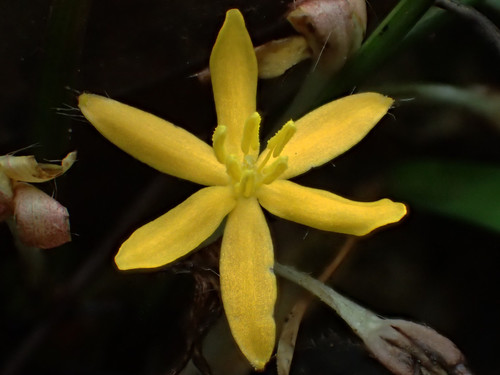
iNaturalist· cc-by-nc-sa
(c) marcoschmidt.frankfurt, some rights reserved (CC BY-NC-SA), uploaded by marcoschmidt.frankfurt
iNaturalist· cc-by-nc
(c) alassanesakpega, some rights reserved (CC BY-NC)
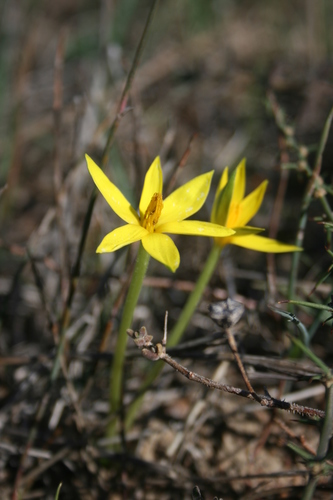
iNaturalist· cc-by-nc
(c) Nicholas Wightman, some rights reserved (CC BY-NC)
Description
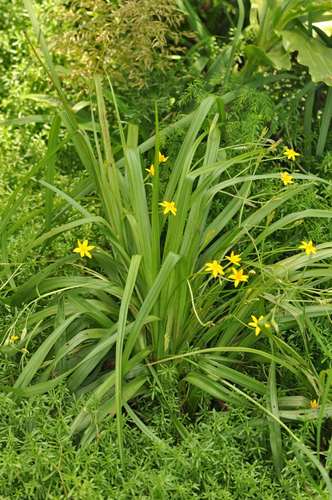
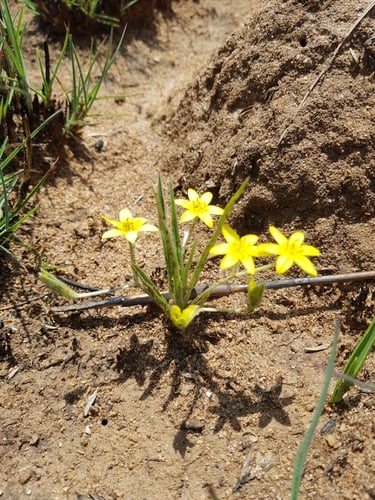
A herb. It has tuber like rhizomes. It has a cluster of grass like leaves. These are 60 cm long. The flower shoots are 20 cm long. The capsule retracts down to the base of the plant.
Edible Uses
The seed capsule is eaten. The peduncle of the flower on fertilisation retracts the capsule down to the ground at the base of the plant. It has medicinal usages: in N Nigeria as a purgative, and in Congo (Brazzaville) as a remedy for hernia. In Central African Republic the root reduced to a pulp is applied topically to swellings held to be of fetish origin by porcupines or by aardvark.
Traditional Uses
The seed capsule is eaten raw.
This uses section is brief — help expand it
Medicinal Uses
The roots are considered to be aphrodisiac, astringent, demulcent and purgative. They are used in the treatment of conditions such as leukaemia, gonorrhoea, coughs.
Known Hazards
The root-stock is held to be non-poisonous-332].
Distribution
A tropical plant. It grows in seasonally marshy savannah in West Africa.
Where It Grows
Africa, Burkina Faso, Cameroon, Central Africa, Central African Republic, CAR, Congo, East Africa, Gabon, Gambia, Ghana, Guinea, Guinée, Guinea-Bissau, Madagascar, Malawi, Nigeria, Senegal, Sierra Leone, Sudan, West Africa, Zambia, Zimbabwe,
Notes
There are 10 Curculigo species.
Synonyms
Also Known As
Kapel-guire
References (4)
- Burkill, H. M., 1985, The useful plants of west tropical Africa, Vol. 2. Kew.
- Dalziel, J. M., 1937, The Useful plants of west tropical Africa. Crown Agents for the Colonies London.
- Jardin, C., 1970, List of Foods Used In Africa, FAO Nutrition Information Document Series No 2.p 73
- Peters, C. R., O'Brien, E. M., and Drummond, R.B., 1992, Edible Wild plants of Sub-saharan Africa. Kew. p 30