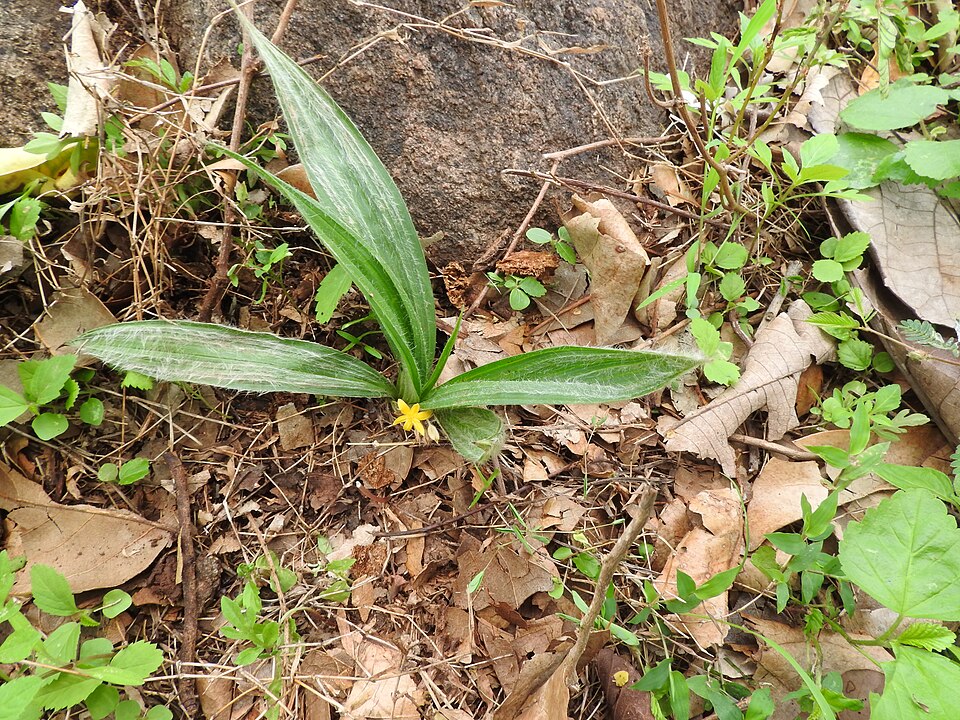
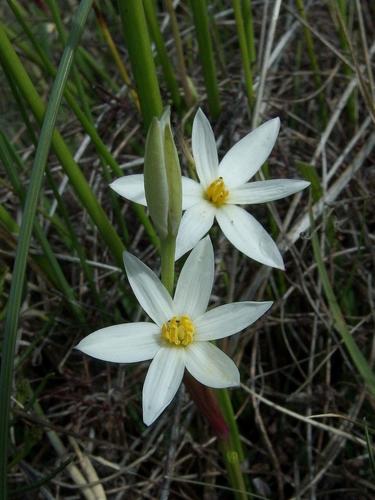
Hypoxis rigidula
Baker
iNaturalist· cc-by-nc
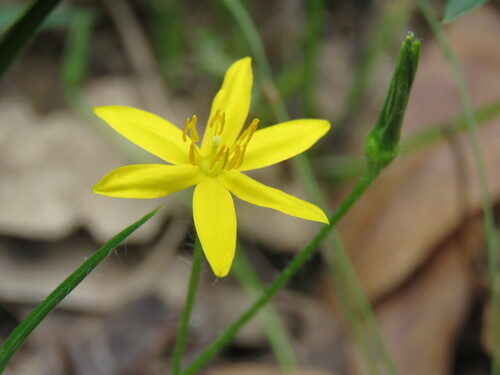
(c) Robert Archer, some rights reserved (CC BY-NC), uploaded by Robert Archer
iNaturalist· cc-by-nc
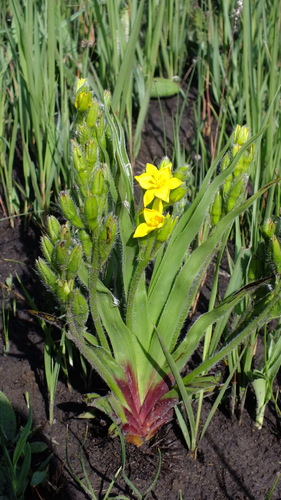
(c) Richard Gill, some rights reserved (CC BY-NC)
Description
A tropical herb or lily-like plant with edible bulbs and corms. The fruit, bulb, and corm are all edible parts of this plant.
This description is brief — help expand it
Edible Uses
The fruit is eaten raw, while the bulb and corm are eaten as vegetables.
Traditional Uses
The fruit are eaten raw. The bulb is eaten as a vegetable.
This uses section is brief — help expand it
Medicinal Uses
The corm is used in the treatment of gall sickness. The roots are often harvested from the wild in large quantities and marketed under the name 'African Potato', a name more accurately applied to the traditional medicinal species Hypoxis hemerocallidea, which is used in the treatment of a range of conditions including cancer, HIV/AIDS, urinary tract diseases, reproductive system diseases, prostate hypertrophy, benign prostate hyperplasia, tuberculosis, syphilis and diabetes. Research has shown that the root of this species has a similar, though not identical, phytochemical profile to Hypoxis hemerocallidea and is non-toxic. However, it is not known if the medicinal benefits are the same.
Distribution
It is a tropical plant.
Where It Grows
Africa, South Africa, Southern Africa, Uganda,
Cultivation
Hypoxis species are generally not very cold tolerant plants and most species are badly damaged or killed by even light frosts. They will usually grow well in a Mediterranean type of climate with little or no frost. Species in this genus generally require a light, freely draining soil and a position in full sun or light shade. Plants are found in the wild in humus-rich, laterite or black soils with a circumneutral pH. Hypoxis species greatly resent root disturbance, plants should be placed in their permanent positions as soon as possible and left undisturbed for as long as possible.
Propagation
Seed - best sown as soon as it is ripe. Division.
Other Uses
The leaves are used for tying firewood and making ropes. They are particularly useful for these purposes because of the presence of numerous long sclerenchymal fibres.
Synonyms
Also Known As
Ekiomi
References (4)
- Fox, F. W. & Young, M. E. N., 1982, Food from the Veld. Delta Books. p 238
- Ojelel, S. & Kakudidi, E. K., 2015, Wild edible plant species utilized by a subsistence farming community in the Obalanga sub-county, Amuria district, Uganda. Journal of Ethnobiology and Ethnomedicine. 11:7
- Ruiters-Welcome, A. K., 2019, Food plants of southern Africa. Ph.D. thesis. Univ. of Johannesburg p 65
- Welcome, A. K. & Van Wyk, B.-E., 2019, An inventory and analysis of the food plants of southern Africa. South African Journal of Botany 122 (2019) 136–179