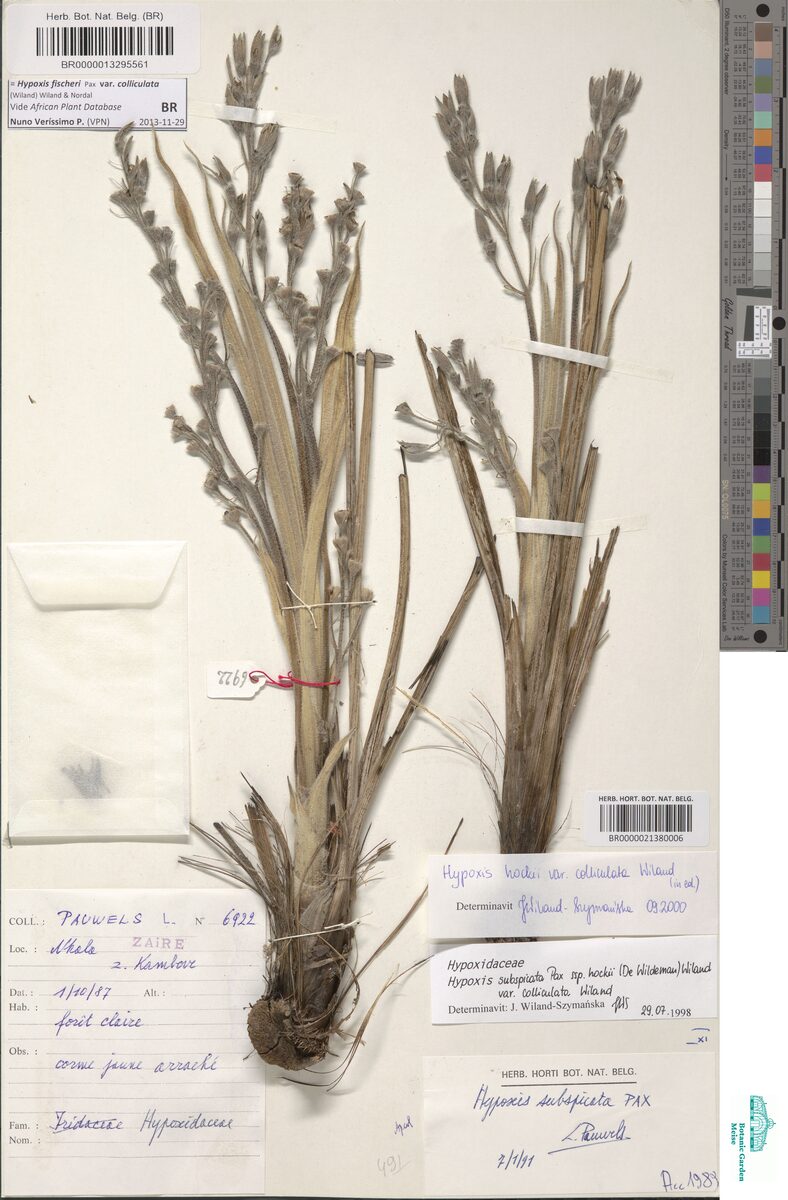
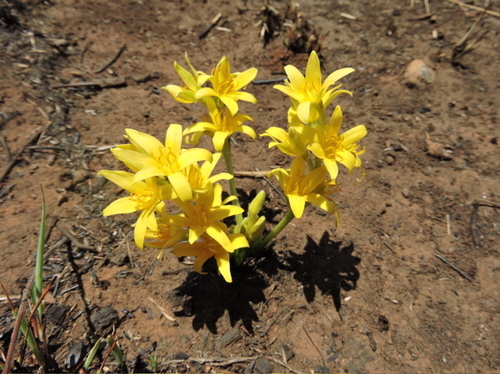
Hypoxis obtusa
Burch. ex Ker Gawl
Yellow star
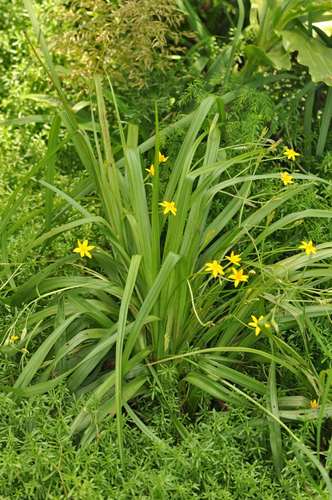
iNaturalist· cc-by-nc-sa
(c) Rob Palmer, some rights reserved (CC BY-NC-SA)
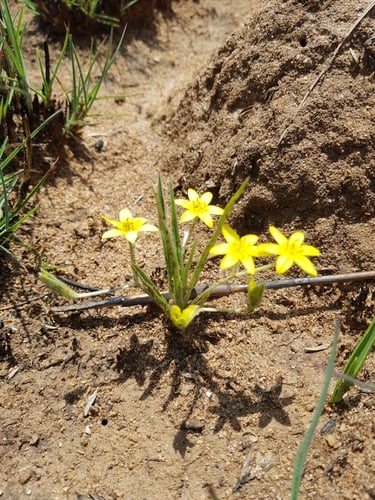
iNaturalist· cc-by-nc
(c) Richard Gill, some rights reserved (CC BY-NC)
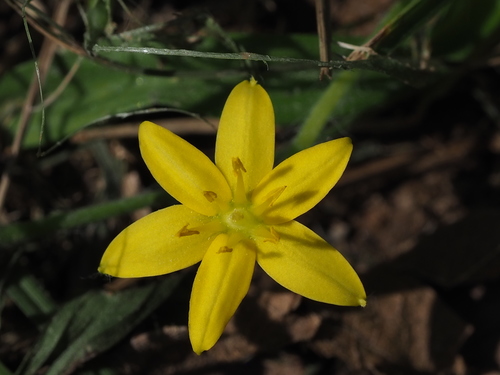
iNaturalist· cc-by-nc
(c) Richard Gill, some rights reserved (CC BY-NC)
Description
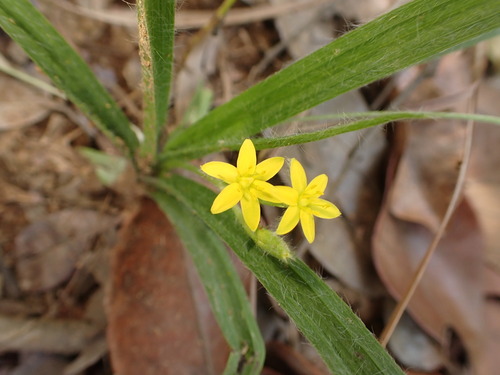
A herb that keeps growing from year to year. It grows 16-50 cm tall. It has a stout rhizome or underground stem. The leaves are stiff and become twisted with age. There are white hairs along the edges.
Edible Uses
The corm and roots are edible, with the corm being eaten especially by children.
Medicinal Uses
The raw corm is crushed, boiled and given to patients. It is used to in the management of diabetes, ulcers, cancer, abdominal pain, HIV/AIDS and, when mixed with ginger, is used as an immune booster. The chewed roots are used to manage cough. The corm is boiled and taken as decoction. This is given as an energizer to weakly children and it is assumed to work as a laxative. It is used by mothers to prevent retarded growth in children. An infusion of the corm is taken orally as a treatment for abdominal pain and stomach aches.. The roots are often harvested from the wild in large quantities and marketed under the name 'African Potato', a name more accurately applied to the traditional medicinal species Hypoxis hemerocallidea, which is used in the treatment of a range of conditions including cancer, HIV/AIDS, urinary tract diseases, reproductive system diseases, prostate hypertrophy, benign prostate hyperplasia, tuberculosis, syphilis and diabetes. Research has shown that the root of this species has a similar, though not identical, phytochemical profile to Hypoxis hemerocallidea and is non-toxic. However, it is not known if the medicinal benefits are the same.
Distribution
It is a subtropical plant. It grows between 1,000-1,830 m above sea level. It grows in open grassland. In Melbourne Botanical Gardens.
Where It Grows
Africa, Angola, Australia, Botswana, Central Africa, East Africa, Ethiopia, South Africa, Southern Africa, Zimbabwe,
Cultivation
Hypoxis species are generally not very cold tolerant plants and most species are badly damaged or killed by even light frosts. They will usually grow well in a Mediterranean type of climate with little or no frost. Species in this genus generally require a light, freely draining soil and a position in full sun or light shade. Hypoxis species greatly resent root disturbance, plants should be placed in their permanent positions as soon as possible and left ndisturbed for as long as possible. The plant commences flowering before the leaves are produced. This species occasionally hybidizes in the wild with Hypoxis rigidula.
Propagation
Seed - best sown as soon as it is ripe. Division.
Other Uses
The plant (the tuber?) is used in making a floor polish for huts in KwaZulu-Natal.
Other Information
The corm is eaten especially by children.
Synonyms
References (6)
- Asfaw, Z., Conservation and use of traditional vegetables in Ethiopia. FAO
- Fox, F. W. & Young, M. E. N., 1982, Food from the Veld. Delta Books. p 238
- Glover, et al, 1966b;
- Mogg, 1975,
- Ruiters-Welcome, A. K., 2019, Food plants of southern Africa. Ph.D. thesis. Univ. of Johannesburg p 65
Show all 6 references Hide references
- Welcome, A. K. & Van Wyk, B.-E., 2019, An inventory and analysis of the food plants of southern Africa. South African Journal of Botany 122 (2019) 136–179